
RDC Restoration Blog · New Jersey
Burst Pipe Water Damage: How To Stop It Fast in an NJ Winter
Burst pipe water damage can release several gallons of water a minute, so the moment you notice it you need to shut off your main water valve, open faucets to relieve pressure, move belongings clear of the water, and call for professional extraction before the moisture reaches your walls and subfloor.
How to stop burst pipe water damage in the first 10 minutes
When a line lets go, the first few minutes decide how big the loss becomes. Every gallon that keeps flowing means more soaked drywall, more warped flooring, and a longer path back to normal. Move through these steps in order — you can do all of them before help arrives:
- Shut the main water valve. It is usually where the water line enters the home — near the street-side wall, in the basement, or by the water heater. Turn it fully clockwise to kill the supply to the whole house.
- Open the taps. Run the lowest faucets and flush toilets to drain the remaining pressure out of the pipes so the break stops spraying.
- Cut the power to the affected area at the breaker if water is anywhere near outlets, appliances, or the panel. Never step into standing water that touches electrical equipment.
- Move what you can. Lift furniture, electronics, boxes, and rugs out of the water, and get anything of value off wet floors.
- Start removing water with towels, a mop, or a wet/dry vacuum — but do not chase hidden moisture inside walls, that is where professionals come in.
- Document everything and call for help. Photograph the source and the damage, then call RDC Restoration at (908) 253-9000, our 24/7 New Jersey emergency line.
Why New Jersey winters cause so many burst pipes
Most of the burst pipe water damage we respond to between December and March comes down to one thing: water freezes, expands, and forces the pipe open. New Jersey’s freeze-thaw swings are hard on plumbing, and the pipes most at risk are the ones with the least protection from the cold — lines in unheated basements and crawl spaces, pipes running along exterior walls, and supply lines to outdoor spigots and garages. A pipe can actually split during a hard freeze and only start pouring water once it thaws, which is why so many failures show up on the first warm morning after a cold snap.
A little prevention goes a long way. During a deep freeze, keep the heat on even in unused rooms, open cabinet doors under sinks so warm air reaches the pipes, and let a faucet trickle on the coldest nights to keep water moving. Disconnect garden hoses before winter and insulate exposed lines. If you own an older home or a finished basement, pairing those habits with proper basement waterproofing keeps both frozen-pipe leaks and groundwater from turning your lower level into a recurring problem.
The first 24 to 48 hours: why fast drying beats mold
Restoration is a race against the clock. Water begins feeding mold within roughly 24 to 48 hours, drywall wicks moisture upward long after the surface looks dry, and trapped humidity migrates into framing and subfloor where you cannot see it. That is the real danger of burst pipe water damage — the water you mop up is only part of the story, and the moisture left behind is what turns a plumbing repair into a mold remediation job weeks later. Because RDC Restoration dispatches from two central New Jersey hubs in Berkeley Heights and Piscataway, a certified crew reaches most addresses while the damage is still containable, which protects your family’s health and keeps the total cost down.
What professional water damage restoration actually involves
Wiping up puddles is not drying a structure. Proper water damage restoration is a measured process, and our crews follow the IICRC S500 standard for water damage that certifies our technicians. Here is what a professional response looks like once the source is stopped:
- Inspection and moisture mapping with meters and thermal cameras to find water hidden inside walls, under flooring, and in cavities the eye misses.
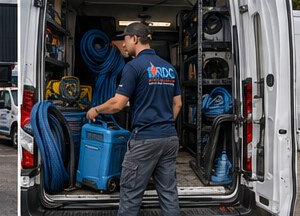
- Extraction of standing water with truck-mounted and portable units before it wicks any further.
- Structural drying using commercial air movers and dehumidifiers sized to the space, monitored daily until readings return to normal.
- Antimicrobial treatment of affected surfaces to stop mold before it establishes.
- Repair and restoration of drywall, trim, and flooring so the home is returned to pre-loss condition.
Just as important, a certified crew finds and fixes the source so the problem does not return — a step homeowner cleanup almost always skips.
When to handle it yourself and when to call a professional
A small, clean-water leak you caught within minutes and dried completely can often be a do-it-yourself job. Call a professional the moment burst pipe water damage involves any of the following: contaminated or gray water, a large affected area, water that has soaked into walls or under floors, damage to ceilings from a leak above, or any concern about mold or air quality. Certified technicians carry moisture meters, commercial drying equipment, and containment gear that a homeowner does not have — and they know how to verify a structure is truly dry rather than dry to the touch.
Insurance and documentation for a burst pipe claim
Most New Jersey homeowners policies cover sudden, accidental water damage from a burst pipe, but the outcome of a claim often comes down to documentation. Photograph everything before you start cleanup, keep receipts for anything you buy or replace, and mitigate promptly — policies require you to take reasonable steps to prevent further loss, and delaying can jeopardize coverage. RDC Restoration produces a detailed, itemized loss report and bills your carrier directly wherever possible, which strengthens and speeds your claim. We serve all 21 New Jersey counties, so wherever you are in the state, help is close. Not sure whether your town is covered? Check our service areas or just call (908) 253-9000.
Key takeaways
- Shut the main valve first — every minute of flowing water widens the damage
- Freeze-thaw swings make burst pipe water damage a leading NJ winter emergency
- Mold can start within 24 to 48 hours, so fast professional drying matters
- Document everything before cleanup for your insurance claim
- Fix the source, not just the symptom — call (908) 253-9000 for 24/7 help
Dealing with a burst pipe in New Jersey right now? RDC Restoration answers 24/7.
Quick answers
Frequently asked questions
What is the first thing to do when a pipe bursts?
Shut off your main water valve immediately, then open faucets to relieve pressure so the break stops flowing. Cut power near any standing water, move belongings clear, and call RDC Restoration at (908) 253-9000 for 24/7 extraction anywhere in New Jersey.
How fast can RDC respond to burst pipe water damage?
RDC dispatches from Berkeley Heights and Piscataway and typically reaches nearby New Jersey towns within about an hour, day or night, so drying can begin before mold takes hold.
Will my insurance cover a burst pipe?
Most New Jersey policies cover sudden, accidental burst pipe water damage. Document everything before cleanup, mitigate promptly, and let RDC produce an itemized loss report and bill your carrier directly wherever possible.
Can I just dry it myself?
A small, clean-water leak dried within minutes may be a DIY job. Call a professional if water reached walls or floors, the area is large, the water is contaminated, or you have any concern about mold or air quality.
Has RDC done this before?
Yes. RDC Restoration has 27 years of experience, IICRC-certified technicians, BBB A-rating, and a 4.9 rating across 117 Google reviews from New Jersey families and businesses.
New Jersey’s trusted restoration team.
Water, fire, or mold trouble? RDC Restoration dispatches the nearest crew 24/7, statewide.