
RDC Restoration Blog · New Jersey
Winter Water Damage: NJ’s Most Common Causes
Winter water damage is the season’s most common and most expensive home emergency in New Jersey, driven by frozen and burst pipes, ice dams that force melt-water under your roof, and water heaters that quit in the cold. After 27 years restoring homes across all 21 counties, I have learned that nearly every winter loss traces back to one of a handful of predictable causes — which is exactly why they are so preventable.
The most common causes of winter water damage in NJ
New Jersey’s freeze-thaw swings from December through March put constant stress on the systems that keep water where it belongs. When the temperature drops below about 20°F for a sustained stretch, vulnerable plumbing and roofing start to fail. These are the culprits my crews see most often.
Frozen and burst pipes
Water expands as it freezes, and a pipe with no room to give will split. The rupture often is not discovered until the ice thaws and water pours out — sometimes hundreds of gallons an hour. The pipes most at risk run through unheated or poorly insulated spaces: exterior walls, crawl spaces, attics, garages, and unfinished basements. A single burst supply line can flood a finished basement or soak two floors before anyone notices, which is why frozen pipes are the number-one source of winter water damage we respond to statewide.
Ice dams and roof leaks
An ice dam forms when heat escaping through the roof melts snow near the ridge, the water runs down to the cold eaves, and it refreezes into a ridge of ice. Meltwater then backs up behind that dam and is forced under the shingles, where it finds its way into the attic, down the walls, and across ceilings. Older homes with under-insulated attics and warm, uneven roof temperatures are especially prone. The damage is deceptive because it shows up as brown ceiling stains days after a storm, long after the snow looks harmless.
Water heater and appliance failures
Cold groundwater makes a water heater work harder all winter, and an aging tank — most last 8 to 12 years — often chooses the coldest week to rupture and dump its full capacity onto the floor. Washing-machine hoses, dishwasher lines, and boiler fittings also grow brittle in the cold and let go. Because these appliances usually sit in a basement or utility closet, the water spreads to drywall, subfloor, and stored belongings before it is caught.
Sump pump and basement failures
A midwinter thaw or rain-on-snow event can send a surge of groundwater at a basement just as a frozen or failed sump pump gives out. Standing water in a basement threatens the foundation, the furnace, and everything stored below grade. If your basement takes on water every winter, the real fix is often professional basement waterproofing rather than another round of mopping up.
How to prevent winter water damage before the freeze
Prevention is far cheaper than restoration, and most of it is straightforward maintenance you can do in an afternoon:
- Insulate exposed pipes in crawl spaces, garages, attics, and along exterior walls with foam sleeves or heat tape.
- Keep the thermostat at a steady temperature — no lower than 55°F — even when you travel, and open cabinet doors so warm air reaches pipes under sinks.
- Let faucets on exterior walls drip during a hard freeze; moving water is much harder to freeze.
- Disconnect garden hoses and shut off outdoor spigots before the first freeze.
- Clear gutters and downspouts in late fall so melting snow drains instead of backing up into ice dams.
- Improve attic insulation and ventilation to keep the roof deck cold and even — the single best defense against ice dams.
- Service your heating system and replace a water heater that is past 10 years old before it fails.
- Know where your main water shutoff is, and make sure everyone in the house does too.
What to do the moment winter water damage strikes
When a pipe bursts or a ceiling starts to leak, the first minutes matter more than anything else. Move quickly and in this order:
- Shut off the water at the main valve to stop the source.
- Cut power to affected areas at the breaker if water is anywhere near outlets or the electrical panel.
- Document everything with photos and video before you move or remove anything — your insurer will want it.
- Move what you can to a dry area to limit further loss.
- Call a certified restoration crew. RDC Restoration answers 24/7 at (908) 253-9000 and dispatches statewide.
Avoid the temptation to simply mop up and wait. Water wicks into drywall, insulation, and subfloor within hours, and what looks dry on the surface is often saturated behind the wall.
Why a fast, professional response matters
Restoration is a race against the clock. Mold can begin colonizing wet materials within 24 to 48 hours, hardwood cups and swells, and trapped moisture quietly rots framing. Because RDC Restoration dispatches from two central hubs — Berkeley Heights in Union County and Piscataway in Middlesex County — a certified crew reaches most New Jersey addresses while winter water damage is still containable, day or night.
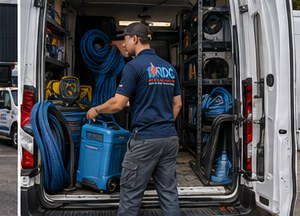
Our technicians follow IICRC industry standards and hold WRT, ASD, NORMI, and AHERA certifications. That means we do more than pull out wet carpet: we use moisture meters and thermal imaging to map hidden water, deploy commercial air movers and dehumidifiers to dry the structure to a verified dry standard, and treat for microbial growth so a winter flood does not become a spring mold remediation project. Just as important, we find and fix the source so the same failure does not repeat next winter. See the full scope of our water damage restoration service for what a professional response includes.
Insurance and documentation for a NJ winter claim
Most New Jersey homeowners policies cover sudden, accidental water damage — a burst pipe qualifies, while gradual leaks and neglected maintenance often do not. The outcome of a claim usually comes down to documentation and how quickly you mitigated. Photograph everything before cleanup, keep receipts, and act promptly, since every policy requires you to prevent further loss. RDC Restoration produces a detailed, itemized loss report and bills your carrier directly wherever possible, which strengthens your claim and takes the paperwork off your plate.
Key takeaways
- Frozen pipes, ice dams, and water-heater failures cause most winter water damage in NJ.
- Insulate pipes, hold a steady 55°F+, and clear gutters before the freeze.
- If it happens, shut off the water, document it, and call for help fast.
- Mold can start within 24–48 hours — speed protects your home and your health.
- RDC bills your insurance directly and serves all 21 NJ counties, 24/7.
Dealing with winter water damage in New Jersey right now? RDC Restoration answers 24/7.
Frequently asked questions
What is the most common cause of winter water damage in New Jersey?
Frozen and burst pipes are the leading cause. When water in an under-insulated pipe freezes and expands, the pipe splits, then floods the home when it thaws. Ice dams and aging water heaters are the next most common sources we respond to statewide.
How fast can RDC Restoration respond to a winter emergency?
RDC dispatches 24/7 from Berkeley Heights and Piscataway and typically reaches nearby New Jersey towns within about an hour, day or night. Call (908) 253-9000 the moment you find water.
Will my insurance cover winter water damage?
Most New Jersey policies cover sudden, accidental damage such as a burst pipe, though gradual leaks and neglected maintenance are often excluded. Document everything before cleanup; RDC produces a detailed loss report and bills your carrier directly wherever possible.
Can I clean up water damage myself?
You can handle a small, clean-water spill, but call a professional whenever water is contaminated, covers a large area, or hides behind walls and under floors. Certified crews carry moisture meters and commercial drying equipment a homeowner does not, and they verify the structure is truly dry.
Does RDC handle water damage in my NJ town?
Yes — RDC serves all 21 New Jersey counties for water damage restoration, dispatched 24/7 from two central hubs. Explore our service areas or call to confirm coverage for your address.
Winter water damage moves fast, but so do we. If a pipe has burst, a ceiling is leaking, or your basement is taking on water, call RDC Restoration 24/7 at (908) 253-9000 or request a free estimate — a certified New Jersey crew is ready to help.
New Jersey’s trusted restoration team.
Water, fire, or mold trouble? RDC Restoration dispatches the nearest crew 24/7, statewide.