24/7 Commercial Restoration Across New Jersey
Commercial Water Damage Restoration & Commercial Restoration in New Jersey
When disaster strikes your building, every hour of closure costs revenue. RDC Restoration keeps New Jersey businesses running. For 27 years our IICRC-certified crews have mobilized to water, fire, storm, and mold losses at offices, retail centers, restaurants, schools, and warehouses from two locations in Berkeley Heights and Piscataway, so you reopen faster and lose less.
- Rapid emergency mobilization
- Large-loss capacity & scalable crews
- Direct commercial insurance billing
- Minimal business downtime
Facility emergency now?
Every hour your doors stay closed is lost revenue. RDC Restoration answers 24/7 and dispatches a scalable New Jersey crew to stabilize your property immediately.
Water • Fire • Mold • Storm • Sewage • Large-loss — one call handles it all.
Quick answer
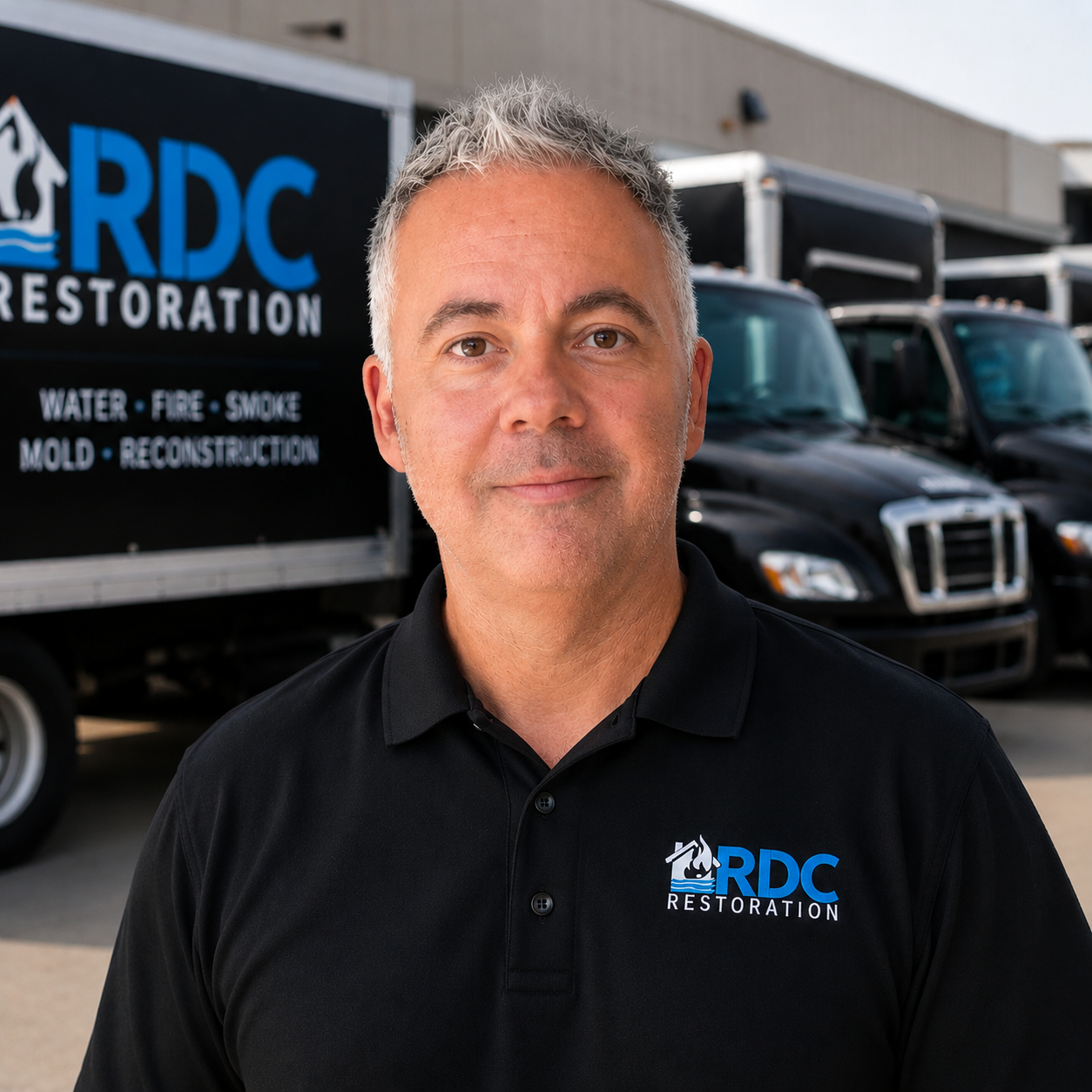
RDC Restoration is a New Jersey commercial restoration company that handles water, fire, storm, mold, and sewage losses at offices, retail, schools, medical offices, and warehouses. Crews answer 24/7, typically arrive within 60 minutes near our Piscataway and Berkeley Heights offices, dry to the IICRC S500 standard, and bill your commercial insurance carrier directly.
- RDC Restoration has served New Jersey businesses since 1999 under NJ HIC license 13VH08055400.
- Typical response is 60 minutes for commercial properties near our Piscataway and Berkeley Heights offices, with 24/7 dispatch statewide.
- Commercial water damage is dried and documented to the IICRC S500 standard; mold follows S520 and fire and smoke follow S700.
- Technicians hold IICRC WRT and ASD, NORMI, and AHERA certifications.
- RDC bills commercial insurance carriers directly and provides moisture logs and photos for adjusters.
- Work can be phased by zone and scheduled after hours or on weekends.
- RDC Restoration is BBB A-rated and 4.9-star rated on Google.
New Jersey's Commercial Restoration Experts
What is commercial restoration, and how is it different?
Commercial restoration is the emergency mitigation, drying, cleaning, and decontamination of a business property after water, fire, smoke, storm, mold, or sewage damage on a plan built around keeping the business open. RDC Restoration provides commercial restoration services to property managers, facility managers, business owners, and HOA boards across New Jersey.
A commercial loss is lost revenue, displaced staff, and unhappy tenants. A failed sprinkler line in an office suite, a kitchen fire in a restaurant, or river water across a warehouse floor can shut you down overnight.
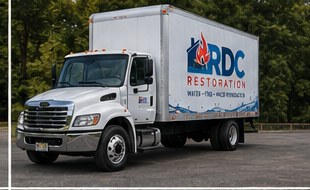
Because we operate from two New Jersey hubs, Berkeley Heights in Union County and Piscataway in Middlesex County, a certified crew can reach most nearby facilities within the critical first hour, and our scalable teams expand to match the size of the loss.
Business interruption
Can my business stay open during commercial restoration?
In many cases, yes. We isolate the damaged area so the rest of the building keeps working:
- Phased, zone-by-zone work. We dry and clean business-critical areas first (registers, server rooms, patient rooms, classrooms) and hand them back while we move on.
- After-hours and weekend shifts. Noisy extraction and material removal can run at night or on weekends.
- Containment barriers. Plastic containment and HEPA-filtered negative air keep dust, odor, and mold spores inside the work zone and away from occupied space.
- Tenant and staff communication. In multi-tenant buildings and HOAs we coordinate unit access and send the property manager a daily update.
- Fast decisions on contents. Inventory, files, and electronics are moved or protected early so they do not hold up drying.
Many commercial policies include business interruption or extra expense coverage, and those claims depend on a clear timeline. Our daily drying records show when each area was safe to reopen.
Every commercial property & loss type
Which commercial properties does RDC Restoration serve?
RDC Restoration serves offices, retail, restaurants, warehouses, multi-unit and HOA buildings, schools, and medical offices across New Jersey. Each fails in its own way.
| Property type | Common loss | How RDC handles it |
|---|---|---|
| Offices & corporate suites | Sprinkler or supply-line leak through drop ceilings into carpet tile | Ceiling-cavity inspection, extraction, after-hours drying; electronics and files protected first |
| Retail stores & shopping centers | Roof leaks, storm water at entrances, burst pipes in back-of-house storage | Inventory moved or protected, sales floor dried first, noisy work done after closing |
| Restaurants & food service | Kitchen grease fire, walk-in cooler leak, floor-drain sewage backup | Category 3 sewage protocol, soot and grease cleaning, odor control, sanitizing before reopening |
| Warehouses & industrial | Flooding on slab floors, roof failure after storms | High-capacity extraction, desiccant drying, equipment staged by zone, racked stock protected |
| Apartment buildings, condos & HOAs | Unit-to-unit leaks, stack backups, common-area flooding | Moisture mapping across adjoining units, tenant access coordination, per-unit reports |
| Schools & institutions | Pipe or boiler failure over breaks, roof leaks into classrooms | Asbestos checks before material removal, containment, work scheduled around the school calendar |
| Medical & dental offices | Supply-line leaks, mold in exam rooms, sewage in lower levels | HEPA containment, mold remediation to IICRC S520, documented cleaning so patient care resumes safely |
Commercial water damage
How does commercial water damage restoration work?
Commercial water damage restoration follows the IICRC S500 standard: identify the water source and category, extract standing water, remove what cannot be dried, then dry the structure to a measured goal.
| IICRC water category | Typical commercial source | What it means for the job |
|---|---|---|
| Category 1 (clean water) | Broken supply line, water heater, ice machine line | Most materials can usually be dried in place if work starts quickly |
| Category 2 (gray water) | Dishwasher or appliance overflow, many sprinkler and fire-suppression discharges | Antimicrobial treatment; carpet pad and some porous materials are often removed |
| Category 3 (black water) | Sewage backups, floor-drain overflow, flood water from outside the building | PPE and containment; porous materials that were contaminated are removed and disposed of; surfaces disinfected |
Clean water does not stay clean. A Category 1 loss can degrade toward Category 2 or 3 within a day or two as it sits, which is the best reason to call a commercial water damage restoration company the same day.
Our step-by-step commercial water mitigation process
- Emergency call and dispatch. We send a crew 24/7, typically within 60 minutes near our two offices.
- Stop the source and make it safe. We help shut off water, check electrical hazards, and post signage for staff and customers.
- Inspect, categorize, and map moisture. Technicians classify the water per IICRC S500 and map wet walls, floors, and ceilings with meters and thermal imaging.
- Extract standing water. Truck-mounted and portable extraction removes bulk water, which shortens drying more than any other step.
- Remove unsalvageable materials. Wet drywall, insulation, and carpet pad are cut out and bagged, after asbestos testing in older buildings.
- Set a drying plan and equipment. Air movers, dehumidifiers, and air scrubbers are placed for the room volume, temperature, and materials.
- Monitor daily and document. We record moisture, temperature, and humidity every visit and adjust equipment until materials reach the dry standard.
- Clean, sanitize, and close out. Surfaces are cleaned and treated, and you receive the final drying report for your insurance file.
How long does commercial water damage restoration take?
Most commercial drying phases run three to five days once equipment is set. Dense materials such as concrete slabs, plaster, and hardwood take longer, and large losses that span several floors are phased over more days. Daily moisture readings tell us when each zone is done.
Commercial damage restoration scopes
What commercial damage restoration services does RDC provide?
RDC Restoration provides commercial water, fire and smoke, mold, storm, and sewage restoration across New Jersey, all from one team.
Commercial water damage and flood cleanup
Burst pipes, sprinkler discharges, roof leaks, and flash flooding are our most common commercial calls. Our water damage restoration crews handle extraction, structural drying, and commercial flood cleanup, and we can prevent repeat basement and lower-level flooding with basement waterproofing.
Commercial fire and smoke damage restoration
Smoke and soot travel through HVAC systems and ceiling plenums well past the burned area. Our fire and smoke damage restoration team follows IICRC S700: board-up, soot removal matched to the residue type, water removal, and deodorization.
Commercial mold remediation
Commercial mold often follows a slow leak no one reported. We start with mold inspection and testing, then perform mold remediation to IICRC S520 using containment, HEPA air filtration, and removal of affected materials, followed by post-remediation clearance testing.
Commercial storm damage restoration services
Nor'easters and summer storms hit New Jersey businesses with roof damage, wind-driven rain, and fallen trees. Our storm damage restoration crews provide board-up, tarping, water removal, and drying. Flood water from outside is Category 3. If you are in a flood zone, review commercial flood coverage at FloodSmart.gov.
Commercial sewage cleanup
A backed-up restaurant floor drain or apartment main-line failure is a health issue first. Our sewage cleanup service removes Category 3 water, disposes of contaminated materials, and disinfects the area before drying begins.
Asbestos testing, biohazard, and specialty cleanup
RDC also provides AHERA-certified asbestos testing and abatement, along with hoarding and biohazard cleanup for difficult unit turnovers.
Insurance & adjusters
How do you document a commercial claim for insurance adjusters?
We document every commercial job so an adjuster can see what happened and why without a second site visit. RDC Restoration bills carriers directly, and the claim file typically includes:
- Moisture logs. Daily readings from fixed points on walls, floors, and framing.
- Psychrometric records. Temperature, humidity, and grains per pound that prove the drying system is working.
- Photos and thermal images. Before, during, and after, including hidden moisture.
- Category and class determination. The IICRC S500 basis for why materials were removed.
- Equipment and scope records. What was placed in each area, for how long, and what was removed.
- Contents inventory. A list of damaged and packed-out items for your property and business personal property claim.
Adjusters get clean records to review, and you are not chasing paperwork while trying to reopen.
Large-loss capacity
How does RDC handle large commercial losses?
Large losses are handled by sizing the drying system to the building, not by flooding the site with machines. A project lead calculates the affected volume, materials, and outdoor conditions, then builds a drying plan staffed by scalable crews from both offices.
The plan combines truck-mounted extraction, air movers placed per IICRC S500 guidance, and the right dehumidifiers: low-grain refrigerant units for conditioned offices, desiccant units for warehouses, cold buildings, and dense materials. HEPA air scrubbers protect occupied areas, and we bring temporary power when building electrical must stay off.
Large jobs are phased: stabilize the whole site first, then work zone by zone, adding or pulling equipment as daily readings come in.
Safety & compliance
What safety and compliance rules apply to commercial restoration?
Commercial restoration is governed by workplace safety and environmental rules. On every commercial project RDC Restoration follows these practices:
- OSHA job-site safety. Crews use PPE and respiratory protection matched to the hazard and follow hazard communication rules for cleaning products.
- Asbestos testing before demolition of wet materials. The EPA asbestos rules require an inspection before regulated renovation or demolition work in most commercial and public buildings. In older buildings we sample suspect drywall, joint compound, flooring, and pipe wrap before tearing out wet materials.
- AHERA for schools. AHERA governs asbestos management in K-12 schools. Our AHERA-certified team works within the district's management plan.
- Containment and air quality. Mold, sewage, and soot work happens behind containment with HEPA filtration.
Pre-loss planning
What should a commercial emergency response plan include?
A commercial emergency response plan is a short document that tells your team and your restoration company what to do in the first hour of a loss. A good plan covers:
- Locations of water main, sprinkler, gas, and electrical shutoffs, with photos
- After-hours contacts for the owner, property manager, facility lead, and insurance broker
- Your policy number and carrier claim line
- Priority areas to protect first, such as server rooms, records, inventory, or patient areas
- Floor plans, building age, and any known asbestos survey results
- Who can authorize emergency work and after-hours access
RDC Restoration can walk your New Jersey facility, note shutoffs and risk areas, and keep your building profile on file so our crew arrives already knowing the layout. Ask us about pre-loss planning →
Why New Jersey businesses choose RDC
One accountable team that minimizes your downtime
- Rapid mobilization: two NJ locations mean RDC Restoration is on-site fast to stop the loss and protect continuity.
- Business continuity focus: phased and after-hours work to minimize downtime and revenue loss.
- Commercial insurance handled: we document the loss in detail and bill your carrier directly. Talk to our team →
Serving New Jersey businesses from two hubs
Where does RDC Restoration provide commercial restoration?
Rapid dispatch across Union, Middlesex, Somerset, Essex, and Morris counties, and statewide for large commercial losses. See all service areas →
● Berkeley Heights Hub
Berkeley Heights HQ · Serving Northern New Jersey
● Piscataway Hub
Piscataway HQ · Serving Central & Southern New Jersey
Commercial restoration by town
Facilities & property manager FAQs
Commercial restoration questions
What does commercial water damage restoration include?
Commercial water damage restoration includes emergency response, water extraction, moisture mapping, removal of materials that cannot be dried, structural drying, antimicrobial cleaning, and daily documentation. RDC Restoration follows the IICRC S500 standard on every commercial job in New Jersey and provides a drying report your insurance adjuster can use. Call (908) 253-9000.
How fast can RDC Restoration respond to a commercial emergency in New Jersey?
RDC Restoration answers 24/7 and typically arrives within 60 minutes at commercial properties near our Piscataway and Berkeley Heights offices. For facilities farther away, we dispatch the nearest crew immediately and scale up with more technicians as the size of the loss becomes clear. Call (908) 253-9000.
Can my business stay open during commercial restoration?
Often, yes. RDC Restoration isolates damaged areas with containment, works zone by zone, and schedules loud or disruptive work after hours or on weekends so the rest of your building keeps operating. We return the most business-critical areas first and give your team a reopening date for each zone.
How long does commercial water damage restoration take?
Most commercial drying phases take three to five days once equipment is in place. Concrete slabs, plaster, hardwood, and multi-floor losses can take longer. RDC Restoration takes daily moisture readings and removes equipment from each zone only when materials reach the dry standard.
Do you work with commercial insurance carriers and adjusters?
Yes. RDC Restoration bills commercial insurance carriers directly and gives adjusters moisture logs, psychrometric readings, photos, thermal images, and a line-by-line scope under IICRC S500. That record also helps support business interruption and extra expense claims. Contact us or call (908) 253-9000 to start a claim.
Do you offer commercial storm damage restoration services in New Jersey?
Yes. RDC Restoration provides commercial storm damage restoration services across New Jersey, including emergency board-up and roof tarping, flood water extraction, drying, and cleanup after nor'easters and severe storms. Flood water from outside a building is treated as Category 3, so we use full containment and disinfection on storm losses.
Who handles commercial water damage restoration for businesses and apartment buildings in Morristown, NJ?
RDC Restoration handles commercial water damage restoration for businesses, apartment buildings, condos, and HOAs in Morristown and across Morris County. Our Berkeley Heights office is the closest hub, crews answer 24/7, and we coordinate access with tenants and property managers. See our Morristown commercial restoration page or call (908) 253-9000.
Do you test for asbestos before removing wet materials in older buildings?
Yes. In older commercial buildings and schools, RDC Restoration samples suspect drywall, joint compound, flooring, and pipe insulation before removing wet materials. EPA rules require an asbestos inspection before regulated demolition and renovation work, and AHERA governs asbestos in K-12 schools. Our AHERA-certified team handles testing and abatement in house.
Can RDC Restoration help my facility build an emergency response plan?
Yes. RDC Restoration can walk your facility, record shutoffs, priority areas, and contacts, and keep that profile on file. If a loss happens, our crew arrives knowing the layout and who can authorize work, which saves time in the first hour. Ask about pre-loss planning at (908) 253-9000.
What makes a commercial restoration company different from a residential one?
A commercial restoration company plans around business continuity, larger and more complex buildings, multiple stakeholders, and stricter documentation. RDC Restoration brings scalable crews, desiccant and large-area drying equipment, after-hours scheduling, and adjuster-ready records, and has restored New Jersey businesses for 27 years. Call (908) 253-9000.
Downtime costs money. RDC Restoration gets you back open.
Call now for 24/7 commercial restoration anywhere in New Jersey. RDC Restoration mobilizes a scalable crew to your facility immediately.
RDC Restoration follows the restoration standards set by the IICRC and holds NORMI mold and AHERA asbestos certifications.