
RDC Restoration Blog · New Jersey
Storm Damage Insurance in NJ: What Homeowners Should Know
Storm damage insurance in New Jersey usually pays for sudden, wind-driven water — rain forced through a damaged roof, a window blown in, a tree through the siding — but rarely for rising flood water, which needs a separate flood policy. The gap between those two is where most claim disputes happen, and how quickly you document and dry out the home decides how the rest of the claim goes.
After 27 years responding to nor’easters, hurricanes, and summer microbursts across all 21 New Jersey counties, I’ve watched two identical-looking losses end very differently — one paid in full, one denied — entirely because of what the homeowner did in the first 24 hours. This guide walks through what your storm damage insurance likely covers, what it doesn’t, and the exact steps that protect both your home and your claim.
What storm damage insurance covers in New Jersey
A standard NJ homeowners (HO-3) policy is built around sudden and accidental damage. When a storm damages the building envelope and water gets in as a direct result, that interior damage is generally covered. Typical covered scenarios include:
- Wind-driven rain entering after wind lifts shingles, tears flashing, or breaks a window.
- Fallen trees and limbs puncturing the roof, siding, or a skylight during a storm.
- Lightning strikes and the fire or surge damage that follows.
- Ice, hail, and the weight of ice and snow collapsing part of the structure.
- Pipe bursts caused by a sudden freeze — a common winter loss that pairs with water damage restoration.
Most policies also include loss of use, which reimburses hotel and meal costs if the home is unlivable during repairs, and additional living expenses tied to a covered event. Coverage limits, deductibles, and separate wind/hurricane deductibles vary by carrier, so read your declarations page before you assume a number.
Wind-driven rain vs. rising flood water — the line that decides your claim
This is the single most important distinction in storm damage insurance, and it trips up more New Jersey homeowners than anything else. Water that enters from above or through the envelope — blown through a damaged roof or wall — is a wind/storm loss covered by your homeowners policy. Water that rises from the ground up — an overflowing river, storm surge, or flash flooding that pools and enters the home — is legally defined as a flood and is excluded from standard homeowners coverage.
Flooding is instead covered by a separate policy, usually through the National Flood Insurance Program (NFIP) or a private flood insurer. If you live near the Raritan, Passaic, or Delaware basins, or in a low-lying coastal town, flood insurance is not optional in practice — it’s the only thing that pays when the water comes up instead of down. Homes with chronic groundwater intrusion are a different problem entirely; those are solved with basement waterproofing and drainage, not an insurance claim.
Adjusters look hard at the water line, the debris pattern, and the direction of staining to decide which category a loss falls into. That’s exactly why documentation before cleanup matters so much.
How to document a storm damage insurance claim
The homeowners who get paid quickly are the ones who build the claim file before they touch anything. Work through this the moment it’s safe:
- Photograph and video everything — wide shots and close-ups of the damage, the source, standing water, and every damaged belonging — before any cleanup.
- Stop further loss. Your policy requires you to take reasonable steps — tarp the roof, board a window, extract standing water — to prevent the damage from spreading. Keep it, but do it.
- Keep every receipt for tarps, fans, a hotel stay, or emergency repairs. These are reimbursable under most policies.
- Don’t throw damaged items away until the adjuster has seen them or you’ve documented them thoroughly.
- Report the claim promptly and write down your claim number and adjuster’s contact.
When RDC Restoration arrives, our certified crews produce a detailed, photo-supported loss report and, wherever possible, bill your carrier directly — so you’re not fronting the cost of emergency work while the claim is processed. That paper trail is often the difference between a smooth payout and a drawn-out dispute.
Why fast mitigation protects your claim and your home
Restoration is a race against the clock, and the clock affects your storm damage insurance claim too. Left standing, water wicks into drywall, insulation, and framing within hours; mold can begin colonizing wet materials in as little as 24 to 48 hours; and soot from a lightning-sparked fire turns acidic and starts etching surfaces within days. An adjuster can also argue that damage which spread because you waited was preventable — and reduce the payout accordingly.
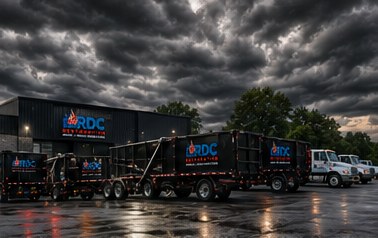
Because RDC dispatches from two central hubs — Berkeley Heights in Union County and Piscataway in Middlesex County — a certified crew reaches most New Jersey addresses while the damage is still containable. We follow IICRC standards for water and structural drying, using calibrated moisture meters, commercial air movers, and dehumidifiers to dry the structure to a documented, verifiable endpoint rather than a guess. Drying it right the first time is also what prevents the secondary mold remediation job three weeks later.
When to call a certified restoration professional
You can safely handle a small, clean-water spill yourself. Call a professional the moment a storm loss involves any of the following:
- Contaminated or standing water, or sewage backup.
- Water that has spread across a large area or into more than one room.
- Hidden moisture behind walls, under floors, or above ceilings.
- Any structural, electrical, or health concern.
- An insurance claim you want documented correctly the first time.
Certified technicians carry equipment and training a homeowner doesn’t — and, just as important, we find and fix the source so the damage doesn’t return. RDC holds IICRC (WRT, ASD), NORMI, and AHERA certifications, carries an A rating from the BBB, and maintains a 4.9-star reputation across New Jersey. Call (908) 253-9000 any hour, or request a free estimate online.
Key takeaways
- Wind-driven water is usually covered; rising flood water needs separate flood insurance.
- Document everything with photos and receipts before any cleanup.
- Mitigate promptly — delay spreads damage and weakens your claim.
- RDC bills your carrier directly wherever possible.
- Fix the source, not just the symptom.
Dealing with storm damage in New Jersey right now? RDC Restoration answers 24/7.
Quick answers
Frequently asked questions
Does homeowners insurance cover storm damage in New Jersey?
Usually, yes — a standard NJ homeowners policy covers sudden, wind-driven storm damage, such as rain entering through a wind-damaged roof or a tree falling on the house. Rising flood water is excluded and requires separate flood insurance. Call (908) 253-9000 and RDC will document the loss for your carrier.
What’s the difference between storm damage and flood damage for insurance?
Storm damage insurance covers water that enters from above or through the building envelope; flood insurance covers water that rises from the ground — rivers, storm surge, or flash flooding. Adjusters use the water line and staining to decide which applies, so photograph everything before cleanup.
How fast can RDC Restoration respond to storm damage?
RDC dispatches 24/7 from Berkeley Heights and Piscataway and typically reaches nearby New Jersey towns within about an hour, day or night, to begin mitigation while the damage is still containable.
Does RDC Restoration bill my insurance company directly?
Wherever possible, yes. RDC produces a detailed, photo-supported loss report and bills your carrier directly, so you’re not fronting the cost of emergency work while the claim is processed.
Which New Jersey areas does RDC serve?
RDC Restoration serves all 21 New Jersey counties for storm, water, fire, and mold damage, with a 4.9-star reputation across the state and 27 years of experience.
New Jersey’s trusted restoration team.
Water, fire, or mold trouble? RDC Restoration dispatches the nearest crew 24/7, statewide. Call (908) 253-9000 or request a free estimate.