
RDC Restoration Blog · New Jersey
Signs of Mold Behind Walls (and What to Do)
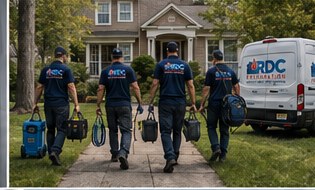
Mold behind walls is one of the hardest problems to catch, because the growth stays hidden inside the wall cavity while the symptoms show up out in the open. In 27 years restoring New Jersey homes, I have opened thousands of walls that looked perfectly fine from the living room. Here is how to read the signs, what you can safely check yourself, and when to call a certified pro.
Everything below follows the IICRC standards our crews are trained and certified to — the same industry standard of care used on insurance and real-estate jobs across the state.
Why mold hides inside your walls in the first place
The space inside a stud wall is dark, still, and often damp — everything mold needs to thrive. Moisture gets in from a slow plumbing leak, a roof or window that weeps during storms, condensation on a cold exterior wall, or a basement that stays humid all summer. Once the paper facing on drywall or the wood framing gets wet and stays wet for more than 24 to 48 hours, spores that are already floating in every home settle in and start colonizing. Because it all happens behind the drywall, you can have an established colony long before you see a single spot.
New Jersey homes are especially prone to this. Our humid Mid-Atlantic summers push indoor humidity high for months, older housing stock in towns across all 21 counties often has aging plumbing and un-flashed windows, and finished basements trap moisture against foundation walls. A wall that would dry out in a desert climate can stay wet for weeks here.
The warning signs of mold behind walls
You rarely see the mold itself. Instead you notice the clues it leaves on the painted surface and in the air:
- A musty, earthy smell that gets stronger in one room or near one wall, especially when the HVAC kicks on.
- Staining that bleeds through paint — brown, yellow, or greenish patches, sometimes a faint pink or black shadow.
- Paint that bubbles, cracks, or peels, or wallpaper that lifts at the seams, because moisture is pushing out from behind.
- Drywall that feels soft, cool, or damp, or baseboards that have started to warp or swell.
- Allergy-style symptoms — congestion, itchy eyes, headaches, or a scratchy throat — that ease when you leave the house. If that sounds familiar, our guide on whether your allergy symptoms could be household mold is worth a read.
One clue often points to a specific cause. Mold on an exterior wall usually means condensation or a leak from outside. Mold on the wall shared with a bathroom or kitchen almost always traces back to a supply line, drain, or wax ring. Mold low on a basement or foundation wall is usually a moisture problem coming through the masonry itself — the kind of intrusion that calls for basement waterproofing rather than a surface fix.
Where to look first in a New Jersey home
Trace the water. The most common hiding spots are the wall behind a shower or tub, the wall under a second-floor bathroom, the wall behind the kitchen sink and dishwasher, around window frames, and along the bottom of below-grade walls. If you have had a roof leak or a ceiling stain, check the wall directly below it — water runs downhill inside the cavity before it shows. Any unresolved water damage event, even a small one from months ago, is a prime suspect.
What you can check safely yourself
- Smell along the base of suspect walls and around outlet covers, where cavity air escapes.
- Press gently on the drywall for soft or spongy spots.
- Look under sinks and behind the toilet for active drips or old water rings.
- Point a cheap moisture meter or infrared thermometer at the wall — cold, damp patches stand out.
- Check the exterior side of the same wall for grading, gutters, or downspouts dumping water against the foundation.
What you should not do is start opening walls yourself. Cutting into drywall that has an active colony releases a huge burst of spores into your living space and can spread a contained problem across the whole floor. If you smell it and see the signs, the safer move is a professional look.
How professionals confirm mold behind a wall
A technician does not guess. We use moisture meters and thermal imaging to find the wet zone without demolition, then take a small inspection opening or use a borescope in a discreet spot to confirm. When you need documentation — for a real estate deal, a landlord dispute, or an insurance claim — mold inspection and testing gives you lab-verified results, and air-quality testing shows whether spore counts inside are elevated compared to outdoor air. That report tells you the true scope before anyone swings a hammer. RDC holds IICRC (WRT and ASD), NORMI, and AHERA credentials, so the findings hold up when a lender, adjuster, or attorney reviews them.
What to do about mold behind walls
Mold behind walls is a containment job, not a spray-and-wipe job. Proper mold remediation means sealing off the room with plastic and negative air pressure, running HEPA air scrubbers, removing the contaminated drywall and insulation as sealed waste, HEPA-vacuuming and treating the framing, drying the cavity completely, and clearing the air before anything gets closed back up. Just as important, you have to fix the moisture source — if the leak or humidity is still there, the mold comes right back. When the source is a damp foundation, that often means addressing basement mold and the water getting in behind it.
The faster you act, the smaller the job. Mold can establish a visible colony in a wet wall in as little as one to three days, which is why how fast mold grows after water damage matters so much. Catch it in the first week and it is often a single wall section; wait a season and it can mean gutting a room.
Why homeowners across New Jersey call RDC
RDC Restoration is a BBB A-rated, 4.9-star restoration company that answers its emergency line 24/7 and dispatches certified crews from hubs in Berkeley Heights (Union County) and Piscataway (Middlesex County) to all 21 New Jersey counties. We bill your insurance directly, so you are not floating the cost of a covered claim, and every mold job is run by IICRC- and NORMI-certified technicians. If you have caught the early signs of mold behind walls, we offer a free inspection — we will find the source, confirm the scope, and give you a straight answer. Learn more about RDC Restoration or see the full list of towns we cover on our service areas page, then call (908) 253-9000.
Frequently asked questions
How do I know if it is mold behind the wall and not just a stain?
A stain alone can be old water damage, but a stain combined with a persistent musty smell, soft drywall, or peeling paint strongly suggests active mold in the cavity. Moisture readings and a small inspection opening confirm it for certain.
Can I just paint over mold on the wall?
No. Mold-blocking paint hides the surface, but the colony keeps growing behind it on the drywall paper and framing, and it will bleed back through. The material has to be removed and the moisture source fixed first.
Is mold behind walls dangerous?
It can be. Hidden colonies release spores into your air continuously and are a common trigger for congestion, headaches, and asthma flare-ups. Some strains produce irritants that affect sensitive people more strongly, so it should not be ignored.
Will insurance cover mold in my walls?
It depends on the cause. Mold from a sudden covered event like a burst pipe is often covered, while mold from long-term humidity or a neglected leak usually is not. Our guide to whether insurance covers mold in New Jersey explains the distinction, and RDC bills your insurer directly on covered claims.
How quickly can RDC inspect a wall in New Jersey?
Our crews cover all 21 counties from Berkeley Heights and Piscataway and answer the emergency line 24/7, so most homeowners get a same-day or next-day inspection. Call (908) 253-9000 to schedule.
Suspect mold behind walls in your home? Do not open the wall — get a certified look first. Call RDC Restoration at (908) 253-9000 for a free New Jersey inspection, or request service online.
FAQs
Common questions
How do I know if it is mold behind the wall and not just a stain?
A stain alone can be old water damage, but a stain combined with a persistent musty smell, soft drywall, or peeling paint strongly suggests active mold in the cavity. Moisture readings and a small inspection opening confirm it for certain.
Can I just paint over mold on the wall?
No. Mold-blocking paint hides the surface but the colony keeps growing behind it on the drywall paper and framing, and it will bleed back through. The material has to be removed and the moisture source fixed first.
Is mold behind walls dangerous?
It can be. Hidden colonies release spores into your air continuously and are a common trigger for congestion, headaches, and asthma flare-ups. Some strains produce irritants that affect sensitive people more strongly, so it should not be ignored.
Will insurance cover mold in my walls?
It depends on the cause. Mold from a sudden covered event like a burst pipe is often covered, while mold from long-term humidity or a neglected leak usually is not. Our guide to whether insurance covers mold in New Jersey explains the distinction.
Related reading
More from the RDC Restoration blog
Water, fire, or mold damage in New Jersey?
RDC Restoration answers 24/7 with certified crews from Berkeley Heights & Piscataway — fast response, direct insurance billing.