
RDC Restoration Blog · New Jersey
Mold Allergy Symptoms at Home: Is Hidden Household Mold the Cause?
Mold allergy symptoms — sneezing, congestion, itchy or watery eyes, a scratchy throat, headaches, or asthma that flares indoors and eases the moment you step outside — are one of the most overlooked warning signs of hidden household mold. In New Jersey’s humid climate, that mold is often growing somewhere you never look: behind a wall, inside a duct, or in a damp basement. Here is how to tell whether your home is the trigger, and what to do about it.
What mold allergy symptoms actually feel like
Mold releases microscopic spores that float through indoor air. When you breathe them in, a sensitized immune system reacts much the way it does to pollen or pet dander. The tell is timing and location: the reaction is strongest at home and quiets down when you leave for work, travel, or spend a day outdoors. Common mold allergy symptoms include:
- Frequent sneezing, a runny or stuffy nose, and post-nasal drip
- Itchy, red, or watery eyes and an itchy throat, nose, or skin
- A dry cough, chest tightness, or wheezing
- Worsening asthma — more rescue-inhaler use than usual
- Headaches, sinus pressure, and a lingering “foggy” feeling
- Symptoms that improve within hours of leaving the house
Not everyone reacts to the same degree. Infants, older adults, and anyone with asthma, a compromised immune system, or an existing mold allergy tend to feel it first and worst.
Why New Jersey homes grow hidden mold
Mold needs only three things to colonize a home: moisture, an organic surface to feed on, and time. New Jersey supplies all three generously. Humid Mid-Atlantic summers push indoor humidity well past the 60% line where mold thrives, spring and fall bring heavy rain, and the region’s older housing stock is full of basements, crawl spaces, and finished attics that trap dampness. A slow plumbing leak, a past water-damage event that was never fully dried, condensation on cold ductwork, or a chronically wet basement can all seed a colony that spreads unseen for months before anyone connects it to their stuffy nose.
Mold allergy symptoms vs. a cold or seasonal allergies
Because the symptoms overlap, mold is easy to misread. A few patterns help you tell them apart. A cold runs its course in a week to ten days and often comes with a fever or body aches; mold allergy symptoms linger for weeks and never spike a fever. Seasonal pollen allergies track the calendar — they roar in spring or fall and fade with the season. Mold reactions, by contrast, track your location: they follow you home year-round and are frequently worse on damp days, after rain, or when the HVAC first kicks on. If your family feels better on vacation and worse the night you return, indoor mold belongs at the top of your suspect list.
Where mold hides in a New Jersey home
Visible mold on a bathroom ceiling is the easy case. The mold driving chronic allergy symptoms is usually the mold you cannot see. The usual hiding places are:
- Basements and crawl spaces — especially below-grade walls that stay cool and damp
- Behind drywall and under flooring where a leak once soaked in
- Inside HVAC ducts and around condensate lines, which then blow spores room to room
- Under kitchen and bathroom sinks, behind toilets, and around tubs
- Attics with poor ventilation or a roof that has leaked
- Around windows, in wall cavities, and behind furniture on exterior walls
Because ductwork can distribute spores throughout the house, a single hidden source can make an entire home feel unhealthy — which is exactly why chasing visible spots rarely fixes the problem.
What to do if you suspect mold allergy symptoms at home
If the pattern above sounds like your household, take these steps in order:
- Track the timing. For a week, note when symptoms flare and where you are. A clear home-versus-away pattern is strong evidence.
- Look and smell. Check the damp, dark places above. A persistent musty, earthy odor often means mold even when nothing is visible.
- Control moisture now. Run a dehumidifier to keep humidity under 50%, fix dripping fixtures, and improve bath and attic ventilation.
- Get an inspection and air-quality test. A professional assessment confirms whether mold is present, identifies the type, and — most importantly — finds the moisture feeding it.
- See your doctor. A clinician can confirm a mold allergy and manage your symptoms while the source is addressed.
A chronically wet basement is one of the most common root causes we find in New Jersey. When that is the issue, lasting relief usually depends on basement waterproofing to stop water at the source, not just cleaning the surface.
When to call a certified mold remediation pro
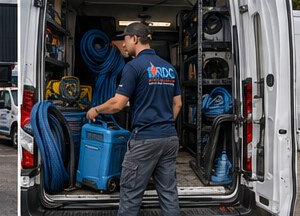
Homeowners can safely wipe down a small patch of surface mold — roughly a square meter or less — on a hard, non-porous surface. Call a professional the moment the situation involves contaminated water, an area larger than that, mold hidden behind walls or under floors, HVAC involvement, or anyone in the home experiencing health effects. Certified crews carry moisture meters, HEPA air scrubbers, commercial drying equipment, and containment barriers that keep spores from spreading during the work — tools a homeowner simply does not have. Reputable remediation follows IICRC standards for containment, removal, and verification, so the job is measured against an industry benchmark rather than guesswork. Just as important, a pro finds and fixes the moisture source so the colony does not grow back.
How RDC Restoration resolves mold across New Jersey
RDC Restoration inspects, tests, and remediates mold for homes and businesses in all 21 New Jersey counties. Founder Russell Calderone brings 27 years of hands-on experience and holds IICRC (WRT and ASD), NORMI, and AHERA credentials, so your project is handled to recognized standards from assessment through clearance. Because we dispatch from two central hubs — Berkeley Heights in Union County and Piscataway in Middlesex County — a certified crew reaches most New Jersey addresses quickly, which keeps damage containable and cost down. We contain the work area, remove affected material, dry and treat the space, correct the underlying moisture, and document everything. RDC is BBB A-rated with a 4.9-star reputation, and we bill your insurance carrier directly wherever possible. If mold is affecting your family’s health, call (908) 253-9000 any time — the line is answered 24/7.
Key takeaways
- Allergy symptoms that ease when you leave home often point to hidden mold
- New Jersey humidity makes basements, ducts, and bathrooms prime mold spots
- Fix the moisture source — not just the visible mold — for lasting relief
- Call a certified pro for hidden, large, or health-related mold
- RDC serves all 21 NJ counties 24/7 — (908) 253-9000
Suspect mold is making your family sick? RDC Restoration answers 24/7 across New Jersey.
Quick answers
Frequently asked questions
Can household mold really cause allergy symptoms?
Yes. Mold releases spores that trigger allergic reactions — sneezing, congestion, itchy eyes, coughing, and asthma flares — in sensitized people. The clue is that mold allergy symptoms improve when you leave home and return when you come back.
How do I know if the mold is hidden in my walls or ducts?
A musty odor with no visible mold, symptoms that worsen when the HVAC runs, and a history of leaks or a damp basement all suggest a hidden source. A professional inspection and air-quality test confirm it and locate the moisture behind it.
Does RDC Restoration handle mold remediation in my New Jersey town?
Yes — RDC serves all 21 New Jersey counties for mold inspection and remediation, dispatched 24/7 from Berkeley Heights and Piscataway. Call (908) 253-9000.
Will fixing the mold stop my symptoms for good?
Only if the moisture source is corrected too. Cleaning visible mold without addressing the leak, humidity, or waterproofing issue that feeds it usually lets the colony — and the symptoms — come back.
Does RDC bill my insurance for mold work?
RDC documents the loss thoroughly and bills your carrier directly wherever possible, which helps strengthen and speed your claim.
New Jersey’s trusted restoration team.
Water, fire, or mold trouble? RDC Restoration dispatches the nearest crew 24/7, statewide. See our service areas.