
RDC Restoration Blog · New Jersey
Spring Thaw Basement Flooding in NJ: Causes, Prevention & Fixes
Spring thaw basement flooding is the most predictable water problem we see all year in New Jersey. Every March, the snow melts, the first warm rains arrive, and basements that were bone dry all winter suddenly take on water. The cause is clear, and so are the defenses.
After 27 springs of pumping out Union, Middlesex, Morris, Somerset, and Hunterdon county basements, I can tell you this is not bad luck. It is physics stacking up against your foundation on a schedule. Understand why it happens and you can get ahead of it instead of mopping up after it. For general preparedness, see Ready.gov’s flood guidance — then call RDC Restoration at (908) 253-9000 for hands-on help here in New Jersey.
Why spring is the wet-basement season in New Jersey
Spring flooding is not one thing going wrong — it is several forces landing on your foundation at the same time as winter breaks:
- Snowpack melts. Weeks of accumulated snow release all their stored water into the ground over just a few warm days.
- The ground is still frozen underneath. The top few inches thaw first, so meltwater cannot soak deep. It runs sideways and pools against your foundation instead.
- Spring rains pile on. March and April bring New Jersey’s reliably heavy rains right on top of the melt, with nowhere for the water to go.
- The water table rises. All that water lifts the groundwater level until it presses against — and through — your basement walls and floor.
The result is saturated soil wrapping your entire foundation, and saturated soil is the setup for trouble. We cover the season broadly in spring flooding risks for NJ homeowners, but the basement is almost always where it hits first and hardest.
The real force: hydrostatic pressure
When the soil around your foundation fills with water, that water has weight, and it pushes. This is hydrostatic pressure, and it is the single biggest reason basements leak during the thaw. The pressure finds every weak point at once — forcing water up through the cove joint where the wall meets the floor, through foundation wall cracks, and up through the slab itself. A basement that stayed perfectly dry all winter under low groundwater can leak the moment that pressure builds. It is the same mechanism behind why a basement floods every time it rains, only amplified by an entire winter’s worth of melting snow arriving at once.
Why New Jersey homes are especially exposed
A few local realities make spring thaw basement flooding worse across our service area. Much of the state sits on dense, clay-heavy soil that holds water rather than draining it, so meltwater lingers against the foundation for days. Repeated winter freeze-thaw cycles work existing hairline cracks wider each year, opening new paths for water. And New Jersey’s older housing stock — block and stone foundations, aging slabs, cove joints that were never sealed — simply has more entry points than newer poured-wall construction. None of these problems announce themselves in January. They wait for the thaw.
What you can do before the thaw
The best time to prepare is late winter, before the melt starts. These steps are homeowner-friendly and genuinely reduce how much water reaches your walls:
- Move snow away from the foundation. Shovel it several feet out so the melt does not drain straight down your wall.
- Clear gutters and extend downspouts. Melting roof snow needs to be carried well away from the house, not dumped at the foundation.
- Check your grading. Soil should slope away from the house. Settled, negative grading channels meltwater right to the wall.
- Test your sump pump now. Spring is when it earns its keep. Confirm it runs and that it has a battery backup for the storms that ride in with the thaw — see our maintenance checklist.
- Watch the warm-up forecast. A rapid thaw stacked on top of rain is the highest-risk pattern. Know where your water shutoff and pump breaker are before you need them.
The permanent fix is drainage, not towels
Surface prep helps, but if hydrostatic pressure is pushing groundwater up through your floor, no amount of downspout work fully solves it. The lasting answer is a system that relieves the pressure and gives the water a controlled path out: an interior French drain around the perimeter feeding a reliable sump pump, plus sealing the cracks and joints where water enters. That is the core of professional basement waterproofing, and it is what turns a basement that floods every spring into one that stays dry for good.
How RDC handles spring thaw basement flooding
When we respond to a wet basement, we work a repeatable process rather than just pushing water around. Our crews are IICRC-certified and follow the IICRC standards for water damage and structural drying:
- Inspect and find the source. We map where water is entering — cove joint, cracks, slab, or a failed pump — before we start drying, so the fix actually addresses the cause.
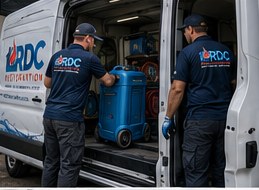
- Extract and dry. Standing water comes out first, then commercial air movers and dehumidifiers bring the space back to a dry standard. This is the heart of professional water damage restoration.
- Check for mold. Because wet materials can begin growing mold within about 48 hours, we assess porous materials and, when needed, move into mold remediation rather than sealing a problem behind the wall.
- Recommend a permanent defense. Once you are dry, we lay out the waterproofing that keeps next spring’s thaw outside where it belongs.
We answer 24/7 and serve all 21 New Jersey counties from dispatch hubs in Berkeley Heights and Piscataway, so a crew is never far. See our full service areas, and learn more about RDC Restoration and our BBB A-rating.
If your basement is already wet
When spring water is already on the floor, the priority is getting it out and dried before mold takes hold — the same 48-hour clock that governs every water event. See how long it takes to dry a flooded basement for realistic expectations, then get a crew moving. Homeowners in our core counties can start with Morris County, Somerset County, or Hunterdon County. RDC bills insurance directly and gives free inspections, so the fastest first step is simply calling (908) 253-9000.
Frequently asked questions
Why does my basement flood in the spring?
Melting snow plus spring rain saturates the soil while the deeper ground is still frozen, so water pools against your foundation and the water table rises. That builds hydrostatic pressure that pushes water in through cracks, the cove joint, and the floor — even in a basement that was dry all winter.
How do I prevent spring thaw basement flooding?
Move snow away from the foundation, clear gutters and extend downspouts, fix grading that slopes toward the house, and make sure your sump pump works and has a battery backup. For recurring flooding, an interior French drain feeding a sump pump is the permanent fix.
Is spring basement water an emergency?
Any standing water should be dried within about 48 hours to prevent mold. It may not be a middle-of-the-night emergency, but it should not wait either. Call (908) 253-9000 for a fast response anywhere in New Jersey.
Will a sump pump alone stop spring flooding?
A sump pump is essential but only handles water that reaches the pit. If pressure is pushing water through the walls and floor, you also need perimeter drainage and crack sealing. Together they keep a basement dry through the thaw.
Does RDC serve my part of New Jersey?
Yes. RDC Restoration serves all 21 New Jersey counties from hubs in Berkeley Heights and Piscataway, with 24/7 dispatch and IICRC-certified crews. Check the service areas page or just call to confirm coverage for your town.
Water, fire, or mold damage in New Jersey?
RDC Restoration answers 24/7 with certified crews from Berkeley Heights & Piscataway — fast response, direct insurance billing.