
RDC Restoration Blog · New Jersey
How Long Does It Take To Dry Out a Flooded Basement?
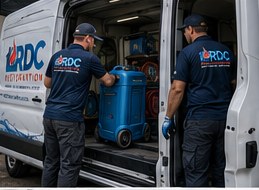
A flooded basement in New Jersey typically takes three to five days to dry out completely with professional equipment, though heavily saturated concrete, framing, and insulation can push that timeline longer. Real drying is a measured process, not a guess. Fans blowing across a wet floor feel productive, but genuinely drying a basement combines water extraction, high-velocity air movers, and commercial dehumidifiers — all verified with moisture meters before the equipment comes out.
How long it takes to dry out a flooded basement
There is no single magic number, because a flooded basement holds water in more places than you can see. On average, a professionally dried basement reaches a stable, safe moisture level in three to five days. A shallow, clean-water flood over a sealed concrete slab may be dry in two to three days. A deeper flood that soaked drywall, wall cavities, insulation, and wood framing can take a week or more — especially when unsalvageable materials have to be removed before the structure can be rebuilt. Humid New Jersey summers slow evaporation, while a cold, dry basement in winter can actually release moisture faster. What matters is never how the surface feels, but what a moisture meter reads deep inside the materials. Concrete and framing routinely test wet long after the floor looks bone dry, and sealing a basement up too early is the single most common reason mold returns within days.
The professional drying process, step by step
RDC Restoration follows a repeatable, standards-based sequence on every flooded basement we handle across New Jersey. Our technicians are IICRC-certified in Water Damage Restoration (WRT) and Applied Structural Drying (ASD), so the same disciplined method is used whether it is a finished rec room or a bare utility cellar:
- Extraction. Standing water is pumped and vacuumed out first. Every hour it sits, water wicks deeper into porous materials, so fast removal shortens the whole timeline.
- Remove what cannot be saved. Soaked carpet padding, swollen baseboard, and contaminated drywall are cut out and bagged so trapped moisture cannot feed mold behind a wall.
- Air movement. High-velocity air movers are positioned to sweep airflow across floors, walls, and cavities, pulling moisture off surfaces and into the air.
- Dehumidification. Commercial dehumidifiers then wring that airborne moisture out of the room and exhaust it away, so the water actually leaves the basement instead of resettling.
- Daily monitoring. A technician returns to log moisture-meter and humidity readings each day, adjusting equipment placement as the numbers fall.
- Clearance. Equipment is not pulled until readings match a dry, unaffected baseline — documented, not eyeballed.
What affects flooded basement drying time in New Jersey
Two floods on the same street can dry on very different schedules. The biggest variables we see are:
- Category of water. Clean supply-line water dries faster and safer than groundwater or sewage backup, which requires containment and disinfection.
- Volume and depth. An inch across the slab is a different job than knee-deep water that reached outlets and framing.
- Materials involved. Sealed concrete releases water sooner than carpet, drywall, insulation, and wood, which hold it far longer.
- Ambient conditions. Muggy summer air slows drying; controlled dehumidification offsets it.
- How quickly work begins. The single biggest lever you control — every hour of delay lets water travel farther and adds drying time.
Why fast response matters
Drying a flooded basement is a race against the clock. Mold can begin to colonize wet materials within 24 to 48 hours, and once it is inside wall cavities it becomes a mold remediation job on top of the water cleanup. Because RDC Restoration dispatches around the clock from two central hubs — Berkeley Heights in Union County and Piscataway in Middlesex County — a certified crew reaches most New Jersey addresses while the damage is still containable. That speed protects your family’s health, saves salvageable materials, and keeps the total cost down. Our emergency line, (908) 253-9000, is answered 24/7, every day of the year.
What you can do before the crew arrives
While you wait for a technician, a few safe steps protect both your home and your claim:
- Shut off power to the basement at the panel if you can reach it dry — never wade into standing water near live outlets.
- Stay out of water that may be contaminated by sewage or fuel.
- Lift belongings, furniture, and electronics off the wet floor if it is safe to do so.
- Photograph and video everything before anything is moved — thorough documentation strengthens your water damage restoration insurance claim.
- Do not seal, paint, or re-carpet the space; trapping moisture only invites mold back.
When to call a professional
You can mop up a minor drip yourself, but call a professional the moment a flood involves contaminated water, a large area, hidden moisture behind walls or under floors, or any health concern. Certified crews carry moisture meters, truck-mounted extraction, and containment gear a homeowner does not have — and, just as important, we trace the water back to its source. If the flooding keeps coming from foundation seepage or hydrostatic pressure, drying alone will not hold; that is where basement waterproofing stops the next flood before it starts.
What flooded basement dry-out costs in New Jersey
Pricing depends on the size of the affected area, how contaminated the water is, the materials involved, and how quickly work begins. A small, contained, clean-water job costs far less than a large or delayed one, because waiting spreads damage and adds mold work to the bill. RDC Restoration gives free, itemized on-site estimates, and on covered losses we bill your insurance carrier directly and document the loss thoroughly so you are not guessing at the numbers. We serve all 21 New Jersey counties — see our service areas to confirm coverage in your town.
Key takeaways
- Most flooded basements dry in three to five days with professional equipment
- Trust moisture meters, not how the surface feels, before sealing up
- Act fast — mold can start within 24 to 48 hours
- Document everything for your insurance claim
- Fix the water source, not just the symptom
Dealing with a flooded basement in New Jersey right now? RDC Restoration answers 24/7.
Frequently asked questions
How long does it take to dry out a flooded basement?
Most flooded basements dry in three to five days with professional extraction, air movers, and dehumidifiers. Shallow clean-water floods can be dry in two to three days, while deeply saturated framing and drywall may take a week or more.
Can I just use fans and a household dehumidifier?
Fans move surface air but cannot pull water out of concrete, insulation, and wall cavities the way commercial equipment does. Relying on them alone is the most common reason a basement re-grows mold after it appears dry.
How fast can RDC reach my New Jersey home?
RDC dispatches 24/7 from Berkeley Heights and Piscataway and typically reaches nearby New Jersey towns within about an hour, day or night. Call (908) 253-9000.
Will my insurance cover a flooded basement?
Coverage depends on your policy and the cause of loss. RDC documents the damage thoroughly, provides a free itemized estimate, and bills your carrier directly wherever possible.
How do I know the basement is really dry?
A basement is dry when moisture-meter and humidity readings inside the materials match an unaffected baseline — not when the floor simply looks or feels dry. RDC verifies those numbers before removing equipment.
New Jersey’s trusted restoration team.
A flooded basement, fire, or mold trouble? RDC Restoration dispatches the nearest certified crew 24/7, statewide. Call (908) 253-9000 or request a free estimate and we will help you dry it out fast.