
RDC Restoration Blog · New Jersey
Why Your New Jersey Basement Floods When It Rains
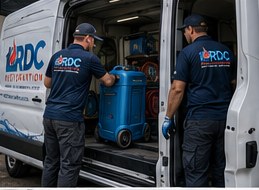
If your basement floods when it rains, the water is almost never the real problem — it is a symptom of how water moves around and under your foundation. In New Jersey, a basement that takes on water with every storm is telling you that groundwater has nowhere better to go, so it pushes through the path of least resistance: a crack, a cold joint, or the seam where your floor meets the wall. After 27 years of pumping out and drying out homes across all 21 counties, the RDC Restoration team can usually name the cause before we reach the bottom of the stairs.
Why a basement floods when it rains in New Jersey
When rain saturates the soil around your home, that soil holds water like a sponge. As the water table rises, it presses against your foundation walls and slab from every direction. That force is called hydrostatic pressure, and it is relentless — it does not need a large opening to get inside, just any opening at all. New Jersey makes this worse than most states because so much of our ground is dense clay that drains slowly, and many of our homes were built decades before interior drainage was standard. So the rain falls, the ground swells, the pressure climbs, and your basement floods again.
The key point is that a wet basement is a drainage design problem, not a cleaning problem — until you give the groundwater a managed route away from the house, the next real storm brings it right back.
The most common causes we find in NJ homes
No two basements flood for exactly the same reason, but the culprits fall into a short list. When we inspect a home, we are usually looking for one or more of these:
- A high or seasonal water table. Low-lying lots and neighborhoods near rivers, wetlands, or the coast sit close to groundwater that rises fast during storms.
- Clay soil and poor grading. If the ground slopes toward the house instead of away from it, rain is funneled straight to the foundation.
- Clogged gutters and short downspouts. Overflowing gutters or downspouts that dump right beside the wall can drop thousands of gallons at the foundation in a single storm.
- Foundation cracks and cold joints. Hairline cracks and the seam between the wall and the floor are the most common entry points under pressure.
- A failed, undersized, or missing sump pump. Many older homes have no sump system at all, and the ones that do often have a pump that cannot keep up or has no battery backup for a power outage.
- No interior drainage. Plenty of NJ basements were finished without a French drain, so the water has no channel to reach the pump.
Very often it is a combination — a heavy clay lot, a downspout emptying at the corner, and a sump pump that gave out three storms ago. Diagnosing the mix correctly is what separates a fix that lasts from one that fails by next spring.
How to tell where the water is getting in
Before the next storm, walk your basement in daylight and look for the story the water leaves behind. A few honest minutes of inspection tells you a lot:
- Follow the stains. Water tracks down from where it enters, so a mineral streak on a wall usually points to a crack above it.
- Check the wall-floor joint. If water pools along that seam first, hydrostatic pressure is pushing up through the base of the wall.
- Look for efflorescence — the chalky white powder on masonry — which marks where moisture has been moving through the block or concrete.
- Note whether it floods during the rain or a day after. Immediate flooding often means surface water and grading; delayed flooding usually means a rising water table.
If you are not sure what you are seeing, that is what a professional inspection is for — we map the entry points and the water table so the fix targets the real source.
What you can do before the next storm
Some of the most effective first steps cost little and buy you time. Start here:
- Clean your gutters and extend every downspout at least four to six feet away from the foundation.
- Regrade the soil next to the house so it slopes away, not toward, the walls.
- Test your sump pump by pouring a bucket of water into the pit — it should switch on, discharge, and shut off cleanly.
- Seal small, visible foundation cracks, understanding this is a stopgap, not a cure for pressure-driven water.
- Add a battery backup or water-powered backup so a storm that knocks out power does not also knock out your pump.
These measures reduce how much water reaches the foundation, but if your basement floods when it rains no matter what you try above ground, the water table is the driver and you need an interior system to manage it.
The lasting fix: how professional waterproofing works
A properly engineered basement waterproofing system does not try to hold water back with pressure it will always lose to. Instead, it collects the water that gets in and moves it out on purpose. A complete interior system usually combines an interior French drain installed at the footing to intercept water, a reliable sump pump and basin sized to your home with battery backup, crack and joint sealing at known entry points, and corrected exterior grading and downspouts to cut the volume arriving at the wall. Designed together and matched to your specific water table, these pieces keep the basement dry through the storms that used to flood it.
At RDC we build the system to the home, not from a template. We inspect first, identify the actual causes, and follow IICRC standards for the work — the same industry standards our technicians are certified in. That is how a fix holds up season after season instead of failing the first time the water table spikes.
Basement flooding in New Jersey right now? RDC Restoration answers 24/7.
When flooding becomes water damage or mold
A basement that floods repeatedly quietly damages the structure and the air you breathe. Soaked drywall, insulation, and stored belongings break down, and once organic material stays wet for 24 to 48 hours, mold can take hold. If a storm has already left standing water or ruined finishes, our water damage restoration crews extract, dry, and restore the space; if you see or smell mold along the walls, our mold remediation team handles it safely. Because RDC bills insurance directly, a covered flood does not have to become an out-of-pocket ordeal.
Why New Jersey homeowners call RDC Restoration
RDC Restoration is a local, owner-operated team that has spent 27 years solving wet-basement problems across the state. We keep dispatch hubs in Berkeley Heights (Union County) and Piscataway (Middlesex County) so a crew can reach every one of New Jersey’s 21 counties quickly — see our service areas for coverage near you. Our technicians hold IICRC certifications in Water Damage Restoration (WRT) and Applied Structural Drying (ASD), along with NORMI and AHERA credentials, and we carry a BBB A rating and a 4.9-star reputation. When your basement floods when it rains, you are not calling a call center — you are reaching the people who will stand in your basement and fix it.
Frequently asked questions
Why does my basement flood only when it rains hard?
Light rain may not raise the water table enough to force water inside, but a heavy or sustained storm saturates the soil and drives hydrostatic pressure past the point your foundation can hold back. That threshold is the moment a vulnerable crack or joint starts to leak.
Can I fix a flooding basement myself?
You can reduce the risk by cleaning gutters, extending downspouts, improving grading, and maintaining your sump pump. But if water is coming up through the floor or the wall-floor joint, that is pressure-driven groundwater, and it takes an interior drainage system to manage it for good.
Is basement waterproofing worth it?
For most New Jersey homes, yes. It protects the foundation, prevents recurring water damage and mold, and turns a basement you cannot trust into usable, dry space. Many homeowners see it prove its value in the very first storm season.
How long does an interior waterproofing system take to install?
Most interior systems are installed in one to two days, depending on the size of the basement and the scope of drainage and grading work involved. We give you a clear timeline after the inspection.
How fast can RDC respond to a flooded basement?
Our emergency line is staffed 24/7, and with hubs in Berkeley Heights and Piscataway we dispatch the nearest available crew statewide. Call (908) 253-9000 and we will get someone moving toward you.
Tired of watching your basement flood every time it rains? RDC Restoration will find the real cause and design a system that keeps it dry for good. Call (908) 253-9000 any time, day or night, or request a free estimate and we will take it from there.
New Jersey’s trusted restoration team.
Water, fire, or mold trouble? RDC Restoration dispatches the nearest crew 24/7, statewide.