
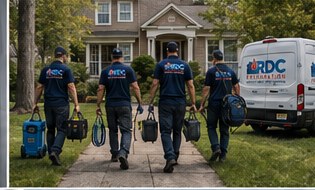
Basement Waterproofing · Waterproofing Solution
Sump-Pump Systems & Battery Backup
A sump pump is the heart of a dry basement — it collects the water your drainage system gathers and pushes it out of the house. The difference between a wet basement and a dry one is often whether that pump runs when the storm hits.
Quick answer: A sump pump system is a basin set into the lowest point of your basement floor with a pump that automatically switches on and discharges collected water away from the foundation. Paired with a battery backup, it keeps working during the heavy storms and power outages that flood basements. It is the engine behind almost every interior waterproofing system.
What a sump pump system does
Everything a waterproofing system collects has to go somewhere. An interior French drain gathers water from around your foundation, but the drain alone cannot lift water out of a basement that sits below grade. That job belongs to the sump pump. Water flows into a basin dug into the lowest point of the floor, a float switch senses the level rising, the pump kicks on, and it pushes the water up a discharge line and out well away from the house.
When people say their basement flooded, the failure is very often not the drainage — it is the pump. A dead pump, a stuck float, or a power outage during the exact storm that produces the water is the most common way a "waterproofed" basement still ends up wet. That is why a real sump pump system is about redundancy, not just a single pump in a hole.
The parts of a complete sump pump system
The basin and primary pump
A properly sized basin at the low point, with a submersible primary pump matched to how much water your basement actually produces during a heavy storm.
Battery backup
The single most important upgrade. Storms cause both the water and the power outage. A battery backup pump keeps discharging when the grid goes down.
Check valve and discharge
A check valve stops pumped water from draining back into the basin, and the discharge line carries water far enough from the foundation that it does not simply circle back.
Alarm and monitoring
A high-water alarm, or on some systems remote monitoring, tells you the moment the primary pump falls behind — before you find water on the floor.
When a sump pump system is the right fix
If you have a rising water table, chronic perimeter seepage, or an existing French drain, you need a dependable sump pump system — it is not optional, it is the discharge engine for the whole approach. It is also the fix when your current pump is old, undersized, or has already failed. Recurring flooding in the same spot with an aging pump is almost always a sump pump failure problem, not a drainage problem.
A sump pump is not the answer when water is entering high on the wall from bad grading or overflowing gutters, or when a single crack is the whole story. A pump manages water that has already reached the basement; it does nothing about water you could have kept outside in the first place.
How RDC installs and sizes a sump system
Measure the real load
We look at where the water comes from, how fast it arrives in a heavy storm, and how far up it has to be lifted. That determines pump horsepower and basin size — an undersized pump that cannot keep up is as good as no pump.
Set the basin correctly
The basin goes at the true low point and ties into the drainage so water reaches it. On a full interior system, the basin is the destination the perimeter drain pitches toward.
Add redundancy
We install a battery backup pump and a check valve, and route the discharge far enough from the foundation that the water does not soak right back into the soil against your walls.
Test under load
Before we leave, we run the system, verify the float, the backup, and the alarm all trigger correctly, and confirm the discharge actually carries water away.
Maintenance: the part that keeps you dry
A sump pump is a mechanical device that runs hardest exactly when you are counting on it. Simple upkeep prevents almost every failure.
- Test the pump two or three times a year by pouring a bucket of water into the basin and watching it cycle.
- Make sure the float can move freely and is not hung up on the basin wall or debris.
- Check the battery backup at least annually and know the age of the battery — they do not last forever.
- Keep the discharge line clear and, in winter, protected from freezing at the outlet.
- Know your pump's age. Most primary pumps have a service life measured in years, not decades — replace before it fails, not after.
Why RDC for your sump pump system
For more than 27 years RDC Restoration has kept New Jersey basements dry, with over 1,000 five-star reviews, IICRC certification, NORMI and AHERA credentials, and a BBB A rating. We serve the whole state from Berkeley Heights and Piscataway. Because we also handle water damage and mold remediation, we know exactly what happens when a pump fails — and we size and back up your system so it does not. Every installation starts with a free inspection and a written price. If your existing pump is fine and just needs a backup, that is what we will recommend.
Common questions
Sump-Pump Systems & Battery Backup — FAQs
Do I really need a battery backup sump pump?
In New Jersey, yes. The storms that produce the most water are the same storms that knock out power, and a primary pump that runs on house current is useless during an outage. A battery backup is the single most valuable part of a sump pump system because it runs precisely when the grid is down and the water is peaking.
How long does a sump pump last?
A primary pump's usable life is typically measured in a handful of years, not decades, because it is a motor that runs on demand. The smart approach is to know your pump's age and replace it proactively rather than discovering it died during the storm that flooded your basement. Backup batteries have an even shorter service life and should be checked yearly.
What size sump pump do I need?
It depends on how much water your basement actually produces in a heavy storm and how high the pump has to lift it. An undersized pump that cannot keep pace with a real downpour will let the basement flood even though it is running. We size the pump to your home's measured water load during a free inspection rather than guessing.
Why does my sump pump run constantly?
Constant cycling usually means a high water table, a drainage system feeding it heavily, or a stuck float. Some of that is normal during and after big storms. If it runs nonstop in dry weather, the float or check valve may be failing, or the basin may be undersized. We diagnose the cause instead of just replacing the pump.
Where should the sump pump discharge?
Far enough from the foundation that the water does not soak back into the soil against your walls and return to the basin. A discharge line dumping right next to the house creates a loop that never ends. Proper grading and extension of the discharge line is part of a correct installation.
Can RDC add a backup to my existing sump pump?
Often, yes. If your primary pump is sound and correctly sized, adding a battery backup and alarm may be all you need. We will tell you honestly at the free inspection whether your current setup is worth keeping or whether the whole system should be replaced.
Related
More on keeping your basement dry
Local basement waterproofing
Get it fixed in your New Jersey county
RDC Restoration diagnoses and waterproofs basements across northern & central New Jersey — free inspection, warrantied work. Find your county:
Wet basement? Get a free inspection.
RDC Restoration finds the real source of the water and fixes it for good — interior drains, sump systems, crack repair, and sealing, all warrantied.