
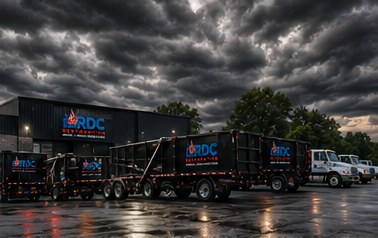
Jersey City, NJ · Hudson County · Storm Damage
Storm Damage Restoration in Jersey City, NJ
RDC Restoration delivers storm damage restoration in Jersey City for homes, apartment buildings and businesses hit by nor'easters, tropical rain, tidal flooding and summer thunderstorms. IICRC-certified crews tarp roofs, board up broken windows, extract floodwater, clear storm debris and dry the structure, then document the loss for your insurer and contractor.
- Emergency roof tarping
- Floodwater extraction
- Storm board-up
- Insurance documentation
Quick answer
RDC Restoration responds to storm damage anywhere in Jersey City, 24/7. Crews dispatch from the Berkeley Heights hub to tarp roof openings, board up broken windows and doors, pump out floodwater and sewer backups, clear storm debris, and dry the structure with commercial air movers and dehumidifiers. RDC documents everything and bills insurance directly. Call (908) 253-9000 when the weather turns.
Storm Damage in Jersey City
Storm Damage Restoration in Jersey City Between the Hudson and Newark Bay
Storm damage restoration in Jersey City means dealing with water coming from several directions at once. Wind-driven rain pushes through brownstone cornices and tower window frames, the combined sewer backs up into basements, and along the waterfront a high tide can stack up against the bulkheads while the rain is still falling. RDC Restoration helps property owners, landlords and condo boards get that water out, the debris cleared and the building closed up before the next band of rain arrives.
Much of the city sits on low, reclaimed land between the Hudson River and Newark Bay, so Downtown, Paulus Hook and the streets near Liberty State Park feel tidal flooding in a way the higher ground of The Heights does not. Inland neighborhoods are not spared, though. When heavy rain overwhelms the aging combined-sewer system, water comes up through floor drains and toilets in Journal Square walk-ups, Greenville two-families and Bergen-Lafayette row houses alike.
For 27+ years our crews have handled storm losses across New Jersey. We tarp roofs, board up openings, extract water, clear debris and dry the structure to standard. Storm damage restoration in Jersey City also means paperwork, since many claims involve a landlord, a condo association and tenants at once. We do not handle repairs, so once the building is dry and secure your contractor takes over with our full documentation. Learn more about our statewide storm damage restoration services.
More on Storm Damage Restoration →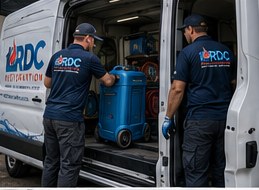
Local risks
Why Storms Hit Jersey City Properties Hard
Jersey City's geography and building stock create storm problems that a suburban town rarely sees. Tidal water, an old sewer system, flat roofs and tall exposed buildings all change how a single storm can affect one block compared with the next one over.
Tidal surge on the waterfront
Exchange Place, Paulus Hook and the Liberty State Park edge sit low beside the Hudson. When a coastal storm lines up with high tide, water can push into garages, lobbies and ground-floor units well before the rain stops.
Combined-sewer backups
Older neighborhoods drain stormwater and sewage through the same pipes. During intense rain the system surcharges, and contaminated water rises through basement drains. That is Category 3 water and must be removed and sanitized, not just mopped up.
Flat roofs on row houses
Many Downtown and Hamilton Park brownstones have flat or low-slope roofs with parapets and scuppers. Clogged drains and wind-lifted membranes let water pool and find its way into top-floor ceilings and stairwell skylights during heavy downpours.
Wind on high-rises
Towers along the Hudson take full exposure to nor'easter and tropical winds. Wind-driven rain can be forced through window seals, balcony doors and curtain-wall joints, soaking units several floors up where nobody expects water and nobody is home to notice it.
Street trees on tight blocks
Mature trees line streets in The Heights, around Lincoln Park and through residential Greenville. Saturated soil and gusts can drop limbs onto roofs, porches and parked cars, and break windows on houses set close to the sidewalk, which is common on older Jersey City blocks.
Power outages and sump pumps
Basements in older Jersey City homes often depend on a sump pump or ejector. When a storm knocks out power, the pump stops just as groundwater and backups peak, and the basement fills while you wait for the lights.
Jersey City
Flood Cleanup in Jersey City Basements, Garages and Lobbies
Flood cleanup in Jersey City starts with knowing what kind of water you have. Rain that comes through a window is clean water. Tidal water from the Hudson or Newark Bay carries salt and debris, and a combined-sewer backup is contaminated with sewage that has to be treated as a health hazard. Each one changes what can be saved and how the space must be cleaned and sanitized before it is safe to use again.
RDC pumps out standing water with truck-mounted and submersible equipment, removes saturated materials that cannot be dried, sanitizes affected surfaces and sets commercial air movers and dehumidifiers. We take daily moisture readings until the structure is dry to standard. If your basement floods every heavy rain, our basement waterproofing service in Jersey City can address the cause, and our article on water damage versus flood insurance in New Jersey explains which policy usually pays.
- Clean, salt and sewage water handled differently
- Truck-mounted and submersible extraction
- Sanitizing after sewer backups
- Daily moisture readings until dry
Jersey City
Emergency Roof Tarping in Jersey City After High Winds
Emergency roof tarping in Jersey City keeps a manageable leak from turning into collapsed ceilings and soaked insulation. A peeled-back membrane on a flat brownstone roof, a lifted section of shingles on a Greenville frame house or a hole punched by a falling limb will keep letting rain in for every storm that follows until it is covered.
RDC crews install weather-tight tarps over damaged roof sections and board up broken windows, skylights and doors. On attached buildings we watch for water traveling sideways into a neighbor's unit through shared walls. Tarping and board-up are temporary protection, built to hold through the next few storms until a roofer or general contractor makes permanent repairs. We photograph the damage before and after covering it so the insurer sees the original condition, and we dry out any rooms the rain already reached.
- Weather-tight tarps on flat and pitched roofs
- Board-up of windows, skylights and doors
- Before-and-after photos for the adjuster
- Interior drying where rain got in
Jersey City
Fallen Tree Damage in Jersey City Homes
Fallen tree damage in Jersey City is often a mix of broken structure and water. A heavy limb can crack a cornice, break through a porch roof or shatter front windows, and then the same storm pours rain through the opening. Because so many homes in The Heights and Greenville sit right on the sidewalk, a single street tree can affect two or three houses on the same block.
Once a tree service has removed the trunk and large limbs, RDC clears the broken glass, branches and ruined materials inside, tarps or boards up the opening, and extracts and dries the water that came in. We document the damage carefully, since the insurer will want to know whether the tree came from your lot, a neighbor's yard or the city's sidewalk strip. Your contractor handles the structural repairs, and our records give them a clear starting point.
- Debris and glass removal inside the home
- Tarping or board-up of the opening
- Water extraction and drying
- Documentation of where the tree came from
First steps
What to Do When a Storm Damages Your Jersey City Property
- Stay out of floodwater. Do not walk through water in a basement or garage if outlets, appliances or the electrical panel may be submerged. Sewer backups and tidal water also carry contaminants, so wait for the power to be shut off safely.
- Check upper floors too. In row houses and towers, look for stains on top-floor ceilings and around windows after wind-driven rain. Water often shows up far from where it entered, sometimes in a neighbor's unit first.
- Move what you can. If it is safe, carry rugs, electronics, documents and photos off wet floors. Put aluminum foil or blocks under furniture legs to keep wood from wicking water and staining carpet.
- Photograph before cleanup. Take wide and close photos of every damaged area, water lines on walls and fallen limbs before anything is moved. Clear pictures make the adjuster's job easier and speed up your claim.
- Call RDC 24/7. Call (908) 253-9000. Crews dispatch around the clock to tarp roofs, board up openings and extract water, and we coordinate directly with your insurance carrier so you are not stuck in the middle.
How we work
Our Storm Recovery Process in Jersey City
1. Secure the building
We tarp roof breaches and board up broken windows and doors so no more rain or wind gets inside. On busy streets we make sure the board-up also keeps the sidewalk safe for neighbors.
2. Inspect and classify
Technicians map wet areas with moisture meters and identify whether the water is clean, tidal or sewer-related. That classification decides what can be dried in place and what must be removed.
3. Extract and clear
Pumps and extractors remove standing water while crews clear branches, glass, mud and ruined materials. Sewer-affected areas are cleaned and sanitized before any drying equipment goes in, protecting both the crew and your family.
4. Dry and monitor
Commercial air movers and dehumidifiers dry floors, walls and framing. We record moisture readings every day and adjust equipment until each area is dry to standard, which keeps mold from taking hold.
5. Document and hand off
You receive photos, moisture logs and a record of removed materials. That package goes to your insurer and to the roofer or contractor you hire for permanent repairs, so nobody has to guess what happened.
Insurance
Storm Insurance in Jersey City: Wind Versus Flood
The biggest surprise for Jersey City property owners after a storm is that wind damage and flood damage are covered differently. A standard homeowner or commercial property policy usually covers wind, fallen trees and rain that enters through a storm-damaged roof or window. Rising water from the Hudson, Newark Bay or surface flooding generally requires a separate flood policy, and sewer backup often needs its own endorsement.
RDC Restoration documents the source of every drop: photos of the roof opening, water lines from tidal flooding, and evidence of sewer backup at floor drains. That record helps the adjuster sort the claim between policies. We bill carriers directly. If a sump pump failure caused the problem, our article on what to do when a sump pump fails in a storm walks through the next steps.
Full-service restoration
Other RDC services in Jersey City
Water Damage Restoration
Water Damage Restoration in Jersey City →Burst Pipe & Winter Water Damage
Burst Pipe & Winter Water Damage in Jersey City →Mold Remediation
Mold Remediation in Jersey City →Mold Inspection & Testing
Mold Inspection & Testing in Jersey City →Basement Waterproofing
Basement Waterproofing in Jersey City →Fire & Smoke Damage
Fire & Smoke Damage in Jersey City →Commercial Restoration
Commercial Restoration in Jersey City →Sewage Cleanup
About Sewage Cleanup →Asbestos Testing & Abatement
About Asbestos Testing & Abatement →Hoarding Cleanup
About Hoarding Cleanup →Jersey City FAQs
Storm Damage in Jersey City: common questions
Is sewer backup during a storm covered by insurance in Jersey City?
Often only if you have a sewer or drain backup endorsement. Because Jersey City's older neighborhoods use a combined sewer, heavy rain can push sewage into basements even when no flooding is visible outside. Check your policy now, before storm season. RDC documents backups clearly at the floor drain and fixtures so the adjuster can see the source and apply the right coverage.
Can RDC fix my roof after a storm?
RDC Restoration installs emergency tarps and board-up to stop more water from getting in, then dries the interior. Permanent roof repairs belong to a licensed roofer or your general contractor. We provide photos and documentation of the damage and the temporary protection so your roofer and insurer can move forward quickly with the permanent fix.
How do I know a big storm is coming to Hudson County?
Watch the forecasts and alerts from the National Weather Service, which issues coastal flood, wind and flash flood warnings for the Jersey City area. When a nor'easter or tropical system is forecast, clear roof drains and scuppers, move valuables up from the basement and test your sump pump and its backup.
Do you handle storm damage at businesses and apartment buildings?
Yes. We handle storm losses at storefronts, offices, warehouses and multifamily buildings, often scheduling around tenants, deliveries and opening times. See our page on commercial restoration in Jersey City for details. When freezing weather follows a storm, our burst pipe water damage service covers the winter side of things, from frozen sprinkler lines to ice dam leaks.
Do you respond to storm damage outside Jersey City?
Yes. Crews dispatch 24/7 across Hudson County from our Berkeley Heights hub, including storm damage restoration in Union City and storm damage restoration in West New York. Because many storm losses end up as water claims for basements and lower floors, we also handle water damage restoration throughout Hudson County too.
Storm Hit Your Jersey City Property?
For storm damage restoration in Jersey City, call (908) 253-9000. Crews dispatch 24/7 to tarp, board up, pump out floodwater and start drying your building.