Hoboken, NJ · Hudson County · Storm Damage
Storm Damage Restoration in Hoboken, NJ
RDC Restoration handles storm damage restoration in Hoboken, from flooded garden apartments in the southwest to wind-torn flat roofs and broken windows Uptown. IICRC-certified crews dispatch 24/7 from our Berkeley Heights hub to tarp, board up, extract water and dry your building, then document everything for your insurer.
- 24/7 Storm Dispatch
- Emergency Roof Tarping
- Flood & Backup Cleanup
- Direct Insurance Billing
Quick answer
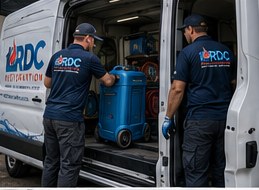
After a storm in Hoboken, NJ, RDC Restoration dispatches crews 24/7 to tarp damaged roofs, board up broken windows and doors, pump out floodwater and sewer backup, and dry the structure with commercial equipment. We monitor moisture to prevent mold, document the loss for wind and flood claims, and bill insurance directly. Call (908) 253-9000.
Storm Damage in Hoboken
Storm Damage Restoration in Hoboken's Low-Lying Neighborhoods
Storm damage restoration in Hoboken usually starts with water. The city sits in a bowl between the Hudson River and the Palisades, much of it on filled former marshland, so heavy rain has nowhere quick to go. When a downpour lines up with a high tide, the combined sewer system can back up through floor drains and toilets in basements and garden-level units, especially in Southwest Hoboken and through the interior of the grid.
Wind adds its own problems. Nor'easters and the remnants of tropical storms push rain sideways into brick facades, around old window frames and under rooftop bulkhead doors. Flat roofs on row houses and mid-rise condos can lose flashing or membrane edges, and a single open seam lets water travel down through every floor before anyone notices a stain. Waterfront high-rises face a different test, with river wind pressing on large glass walls and balcony doors.
RDC Restoration has worked New Jersey storms for 27+ years. Hoboken is covered by our Berkeley Heights hub, and crews dispatch 24/7 with tarps, board-up materials, pumps and drying equipment. We handle the emergency and mitigation work described on our storm damage restoration page: securing openings, removing water and debris, drying and documenting. Permanent roof, window and structural repairs go to your contractor, and we give them the photos, readings and records they need.
More on Storm Damage Restoration →
Local risks
Why Storms Hit Hoboken Harder Than Most Towns
Hoboken's geography does most of the damage. Low ground, an older combined sewer network and dense attached buildings mean a single storm can flood basements, overload drains and move water between units. Here is what we see most often across Uptown, Downtown and the southwest side of the city.
Southwest street flooding
The southwest corner of the city collects runoff from the rest of the grid. Streets there can flood quickly in a heavy storm, and water finds its way into ground-floor apartments, storage rooms and building lobbies through doors, vents and window wells.
Sewer backups at high tide
When the river is high, the combined sewer system has less room to drain. Rain plus a high tide can push sewage-contaminated water up through basement floor drains. That water is treated as Category 3 and needs disinfection, not just a mop.
Flat roofs and bulkheads
Most row houses and many condo buildings have flat roofs with rooftop decks, skylights and stair bulkheads. High winds lift membrane edges and loosen flashing, and wind-driven rain gets in at every seam and penetration.
Waterfront wind exposure
Buildings along the waterfront near Pier A and Sinatra Drive take the full force of wind coming across the Hudson. Large windows, balcony doors and facade joints on the river side are frequent entry points for driven rain.
Street trees and rear yards
Tree-lined blocks are part of Hoboken's charm, but saturated soil in small tree pits and rear yards gives roots little grip. Limbs and whole trees can come down on parked cars, stoops, fences and rear extensions.
Power outages and pumps
Basement sump and ejector pumps stop when the power goes out, and outages often arrive with the worst rain. A building that stays dry most of the year can flood quickly once its pump goes quiet, much like the freeze-ups behind burst pipe water damage in Hoboken each winter.
Hoboken
Flood Cleanup in Hoboken: Basements, Garden Units and Lobbies
Flood cleanup in Hoboken is rarely just clean rainwater. Water that comes in from the street carries road runoff, and water that backs up through drains may contain sewage. RDC classifies the water first, because that decides what can be dried and cleaned in place and what has to be removed. Carpet, pad and drywall touched by contaminated water usually come out; plaster and brick can often be cleaned and dried where they stand.
Crews pump out standing water, remove ruined materials, disinfect affected surfaces and set air movers and dehumidifiers. Moisture readings are logged daily until the structure is dry, which matters in Hoboken basements where the ground itself stays damp. Our storm flooding cleanup guide explains what is safe to handle yourself, and if your building floods again and again, our team for basement waterproofing in Hoboken can look at where the water gets in.
- Water classification before cleanup
- Sewage backup disinfection
- Removal of contaminated carpet and drywall
- Daily moisture monitoring
Hoboken
Emergency Roof Tarping in Hoboken for Flat and Pitched Roofs
Most roof tarping advice assumes a pitched suburban roof. Emergency roof tarping in Hoboken is often a different job: flat or low-slope roofs reached through a stair bulkhead or hatch, shared with neighbors on both sides, with decks, condensers and skylights in the way. Tarps have to be anchored without adding new holes and sealed so wind off the river cannot get underneath and peel them back.
RDC crews tarp damaged areas, cover broken skylights and secure bulkhead doors, then work inside to extract water that already came through ceilings. We photograph the damage before and after tarping for your claim. The tarp is a temporary measure that buys time; a licensed roofer handles the permanent repair. If water came through a top-floor ceiling, we also check the units below, since water in Hoboken's stacked buildings tends to travel downward fast.
- Tarps sized and anchored for flat roofs
- Skylight and bulkhead covers
- Interior extraction under the leak
- Photo documentation for the roofer and insurer
Hoboken
Fallen Tree Damage in Hoboken: Securing the Building Afterward
When a street tree or rear-yard tree comes down in a storm, the damage in Hoboken is usually close quarters: a limb through a front window, a crushed rear extension, or a trunk resting on a stoop and cornice. On narrow blocks, that can also block the entrance for everyone in the building. Fallen tree damage in Hoboken needs the opening closed quickly before the next band of rain arrives.
Once a tree service has cut and removed the tree, RDC boards up broken windows and doors, tarps any roof or wall openings, clears storm debris and glass, and dries out rooms where rain got in. We document the impact points so your insurer can see exactly where the damage came from. Structural repairs to walls, cornices or extensions belong to your contractor; we leave them a clean, dry and documented space to start from.
- Board-up of broken windows and doors
- Tarping of roof and wall openings
- Debris and glass cleanup
- Drying of rain-soaked rooms
First steps
What to Do After a Storm Damages Your Hoboken Property
- Stay out of floodwater. Do not walk through flooded basements or streets. Water in Hoboken's low areas can hide open drains and may contain sewage, and submerged outlets or appliances are a shock risk. Shut off basement power only if you can reach the panel safely.
- Photograph everything. Before anything is moved, take photos and video of water lines, damaged ceilings, broken windows and fallen limbs. Include the outside of the building and the street, since flood and wind claims often turn on where water came from.
- Call for help 24/7. Call RDC at (908) 253-9000. Crews dispatch 24/7 to tarp, board up and start pumping. Then report the loss to your insurer and, in a condo or rental, to the association or landlord.
- Protect what you can. Move furniture, documents and electronics off wet floors and up a level if you can do it safely. Put foil or blocks under furniture legs that must stay on damp carpet to limit staining.
- Don't seal it up wet. Resist the urge to paint over stains or close walls quickly. Hidden moisture behind plaster and drywall is how storm damage turns into mold weeks later in Hoboken's damp lower levels.
How we work
How RDC Restores a Storm-Damaged Hoboken Building
1. Emergency response
Crews dispatch 24/7 with tarps, plywood, pumps and drying gear. On arrival we check for safety hazards, find where water is entering and close off openings first so the damage stops growing inside the building.
2. Secure and tarp
Damaged roof sections, skylights and bulkheads are tarped, and broken windows and doors are boarded. On attached Hoboken buildings we keep shared roof areas, party walls and the neighbors' access in mind.
3. Extract and clean
Standing water is pumped out, debris is cleared, and materials soaked by contaminated floodwater or sewer backup are removed. Affected areas are then cleaned and disinfected before any drying equipment is set up.
4. Dry and monitor
Commercial air movers and dehumidifiers dry the structure to IICRC standards. We take moisture readings daily and adjust equipment until floors, walls and framing are back to normal for the building.
5. Document and hand off
You receive photos, moisture logs and a scope of the damage for your insurer. Your contractor or roofer works from the same records to plan and price the permanent repairs.
Insurance
Wind Claims vs Flood Claims in Hoboken
Storm claims in Hoboken often split in two. Standard homeowners and commercial policies usually cover sudden wind damage, fallen trees and rain that enters through a storm-created opening. Rising floodwater from the street is generally excluded and handled by a separate flood policy, and sewer backup coverage is often an endorsement that has to be added. Because one Hoboken building can see all three in a single storm, the documentation needs to show which water came from where.
During storm damage restoration in Hoboken, RDC photographs entry points, records water lines and labels damage by source so each adjuster sees their part clearly, and we bill carriers directly wherever possible. Our article on water damage vs flood insurance in New Jersey explains the difference in plain terms, and the National Weather Service posts flood and coastal warnings for the area.
Full-service restoration
Other RDC services in Hoboken
Water Damage Restoration
Water Damage Restoration in Hoboken →Burst Pipe & Winter Water Damage
Burst Pipe & Winter Water Damage in Hoboken →Mold Remediation
Mold Remediation in Hoboken →Mold Inspection & Testing
Mold Inspection & Testing in Hoboken →Basement Waterproofing
Basement Waterproofing in Hoboken →Fire & Smoke Damage
Fire & Smoke Damage in Hoboken →Commercial Restoration
Commercial Restoration in Hoboken →Sewage Cleanup
About Sewage Cleanup →Asbestos Testing & Abatement
About Asbestos Testing & Abatement →Hoarding Cleanup
About Hoarding Cleanup →Hoboken FAQs
Storm Damage in Hoboken: common questions
Is sewer backup during a storm treated differently from rainwater?
Yes. When Hoboken's combined sewer system backs up into a basement, the water is considered Category 3, meaning it may carry bacteria and other contaminants. Porous materials it touched usually have to be removed, and the area needs cleaning and disinfection before drying. RDC handles that work and separates it in the documentation, since insurers often treat backup differently from flood or rain.
Can you tarp a roof that I share with the buildings next door?
Yes. Many Hoboken row houses share roof lines and parapets with their neighbors. RDC tarps the damaged section of your roof and anchors it without relying on the neighbor's surface, and we note where the damage sits relative to the property line. If the neighbors also have damage, we can work with their insurer or property manager separately.
My garden-level apartment floods in every big storm. What can be done?
In the short term, RDC can extract the water, remove damaged materials, dry the space and check for mold. Longer term, the source matters: some units take water through doors and window wells, others through floor drains during high tide. Our water damage restoration team in Hoboken can document the pattern so the owner or landlord can plan a permanent fix.
Do you also handle storm damage to Hoboken shops and offices?
Yes. Flooded storefronts, restaurant basements and office suites need the same tarping, extraction and drying, planned around closing and reopening. See our commercial restoration services in Hoboken for how we stage work around a business. If lightning or a downed line started a fire, our Hoboken fire and smoke cleanup crews handle that as well.
Do you cover the rest of Hudson County after big storms?
Yes. The same crews that work Hoboken also provide storm damage restoration in Bayonne and storm damage restoration in West New York, plus Jersey City, Union City and Weehawken. For flooding anywhere in the area, see our Hudson County water damage restoration page or call (908) 253-9000 any time, day or night.
Storm Damage in Hoboken? Call RDC Now
Flooded basement, open roof or a tree through the window? RDC crews dispatch 24/7 across Hoboken to tarp, pump out and dry your building. Call (908) 253-9000.