
Secaucus, NJ · Hudson County · Storm Damage
Storm Damage Restoration in Secaucus, NJ
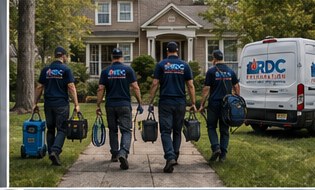
RDC Restoration handles storm damage restoration in Secaucus when nor'easters, tropical storms or summer downpours push water into homes and buildings across the Meadowlands. IICRC-certified crews tarp roofs, board up broken windows, extract floodwater and dry structures to standard, dispatching 24/7 from our Berkeley Heights hub.
- Emergency Roof Tarping
- 24/7 Storm Dispatch
- Floodwater Extraction
- Direct Insurance Billing
Quick answer
For storm damage restoration in Secaucus, NJ, RDC Restoration provides emergency roof tarping, board-up, floodwater extraction, structural drying, debris cleanup and mold prevention for homes and businesses. Crews dispatch 24/7 from Berkeley Heights, document the damage for your insurer and bill the carrier directly. Call (908) 253-9000 for help with wind, rain or flood damage anywhere in town.
Storm Damage in Secaucus
Storm Damage Restoration in Secaucus, Where Wind Meets Tidal Water
Storm damage restoration in Secaucus usually means dealing with wind and water at once. The town sits low in the Meadowlands, nearly surrounded by the tidal Hackensack River and its wetlands, so heavy rain has few places to go and storm surge can push river water inland. A nor'easter that only loosens shingles in hillier towns can leave Secaucus basements, garages and ground floors standing in water. Add saturated ground, mature trees on older residential streets and flat roofs across the warehouse districts, and one storm can cause several kinds of damage at the same address.
RDC Restoration has handled storm losses across New Jersey for 27+ years. Our IICRC-certified crews tarp damaged roofs, board up broken windows and doors, extract floodwater and dry the structure, and our NORMI-credentialed technicians watch for the mold that follows. Secaucus is served from our Berkeley Heights hub as part of our water damage restoration coverage throughout Hudson County.
Every storm call here is a little different. A home near Mill Creek may be fighting rising groundwater and a sump pump that quit, while an office near Harmon Meadow may have wind-driven rain coming through a torn roof membrane. We deal with both the opening and the water, and we stop at mitigation. Roof, window and framing repairs go to your contractor, with our documentation in hand. Our storm damage restoration services page covers the full scope.
More on Storm Damage Restoration →
Local risks
Why Storms Hit Secaucus Harder Than Most Towns
Secaucus was largely built on drained marsh and reclaimed meadow barely above sea level. That means the same storm that brings an ordinary soaking inland can bring ponded streets, tidal backup and wet basements here. These are the storm patterns our crews deal with most often in town.
Nor'easters and tidal backup
Long nor'easters pair steady wind-driven rain with onshore winds that push the tide up the Hackensack River. When high tide lines up with heavy rain, storm drains have nowhere to empty, and water backs up into low streets, yards and basements.
Hurricanes and tropical remnants
Late-summer and fall tropical systems can drop heavy rain over the Meadowlands in a single day and drive storm surge up the river. Low-lying blocks near Mill Creek and along the marsh edges are usually the first to take on water.
Summer thunderstorms
Fast summer storms dump a lot of rain in a short burst. On the flat, paved stretches around Harmon Meadow and the warehouse districts, water ponds quickly and can reach loading docks, ground-floor units and storefronts before the drains catch up.
Wind-driven rain and roof openings
Strong gusts lift shingles, peel flat-roof membranes and break windows. Rain blown sideways gets behind siding and window frames and soaks insulation and drywall inside the walls, where it is hard to see. Tarping and board-up stop the water at the opening.
Fallen trees and limbs
Older residential streets near County Avenue have mature trees that can drop large limbs on roofs, porches and cars when the soil is saturated and the wind picks up. A limb through the roof turns a wind event into a water event the next time it rains.
Power outages and sump pumps
With a high water table, many Secaucus basements rely on sump pumps. When a storm knocks out power, those pumps stop exactly when groundwater is rising. A battery backup helps, but plenty of basements flood during an outage before the lights come back on.
Secaucus
Flood Cleanup in Secaucus Basements, Garages and Ground Floors
Flood cleanup in Secaucus usually involves water from more than one direction: rain ponding on the surface, groundwater pushing up through slabs and foundation walls, and during surge events, river water backing in from the Hackensack and its creeks. Outdoor floodwater is treated as contaminated, so carpet, padding and other porous materials it touches usually have to come out. Drywall gets cut above the water line so the cavities behind it can dry.
RDC Restoration extracts standing water with truck-mounted and submersible pumps, removes soaked materials that cannot be saved, cleans and sanitizes affected surfaces, and dries the structure with commercial air movers and dehumidifiers. Moisture readings are taken daily until the building reaches dry standard. Our guide to cleaning up after storm flooding covers the safety basics. Homes that take on groundwater every season may want to look at basement waterproofing in Secaucus.
- Truck-mounted and submersible extraction
- Contaminated materials removed, surfaces sanitized
- Daily moisture readings to dry standard
- Mold prevention for slow-drying lower levels
Secaucus
Emergency Roof Tarping in Secaucus to Stop Water at the Opening
A torn run of shingles or a punctured flat roof lets rain in every time it storms until it is covered. Secaucus has pitched roofs on its older homes and townhouses, and large flat roofs on warehouses, retail buildings and apartment complexes. Both need a weather-tight temporary cover until a roofer can make permanent repairs, which is why emergency roof tarping in Secaucus is often the first thing our crew does on site.
We install heavy-duty tarps secured to sound framing, board up broken windows and doors, and then turn to the water that already got in: wet attic insulation, ceiling drywall and wall cavities. We are not roofers, so the permanent roof work stays with your roofing contractor. If the leak came from a winter ice dam instead, see our page on winter and burst pipe water damage in Secaucus. Large flat-roof leaks at businesses are handled by our commercial restoration crews in Secaucus.
- Weather-tight tarps on pitched and flat roofs
- Board-up of broken windows and doors
- Wet attic insulation and ceilings addressed
- Photos of every opening for your claim
Secaucus
Fallen Tree Damage in Secaucus Homes and Yards
When a tree or a heavy limb comes down on a house, safety comes first: downed power lines, cracked framing and broken glass. Stay out of rooms under the impact point and call the utility if lines are involved. Once a tree service has lifted the trunk and heavy limbs off the roof, the opening needs to be closed quickly.
RDC Restoration tarps the roof opening, boards up broken windows and doors, clears branches, glass and storm debris from inside, and dries any rain that came through the hole. Saturated ground after a long storm is when trees on older Secaucus streets are most likely to fail, so rain is often already in the walls by the time the tree is removed. We document fallen tree damage in Secaucus in detail so your insurer and contractor can see exactly what the tree hit.
- Roof and wall openings tarped and boarded
- Debris and broken glass cleared indoors
- Rainwater dried before mold sets in
- Detailed photos for the claim
First steps
What to Do Right After a Storm Damages Your Secaucus Property
- Stay out of floodwater. Do not wade through flooded basements or streets. Floodwater can hide debris, carry sewage and conceal live electrical hazards. If water is near outlets or the electrical panel, keep clear and have the utility or an electrician shut the power off safely.
- Check weather alerts first. Before going outside to inspect, check current alerts from the National Weather Service. In Secaucus, flooding can peak with the tide after the rain stops, so water may keep rising for a while after the storm itself has passed.
- Document the damage. Photograph roof damage, broken windows, fallen trees and the water line on your walls before cleanup. Note where water came in and how high it reached. These photos are your strongest evidence for both a wind claim and a flood claim.
- Call for tarping and board-up. Call RDC Restoration at (908) 253-9000. Crews dispatch 24/7 to tarp roofs, board up openings and start extraction. Closing up the building quickly limits further damage, which insurers expect owners to do.
- Move valuables up and out. If it is safe, move documents, electronics and keepsakes off basement floors and away from wet walls, and lift furniture onto blocks. Do not try to pump out a deeply flooded basement while groundwater outside is still high.
How we work
Our Storm Damage Restoration in Secaucus, Step by Step
1. Emergency response
Our crew arrives with tarps, board-up materials and extraction equipment, secures the openings and documents the damage. We pin down whether water came from the roof, the windows, the ground or the river, since each is handled differently.
2. Extraction and debris
Pumps remove standing water while crews clear fallen branches, broken glass and soaked materials that cannot be dried. Contaminated floodwater is handled with protective equipment, and affected areas are cleaned and sanitized.
3. Dry and dehumidify
Commercial air movers and dehumidifiers dry walls, floors and framing. In Secaucus, where groundwater stays high after storms, we watch lower levels closely with moisture meters and adjust the equipment until readings reach dry standard.
4. Prevent mold
Wet materials in a warm, humid building can grow mold quickly. Our crews check hidden cavities and treat affected areas, and if growth is already present we coordinate mold remediation in Secaucus under proper containment.
5. Document and hand off
You receive photos, moisture logs and a written scope. Roof, window and framing repairs go to your roofer or general contractor, and our records help them and your insurer agree on what needs to be done.
Insurance
Wind Claims and Flood Claims in Secaucus
Storm losses in Secaucus often involve two separate policies. A standard homeowners or commercial property policy typically covers wind damage, such as a torn roof, broken windows or a tree through the roof, plus the rain that comes in through those openings. Rising water from surface flooding, tidal backup or storm surge is usually excluded and falls under a separate flood policy, often written through the National Flood Insurance Program.
Because so much of Secaucus sits low and close to the river, adjusters frequently have to separate wind damage from flood damage on the same property. RDC Restoration documents where water entered, how high it reached and what each source damaged, and we bill carriers directly wherever possible. Our article on water damage vs. flood insurance in New Jersey explains the difference in more detail.
Full-service restoration
Other RDC services in Secaucus
Water Damage Restoration
Water Damage Restoration in Secaucus →Burst Pipe & Winter Water Damage
Burst Pipe & Winter Water Damage in Secaucus →Mold Remediation
Mold Remediation in Secaucus →Mold Inspection & Testing
Mold Inspection & Testing in Secaucus →Basement Waterproofing
Basement Waterproofing in Secaucus →Fire & Smoke Damage
Fire & Smoke Damage in Secaucus →Commercial Restoration
Commercial Restoration in Secaucus →Sewage Cleanup
About Sewage Cleanup →Asbestos Testing & Abatement
About Asbestos Testing & Abatement →Hoarding Cleanup
About Hoarding Cleanup →Secaucus FAQs
Storm Damage in Secaucus: common questions
Why does my Secaucus basement flood even when the river stays in its banks?
Much of Secaucus sits on former marsh with a high water table. During heavy rain, groundwater rises and pushes through floor slabs and foundation joints, and when the tide is high, storm drains back up instead of draining. A sump pump that loses power during the storm makes it worse. We extract and dry the basement, and our records help you plan longer-term fixes.
Do you remove trees from roofs?
Large trunks and limbs on a roof are usually removed by a tree service with the right rigging. Once the weight is off, RDC Restoration tarps the opening, boards up broken windows, clears debris inside and dries the rain that came in. We can coordinate timing with your tree service so the roof is covered as soon as it is clear.
Can you tarp a flat commercial roof in Secaucus?
Yes. Many warehouses, retail buildings and apartment complexes around Harmon Meadow and the Meadowlands have flat or low-slope roofs. We cover damaged areas with secured temporary materials to stop the leak, then dry the ceilings, insulation and contents below. The permanent roof repair is handled by your roofing contractor of choice.
Is it safe to clean up storm floodwater myself?
Outdoor floodwater is considered contaminated because it can carry sewage, fuel, chemicals and debris. In Secaucus, water that came in from the marsh edges or backed up through storm drains falls in that category. A small amount of clean rainwater can be handled by an owner, but contaminated floodwater calls for protective gear, proper extraction and sanitizing, which our crews provide.
Do you cover storm damage in nearby Hudson County towns?
Yes. Our Berkeley Heights crews cover the whole county. We handle storm damage restoration in Jersey City, where waterfront neighborhoods face many of the same surge risks as Secaucus. Down the peninsula we also provide storm damage restoration in Bayonne, and we serve North Bergen, Kearny and the other Meadowlands towns. Call (908) 253-9000 day or night.
Storm Damage in Secaucus? Crews Dispatch 24/7
Call RDC Restoration at (908) 253-9000 for roof tarping, board-up, floodwater extraction and drying anywhere in Secaucus, any day of the week.