
RDC Restoration Blog · New Jersey
Sump Pump Failed During a Storm — What Now?
If your sump pump failed during a storm, water can rise in a New Jersey basement faster than most homeowners expect. The right moves in the first hour protect your family, your foundation, and your wallet: cut the power to the flooded area, get standing water out, document the damage for insurance, and find out why the pump quit so it never floods you again.
What to do the moment your sump pump fails
A dead sump pump during heavy rain is an emergency, but a calm, ordered response keeps a scary situation from becoming a health hazard. Work through these steps in order:
- Stay out of energized water. If water is near outlets, the panel, a furnace, or a water heater, do not wade in. Shut off electricity to the basement at the breaker only if you can reach it while standing on a dry surface — otherwise call an electrician or the fire department.
- Stop the source if you safely can. A garden hose siphon, a wet/dry vac, or a spare portable pump buys time, but never run a gas-powered pump indoors.
- Lift what you can. Move boxes, electronics, and anything of value onto shelves or upstairs before the water reaches them.
- Photograph everything. Wide shots and close-ups of the water line, the pump, and damaged belongings before cleanup will make your insurance claim far smoother.
- Call for professional extraction. Once a certain volume of water is in, a shop vac cannot keep up. RDC Restoration answers 24/7 at (908) 253-9000.
Why a sump pump failed during your storm
Understanding why the sump pump failed tells you whether you need a repair, a replacement, or a redesigned system. In our 27 years across New Jersey, nearly every failure traces back to one of these causes:
- Power loss. Storms that drop the most rain also knock out the grid — so the pump dies at the exact moment the pit is filling fastest. This is the single most common cause we see.
- A stuck or failed float switch. The float that tells the pump to turn on can jam against the pit wall, snag on debris, or simply wear out, leaving a perfectly good motor sitting idle.
- A clogged or frozen discharge line. Silt, gravel, or ice in the intake or the outlet pipe stops water from moving even while the motor runs.
- An undersized or aging pump. A 1/3-horsepower unit installed years ago may not keep up with today’s heavier downpours, and most sump pumps only last about 7 to 10 years.
- Burnout from overwork. A pump cycling nonstop through a multi-day soaker can overheat and quit.
How to keep a sump pump failure from happening again
The good news: almost every one of those failure points is preventable. A resilient system is layered so that no single point of failure floods your home.
- Add a battery or water-powered backup. This is the most important upgrade. A backup pump keeps the pit clear when the power goes out — which, in a storm, is precisely when your primary pump loses electricity.
- Right-size the pump to your water table. A pump matched to how much water your specific New Jersey lot actually takes on will not burn out trying to catch up.
- Test it every season and before big storms. Pour a bucket of water into the pit and confirm the pump kicks on and empties it. Clear any debris from the float and the intake screen.
- Install a high-water alarm. A simple alarm — or a Wi-Fi sensor that pings your phone — warns you before water reaches your belongings.
- Pair the pump with real waterproofing. A sump pump moves water that has already gotten in. Interior drainage, sealed cracks, and proper grading stop water at the wall. Our basement waterproofing team designs the two to work together.
When basement water becomes a restoration job
You can mop up a shallow, clean puddle yourself. But once a failed sump pump lets water sit, it stops being a plumbing problem and becomes a restoration one. Call a certified professional the moment you see any of these:
- Water deep enough to reach outlets, drywall, insulation, or the furnace
- Sewage backup or storm water that carries contaminants (a health hazard, not a mop job)
- Moisture that has wicked behind finished walls or under flooring where you cannot dry it
- A musty smell — the first warning that mold is already taking hold
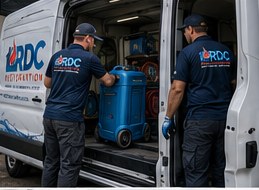
Time is the deciding factor. Mold can begin growing in wet materials within 24 to 48 hours, which is why the gap between the storm and the cleanup matters so much. RDC crews arrive with truck-mounted extractors, commercial air movers, and moisture meters that read what a homeowner cannot see, and we dry structures following IICRC standards so the drying is verified, not guessed. When flooding has already soaked finished space, our water damage restoration and mold remediation teams handle the extraction, drying, and any regrowth on one coordinated visit.
What sump pump failure cleanup costs in New Jersey
There is no honest flat rate, because the cost of cleaning up after a sump pump failed depends on how far the water spread, how contaminated it was, what materials it touched, and how quickly work begins. A small, clean, quickly-addressed flood is far less than a large or delayed one — because every hour of standing water expands the damage and can add mold remediation to the bill. RDC Restoration gives free, itemized, on-site estimates, and on covered losses we document the damage and bill your insurance carrier directly, so you are never guessing at the number.
Why a fast response protects you
Restoration is a race against the clock, and geography decides who wins it. RDC Restoration dispatches from two central New Jersey hubs — Berkeley Heights in Union County and Piscataway in Middlesex County — and serves all 21 New Jersey counties. That footprint lets a certified crew reach most addresses while the damage is still containable, which protects your health, saves your finishes, and keeps the total cost down. Founder Russell Calderone holds IICRC (WRT and ASD), NORMI, and AHERA certifications, and RDC is BBB A-rated with a 4.9-star reputation across New Jersey.
Key takeaways
- Kill the power to the flooded area before you step into standing water
- Call (908) 253-9000 for 24/7 emergency extraction anywhere in New Jersey
- Act fast — mold can start within 24 to 48 hours
- Photograph everything for your insurance claim
- Add a battery backup and real waterproofing so it never floods you again
Sump pump failed and water rising right now? RDC Restoration answers 24/7.
Quick answers
Frequently asked questions
My sump pump failed — will my basement definitely flood?
Not always. If you catch it early during light rain and the water table is low, you may have time to clear the float, restore power, or run a backup pump. But during a heavy New Jersey storm, a failed sump pump can flood a basement in under an hour, so treat it as an emergency and call (908) 253-9000 if water is already rising.
Is water from a failed sump pump safe to clean up myself?
Clean groundwater a few inches deep on a hard floor can often be handled with a wet/dry vac. Once the water reaches outlets, finished walls, or carpet — or if any storm or sewer contamination is involved — it becomes a health and structural risk that needs certified extraction and verified drying.
How fast can RDC respond after a sump pump failure?
RDC typically reaches nearby New Jersey towns within about an hour, day or night, because we dispatch from Berkeley Heights and Piscataway and cover all 21 counties.
Will a battery backup really prevent the next failure?
A backup pump specifically solves the most common cause of failure — losing grid power mid-storm. Paired with a correctly sized primary pump, a high-water alarm, and proper basement waterproofing, it removes nearly every single point of failure.
Does RDC bill my insurance for the cleanup?
Yes. RDC documents the loss thoroughly with photos and moisture readings and bills your carrier directly wherever possible, and we provide free, itemized on-site estimates either way.
New Jersey’s trusted restoration team.
Sump pump failed, or water, fire, or mold trouble? RDC Restoration dispatches the nearest crew 24/7, statewide. Call (908) 253-9000 or request a free estimate.