


Freehold, NJ · Monmouth County · Mold Inspection & Testing
Mold Inspection & Testing in Freehold, NJ
RDC Restoration provides NORMI-certified mold inspection and testing in Freehold, New Jersey — finding out whether you have a mold problem, what kind, and how bad, with air sampling and independent lab analysis before you spend a dollar on removal.
- Serving Freehold & Monmouth County
- Air & surface testing
- NORMI certified
- Independent lab reports
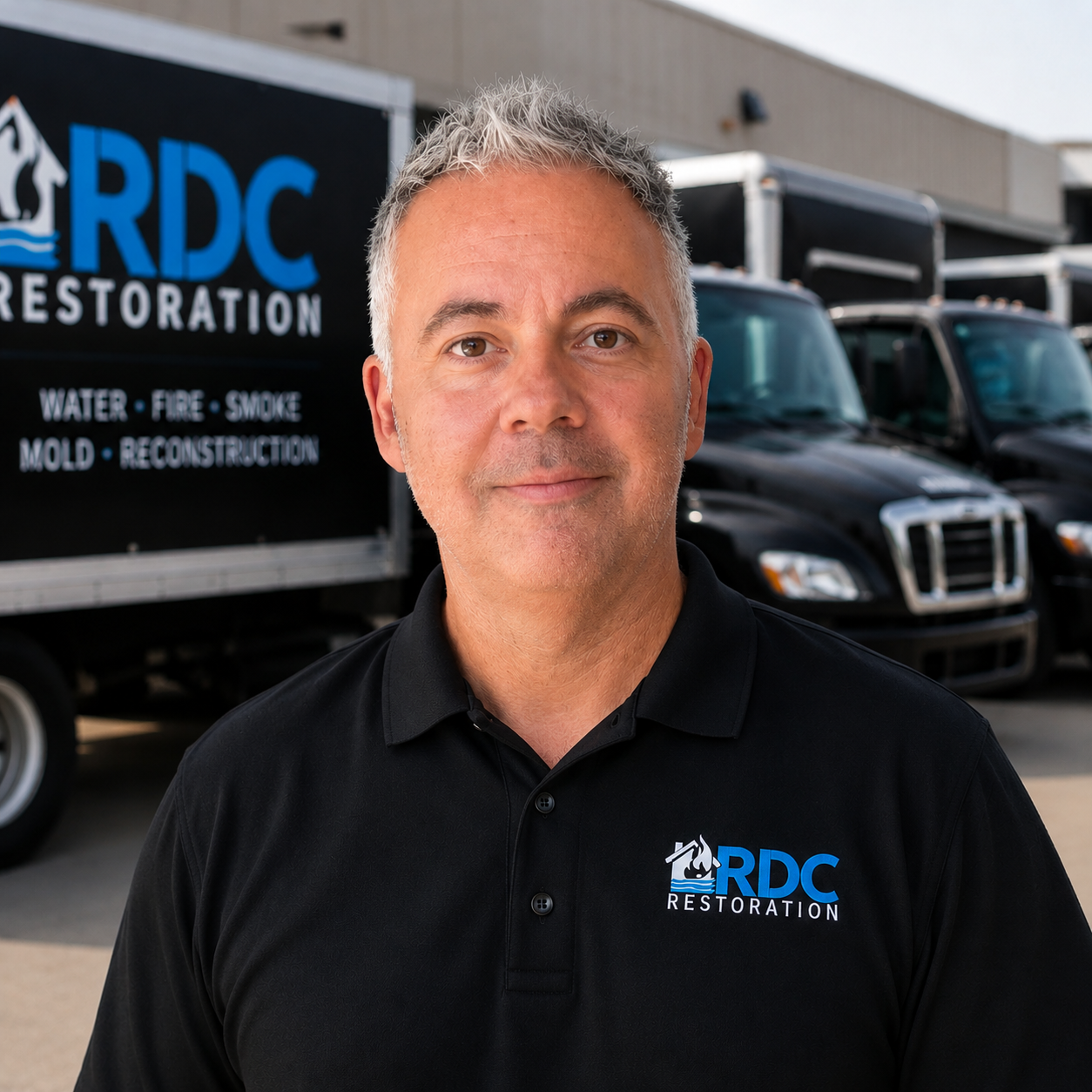
Mold Inspection in Freehold
Freehold’s trusted mold inspection & testing team
Freehold refers to both the compact, densely built Freehold Borough and the surrounding suburban Freehold Township, together the historic seat of Monmouth County. The borough centers on a walkable downtown of 19th-century buildings and older homes, while the township spreads into newer subdivisions and shopping corridors. The land drains toward the Manasquan River headwaters and several brooks, with well-known areas like downtown Main Street, West Freehold, and Elton.
A mold inspection is diagnosis; mold remediation is treatment — and you should not pay to remove mold you do not have, or miss mold hidden behind Freehold walls, under floors, or in HVAC systems. For 27 years RDC Restoration has inspected and tested Freehold and Monmouth County properties from our Piscataway hub, pairing a thorough visual and moisture inspection with air and surface samples sent to an independent, accredited laboratory — so your results are verified by science, not a sales pitch.
- NORMI-certified Freehold mold inspectors
- Air, surface & swab sampling
- Independent accredited lab analysis
- Written report with clear next steps
When to test
When Freehold homeowners need a mold inspection
Freehold’s older borough homes carry aging plumbing and cellars vulnerable to seepage, while township streams and the upper Manasquan River watershed, combined with expanding paved runoff, can push stormwater into low-lying basements during heavy rain.
Buying or selling in Freehold
A pre-purchase or pre-sale mold inspection protects the deal and the price, with a written, lab-backed report you can hand to any Freehold buyer, seller, agent, or attorney.
A musty smell, nothing visible
An earthy odor with no obvious source usually means mold is growing out of sight in a Freehold home. Air sampling finds it before anyone opens a wall.
After water damage or a leak
Flooding, roof and plumbing leaks, and Freehold’s humidity are the leading mold triggers. Testing confirms whether it took hold — or gives you the all-clear.
Unexplained health symptoms
Congestion, headaches, or asthma that ease when you leave the house point to indoor air quality. A Freehold test tells you if mold is the cause.
Clearance after remediation
Post-remediation testing verifies a completed Freehold job is genuinely clean and safe — independent proof, not just a visual once-over.
Landlord & tenant questions
An unbiased third-party inspection and lab report settle “is there mold?” disputes between Freehold renters, owners, and property managers.
Signs it is worth testing your Freehold home
Mold hides before it shows. In Freehold properties, testing is most valuable when you notice any of these:
- A persistent musty, earthy smell with no visible source
- Visible growth you want identified before removal
- Worsening allergies, coughing, or asthma indoors
- Water stains, past leaks, or a previously flooded area
- A home sale, purchase, or landlord/tenant question
- A completed remediation you want independently cleared
What we test for
Types of mold testing in Freehold
Air (spore) sampling
Indoor and outdoor Freehold air samples measure airborne spore counts against a baseline, revealing hidden growth and air-quality problems.
Surface & swab sampling
Tape-lift and swab samples from suspect spots confirm whether a Freehold stain is active mold and identify the species.
Moisture & thermal mapping
Moisture meters and infrared cameras trace dampness in the Freehold property back to its source so testing targets the right areas.
Independent lab analysis
Every Freehold sample is analyzed by an accredited third-party laboratory, so type and concentration are verified — not estimated.
Post-remediation clearance
Clearance testing after cleanup documents that Freehold spore levels are back to normal and the space is safe to reoccupy.
Pre-purchase & real-estate
Fast, report-ready Freehold inspections for buyers, sellers, agents, and attorneys who need documented answers on a timeline.
Why it matters
Air quality and your Freehold home
Mold is an indoor-air-quality problem as much as a surface one. For Freehold families, elevated spore levels can trigger allergies, asthma, sinus irritation, and respiratory issues — and infants, older adults, and anyone with a compromised immune system are most at risk. A test tells you what is actually in the air, not just what is on the wall.
Because the same New Jersey team can also handle the fix, there is no handoff and no finger-pointing. If testing confirms a problem, RDC Restoration walks you straight into a clear mold remediation plan for Freehold and, where a leak or flood is the root cause, related water damage restoration — one accountable team from inspection through clearance. And if the results come back clean, we tell you that too.
The RDC Restoration process
How a Freehold mold inspection works
Schedule & assess
Tell us your concern; we schedule a Freehold visit and review any history of leaks, flooding, or symptoms.
Inspect & measure
A certified inspector performs a full visual, moisture, and thermal inspection to locate mold and its water source.
Sample & lab test
Air and surface samples are collected and sent to an independent accredited lab that identifies type and levels.
Report & next steps
You get a clear written report with lab results and, if needed, a straightforward remediation plan.
Where mold starts
Had water damage in Freehold? Test before you assume.
Almost every mold problem starts with water. If your Freehold property has had a leak, a flood, or a damp basement, mold may already be forming out of sight — and it may not be. RDC Restoration tests to confirm, then handles whatever the results call for: 24/7 water damage restoration in Freehold to dry the property, mold remediation to remove what has grown, and basement waterproofing to shut the moisture off for good. One team, one call — (908) 253-9000.
Every Freehold neighborhood
Mold inspection throughout Freehold
From Downtown Freehold to West Freehold, RDC Restoration inspects and tests homes and businesses across Freehold.
Also serving nearby
Mold inspection across Monmouth County
Beyond Freehold, RDC Restoration inspects and tests for mold throughout Monmouth County — see the full Monmouth County service area.
Full-service restoration
Other RDC services in Freehold
Water Damage Restoration
Water Damage RestorationMold Remediation
Mold RemediationBasement Waterproofing
Basement WaterproofingFire & Smoke
Fire & SmokeSewage Cleanup
Sewage CleanupStorm Damage
Storm DamageAsbestos Abatement
Asbestos AbatementHoarding Cleanup
Hoarding CleanupCommercial
CommercialFreehold FAQs
Mold inspection in Freehold — common questions
How much does a mold inspection cost in Freehold?
It depends on the size of the Freehold property and how many samples the lab analyzes. RDC Restoration gives clear pricing up front — and will tell you honestly if a test is not necessary. Call (908) 253-9000 for a quote.
Do I need a mold test if I can already see mold in Freehold?
Not always. If mold is visible and the cause is clear, you can often move straight to mold remediation in Freehold. Testing matters most when mold is hidden, the extent is unknown, someone has symptoms, or you need documented proof for a sale, a landlord, or clearance.
What is air sampling and do I need it?
Air sampling measures airborne spore counts in your Freehold home against an outdoor baseline, revealing hidden growth a visual inspection can miss. It is the best way to check indoor air quality and confirm whether mold is affecting the whole space.
Can you do a mold inspection for a Freehold home purchase?
Yes. RDC Restoration performs pre-purchase and pre-sale Freehold inspections with a written, lab-backed report you can share with buyers, sellers, agents, and attorneys — often on a real-estate timeline.
What is post-remediation clearance testing?
After mold removal, clearance testing takes fresh Freehold air and surface samples to confirm spore levels are back to normal and the space is safe to reoccupy — independent proof the remediation worked.
Get the facts — schedule a Freehold mold inspection.
RDC Restoration inspects, tests, and tells you exactly what is there in Freehold — then, if you need it, removes it for good. Serving all of Monmouth County.
