
Summit, NJ · Union County · Burst Pipe & Winter Water Damage
Burst Pipe & Winter Water Damage in Summit, NJ
RDC Restoration handles burst pipe water damage in Summit when a frozen line splits inside a wall, a crawl space or an attic. IICRC-certified crews dispatch 24/7 from Berkeley Heights to extract water, dry plaster, hardwood and framing, prevent mold, and document the loss for your insurer while your plumber fixes the pipe.
- 24/7 water extraction
- Structural drying
- Mold prevention
- Direct insurance billing
Quick answer
When a frozen pipe bursts or an ice dam leaks in Summit, NJ, RDC Restoration sends a crew 24/7 from our Berkeley Heights location to extract the water, dry walls, ceilings and floors with commercial equipment, and take steps to prevent mold. A plumber repairs the pipe and a roofer handles the ice dam; we handle the water damage and bill your insurer directly. Call (908) 253-9000.
Burst Pipe & Winter Water Damage in Summit
Burst Pipe Water Damage in Summit's Older Homes
Burst pipe water damage in Summit tends to show up on the coldest mornings of the year, often in houses that were built long before anyone insulated a plumbing run. A pipe freezes overnight, the ice expands, and when the line thaws, water pours out of a split you can't see. By the time a stain appears on a plaster ceiling or water drips from a light fixture, a lot of it has already soaked into the structure.
Summit's housing stock makes winter water damage a real concern. Many homes in Franklin, Brayton, Oakwood and Lincoln-Hubbard are large colonials, Victorians and Tudors with dated plumbing, pipes running along exterior walls, unheated sunrooms and porches, and additions built over crawl spaces. The city's hilltop position on the second Watchung ridge also leaves houses exposed to hard winter wind, which pulls heat out of the walls where pipes run. Nor'easters that drop heavy snow add their own risks, which our storm damage restoration in Summit page covers.
RDC Restoration is not a plumber or a roofer. Your plumber repairs the broken line, and a roofer clears ice dams. We handle everything the water touched: emergency extraction, structural drying, mold prevention and documentation for your claim, then we hand off to your contractor for repairs. Learn more on our winter water damage page, or see how we cover the wider Union County water damage restoration area from Berkeley Heights.
More on Burst Pipe & Winter Water Damage →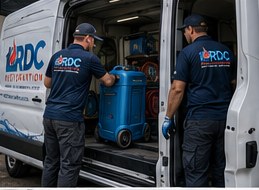
Local risks
Why Summit Winters Are Hard on Pipes and Roofs
Summit's older houses, ridge-top exposure and long freeze-thaw stretches create a predictable set of winter water problems. These are the situations our crews see most often in town between the first hard freeze and the spring thaw. Most of them start small and stay hidden.
Pipes in exterior walls
Older Summit homes often have supply lines running through outside walls with little or no insulation. On windy nights at the top of the ridge, those wall cavities get cold enough to freeze water standing in the pipe, especially behind kitchen sinks and in bathrooms.
Crawl spaces and additions
Sunrooms, mudrooms and kitchen additions built over crawl spaces are common in larger Summit houses. Vents left open, gaps in the foundation and thin insulation let cold air reach the pipes underneath, and a split line there can soak the subfloor unnoticed.
Ice dams on complex roofs
Tudors and Victorians have valleys, dormers and steep intersecting slopes where snow piles up. Heat escaping from the attic melts the snow, the water refreezes at the eaves, and meltwater backs up under the shingles into ceilings and walls.
Snowmelt on steep grades
When snow melts quickly or rain falls on a heavy snowpack, water runs down Summit's hillsides toward low points. Frozen ground can't absorb it, so it presses against stone foundations and enters basements through mortar joints and window wells.
Sump pumps in ice storms
Ice storms bring down tree limbs and power lines across Summit's wooded streets. Without power, sump pumps stop just as melting ice starts to fill the pit, and a discharge line frozen solid outside can back water up into the basement.
Vacant and away-for-winter homes
Houses on the market, under renovation or left empty while owners travel can lose heat without anyone noticing. A failed furnace in an empty home can lead to multiple frozen pipes, and the leak may run for days before it is found.
Summit
Frozen Pipes in Summit: What Happens and How to Respond
Frozen pipes in Summit don't usually split where the ice forms. Pressure builds between the ice blockage and the closed faucet, and the pipe gives way at its weakest point, which might be inside a wall, under a floor or in an attic. That's why the leak often appears only after things start to thaw, when water suddenly flows through the break.
If you suspect a frozen pipe, turn off the main water valve before trying to thaw anything, and know where that valve is before winter starts. Open faucets to relieve pressure, warm the area gradually with a space heater kept at a safe distance or a hair dryer, and never use an open flame. Call a plumber to repair any damage. If water has already escaped, call RDC so we can start extraction and drying while the plumber works. Our article on preventing frozen pipes in New Jersey covers the steps that keep lines from freezing in the first place.
- Shut off the main water valve first
- Open faucets to relieve pressure
- Thaw slowly, never with a flame
- Plumber repairs; RDC dries
Summit
Ice Dam Leak in Summit Ceilings and Walls
An ice dam leak in Summit usually shows up as a brown stain near the top of an exterior wall, water dripping from window trim, or peeling paint along a ceiling edge. The cause is outside on the roof, but the damage is inside: wet attic insulation, saturated plaster, and water running down inside the wall where you can't see it.
A roofer or snow removal contractor should handle the ice and the roof itself. RDC handles the interior damage. We locate the wet areas with moisture meters and thermal imaging, remove soaked insulation that won't dry, open small sections of wall or ceiling only where needed to release trapped water, and dry the structure with air movers and dehumidifiers. Because ice dam leaks can drip slowly for weeks, we check for early mold too. Our guide to ice dam water damage in New Jersey explains how dams form and why attic ventilation matters. If you notice a musty odor after the thaw, a mold inspection in Summit can confirm whether growth has started.
- Moisture mapping of attic, walls and ceilings
- Removal of wet insulation
- Targeted drying of plaster and framing
- Mold checks after slow leaks
Summit
Emergency Water Extraction in Summit After a Pipe Bursts
Emergency water extraction in Summit is the first thing that matters after a supply line breaks. A burst pipe can release a large volume of water quickly, and it spreads across hardwood, under baseboards and down into finished basements. The longer water sits, the more it wicks into plaster, swells floors and raises the chance of mold.
RDC crews arrive with truck-mounted and portable extractors to remove standing water from floors, carpets and basements. Then we set up air movers and dehumidifiers, take moisture readings daily, and keep drying until walls, floors and framing reach normal levels. Contents are moved out of wet areas and protected. The same extraction gear handles frozen fire-sprinkler lines at Summit businesses, which our commercial restoration in Summit team coordinates. Neighbors dealing with burst pipe water damage in Westfield or burst pipe water damage in Elizabeth get the same response.
- Truck-mounted and portable extractors
- Daily moisture readings
- Contents moved and protected
- Commercial sprinkler-line losses handled
First steps
What to Do When a Pipe Bursts in Your Summit Home
- Shut off the water. Turn off the main valve right away, usually found in the basement where the water line enters through the foundation wall. Every household member should know where it is and how to close it before cold weather arrives.
- Kill power to wet areas. If water is near outlets, fixtures or the electrical panel, switch off the affected circuits only if you can reach the panel safely from a dry spot. Stay out of standing water that may be energized.
- Call a plumber and RDC. A plumber repairs the broken pipe; RDC handles the water. Call (908) 253-9000 and we'll dispatch a crew 24/7 to begin extraction and drying while the plumbing repair is underway.
- Move what you can. Lift rugs, electronics, books and furniture out of wet areas and put foil or blocks under furniture legs that can't be moved. Take photos before moving anything for your insurance claim.
- Prevent the next freeze. Keep heat at a steady setting, let faucets on exterior walls drip during deep cold, open sink cabinets, and insulate exposed pipes. Ready.gov winter weather guidance lists more steps for preparing a home.
How we work
Our Winter Water Damage Process in Summit
1. Inspect and map moisture
We trace where the water went using moisture meters and thermal imaging, including inside walls, under floors and in ceilings below the break, and photograph everything for the insurer before work begins.
2. Extract standing water
Truck-mounted and portable extractors pull water from floors, carpets and basements. Saturated carpet pad, insulation and drywall that can't be dried are removed and documented for the claim. Wet belongings are moved to dry rooms.
3. Dry the structure
Air movers and dehumidifiers are placed to dry plaster, hardwood, subfloors and framing. Older Summit homes with plaster walls and dense wood floors often need careful, steady drying rather than a quick fix.
4. Prevent mold
We clean and treat affected surfaces and keep monitoring moisture daily until readings return to normal. Drying fully is the best protection against mold growing in hidden wall cavities after the job ends.
5. Document and hand off
You receive photos, moisture logs and a written scope of the damage. Your contractor uses it to plan repairs, and your insurer uses it to process the claim without extra back-and-forth.
Insurance
Insurance for Frozen Pipes and Ice Dams in Summit
Most New Jersey homeowner policies cover sudden water damage from a burst pipe, and many cover interior damage caused by ice dams. The pipe repair itself may or may not be included, and many policies limit coverage if a home was left without reasonable heat. That matters for vacant or seasonal properties, where a furnace failure can go unnoticed.
RDC documents the cause, the path of the water and the extent of the damage from the first visit, with photos and daily moisture readings. We bill your carrier directly where the policy allows and provide your contractor with a clear scope for repairs. When a claim for burst pipe water damage in Summit involves a condominium or a rental, our records help sort out which policy covers which part of the loss.
Nearby
Burst Pipe & Winter Water Damage across Union County
See the Union County service area, or another town nearby.
Full-service restoration
Other RDC services in Summit
Water Damage Restoration
Water Damage Restoration in Summit →Mold Remediation
Mold Remediation in Summit →Mold Inspection & Testing
Mold Inspection & Testing in Summit →Basement Waterproofing
Basement Waterproofing in Summit →Fire & Smoke Damage
Fire & Smoke Damage in Summit →Storm Damage
Storm Damage in Summit →Commercial Restoration
Commercial Restoration in Summit →Sewage Cleanup
About Sewage Cleanup →Asbestos Testing & Abatement
About Asbestos Testing & Abatement →Hoarding Cleanup
About Hoarding Cleanup →Summit FAQs
Burst Pipe & Winter Water Damage in Summit: common questions
Do you fix the burst pipe?
No. RDC Restoration is not a plumber. A licensed plumber repairs or replaces the broken line. We handle the water damage that follows: emergency extraction, structural drying, mold prevention and documentation. We often arrive while the plumber is still working, so drying can begin as soon as the leak is stopped and the water is safely off.
How do I know if water is still inside my walls?
Surfaces can feel dry while the inside of a wall stays wet. Signs include bubbling paint, soft plaster, a musty smell, or warped baseboards. We use moisture meters and thermal imaging to find hidden water without tearing out more than necessary, which is especially useful in older Summit homes where original plaster and trim are worth preserving.
Can an ice dam leak cause mold?
Yes. Ice dam leaks are often slow and steady, wetting attic insulation, roof sheathing and wall cavities over many days. That's an ideal setting for mold. After the roofer clears the ice, we dry the affected areas and check for early growth. If mold is already established, our mold remediation in Summit crews remove it under containment.
What if my Summit house was empty when the pipe burst?
Call your insurer and RDC as soon as you find it. Leaks in vacant or seasonal homes can run for a long time, so damage often reaches several floors. We extract the water, dry the structure, check for mold and document everything carefully, which matters because insurers look closely at heat and occupancy when reviewing claims involving burst pipe water damage in Summit.
How can I prevent frozen pipes next winter?
Keep the thermostat steady, even when you're away. Insulate pipes in crawl spaces, attics, garages and along exterior walls. Disconnect garden hoses and shut off outdoor spigots. Let faucets drip during extreme cold, and know where your main shutoff is. A battery backup for your sump pump also helps during ice storms and power outages.
Pipe Burst in Summit? Call RDC Now
Crews dispatch 24/7 from Berkeley Heights to extract water, dry the structure and prevent mold after frozen pipes or ice dams. Call (908) 253-9000.