
Scotch Plains, NJ · Union County · Burst Pipe & Winter Water Damage
Burst Pipe & Winter Water Damage in Scotch Plains, NJ
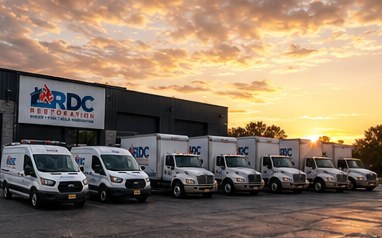
RDC Restoration handles burst pipe water damage in Scotch Plains and the other leaks winter brings to the township, from ice dam drips in older downtown homes to thaw seepage near Ash Brook. Crews dispatch 24/7 from Berkeley Heights to extract water, dry the structure, prevent mold and document the loss while your plumber or roofer fixes the cause.
- 24/7 Water Extraction
- Frozen Pipe Drying
- Ice Dam Leak Cleanup
- Mold Prevention
Quick answer
When a pipe freezes and bursts or an ice dam leaks in Scotch Plains, NJ, RDC Restoration dispatches crews 24/7 from Berkeley Heights to extract water, dry ceilings, walls and floors to IICRC standards, prevent mold and document the loss for insurance. A plumber repairs the pipe and a roofer clears the ice dam; RDC handles the water. Call (908) 253-9000.
Burst Pipe & Winter Water Damage in Scotch Plains
Burst Pipe Water Damage in Scotch Plains and Other Winter Leaks
Burst pipe water damage in Scotch Plains tends to show up after the first deep cold snap, often when a family comes home from a weekend away or turns on a faucet that gives nothing. The pipe usually froze days earlier in an exterior wall, a crawl space or a garage ceiling. The flooding starts when it thaws, and a split copper line can soak two floors before anyone notices.
The township's mix of houses makes winter leaks predictable. Older colonials and Victorians near downtown have plumbing that was added or rerouted over the decades, sometimes through cold outside walls and unheated porches. Postwar split-levels in sections like Jerseyland and Willow Grove often run lines over attached garages or along the band joist. Homes in the foothills see heavy snow loads and the ice dams that come with them. Burst pipe water damage in Scotch Plains also hides in finished basements, where a split line behind paneling or a drop ceiling can run for hours before anyone goes downstairs.
RDC Restoration is not a plumber or a roofer. Your plumber repairs the pipe and your roofer deals with the ice dam; our IICRC-certified crews handle the water: extraction, drying, mold prevention and documentation for your insurer. We dispatch 24/7 from Berkeley Heights, and our winter water damage page covers the full range of cold-weather losses we see across New Jersey.
More on Burst Pipe & Winter Water Damage →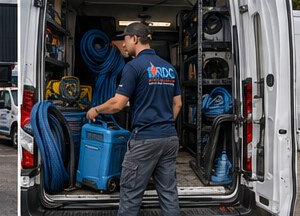
Local risks
How Winter Turns Into Water Damage in Scotch Plains
Cold weather does not cause water damage on its own. It sets up a failure that lets go when temperatures swing, which is why so many of our winter calls come on the first mild day after a freeze. These are the patterns we see in Scotch Plains.
Pipes in outside walls and garages
Supply lines running along exterior walls, under kitchen sinks on outside walls or through the ceiling of an attached garage freeze first. In split-levels the line to an upstairs bath often passes right over the garage.
Ice dams on foothill roofs
Snow that sits on roofs in the higher parts of town melts from attic heat, then refreezes at the cold eaves. The ridge of ice pushes meltwater under shingles, into soffits and down the inside of exterior walls.
Thaw flooding near Ash Brook
When snowpack melts quickly or rain falls on frozen ground, runoff heads downhill toward Ash Brook and its tributaries. Older homes in the low sections with porous foundations take on seepage through walls and floor joints.
Sump pumps in ice storms
Ice storms bring down limbs and power lines, and a sump pump without power cannot keep up with thaw water. Discharge lines that freeze outside can also back water up into the pit and onto the basement floor.
Empty and seasonal homes
A house left empty for a holiday trip, between owners or during an estate sale may lose heat without anyone knowing. A furnace failure in an unoccupied home can mean several days of water running before it is found.
Frozen sprinkler lines in businesses
Fire-sprinkler branches in unheated vestibules, loading doors and attic spaces can freeze and split in commercial buildings. When they thaw, the flow is heavy and fast, and it often happens overnight or on a weekend.
Scotch Plains
Frozen Pipes in Scotch Plains: Prevent the Freeze, Handle the Thaw
Frozen pipes in Scotch Plains are most common on the coldest, windiest nights, when outside walls and garage ceilings drop well below room temperature. Prevention is cheap: keep the heat on (even when away), open cabinet doors on outside walls, let a faucet drip on the coldest nights, insulate exposed lines and disconnect garden hoses. Our article on preventing frozen pipes in a New Jersey home has a full checklist.
If a pipe has already frozen, do not use an open flame to thaw it. Know where your main shutoff is before you need it; in most homes it sits where the service line comes through the basement wall or into the crawl space. If the pipe splits, shut the water off, call a plumber for the repair and call RDC for the water. Leave the faucet open so meltwater has somewhere to go.
- Keep the thermostat on, even when traveling
- Open cabinets on exterior walls
- Drip faucets on the coldest nights
- Locate and test the main shutoff
Scotch Plains
Ice Dam Leak in Scotch Plains Ceilings and Exterior Walls
An ice dam leak in Scotch Plains often shows up as a brown stain at the top of an exterior wall, a drip from a window head or a bulging ceiling near the eaves. The water you can see is usually the smallest part. It has already traveled through attic insulation and down the wall cavity, where it can sit for weeks if the cavity is never opened or dried. Bedrooms and bathrooms under low-slope sections of the roof are where we find it most.
A roofer or snow-removal service clears the ice and addresses the roof. RDC handles the interior: we measure moisture behind the stain, open or vent cavities when needed, dry wet insulation and framing and monitor until the readings are normal. Our post on how ice dams cause water damage explains why the leak keeps coming back until the attic and roof are corrected.
- Moisture checks behind visible stains
- Drying of wall cavities and insulation
- Ceiling and attic moisture monitoring
- Documentation for the roofer and insurer
Scotch Plains
Emergency Water Extraction in Scotch Plains When the Line Lets Go
Emergency water extraction in Scotch Plains is the first thing our crews do after a pipe or sprinkler line bursts. Truck-mounted and portable extractors pull water out of carpet, pad and subfloors, and wet materials that cannot be saved are removed so the structure behind them can dry. The faster water is out, the less drywall and flooring has to go. The same extraction and drying process backs our year-round water damage restoration in Scotch Plains.
Winter extraction has a mold angle too. Homes are closed up and heated, so wet materials stay warm and humid, which is ideal for growth. RDC sets dehumidifiers and air movers, logs moisture daily and applies antimicrobial treatment where appropriate. If growth is already visible, our mold remediation team in Scotch Plains handles containment and removal. Quick extraction keeps burst pipe water damage in Scotch Plains from turning into a mold job.
- Truck-mounted and portable extraction
- Removal of unsalvageable wet materials
- Dehumidification and daily moisture logs
- Antimicrobial treatment where needed
First steps
First Steps When a Pipe Bursts in Your Scotch Plains Home
- Shut off the main water. Close the main valve, usually where the service line enters the basement or crawl space. If you cannot find it or it will not turn, the water company can shut the curb valve. Every gallon stopped is less to extract.
- Kill power to wet areas. Turn off breakers for rooms where water is near outlets, fixtures or the ceiling. If the panel itself is wet or you are standing in water, stay out and let a professional handle it.
- Call a plumber and RDC. Your plumber repairs the split line. Call RDC at (908) 253-9000 for extraction and drying; crews dispatch 24/7, so the water work does not have to wait for the plumbing appointment.
- Keep the heat on. If the furnace still runs, keep the house warm to stop other lines from freezing and to help drying. Open cabinet doors under sinks on outside walls to let warm air reach the pipes.
- Photograph and save the part. Take photos of the burst section, the water on floors and ceilings and any damaged belongings. Keep the failed pipe or fitting if the plumber removes it; your adjuster may want to see it.
How we work
RDC's Winter Water Damage Process in Scotch Plains
1. Inspect and classify
Our crew confirms the water is off, then traces where it traveled using moisture meters and thermal imaging. We classify the water and the extent of wetting, and photograph everything before work begins.
2. Extract
Standing water is removed from floors, carpet and pad with truck-mounted and portable extractors. On upper-floor bursts we check the ceilings and wall cavities below, where water collects out of sight.
3. Remove what cannot be saved
Soaked drywall, insulation and pad that will not dry in place are cut out and removed. Keeping removal to what is necessary makes your contractor's later repairs smaller. Every cut is photographed first.
4. Dry and prevent mold
Commercial dehumidifiers and air movers dry the structure to the IICRC S500 standard, with daily readings. Antimicrobial treatment is applied where conditions call for it, which matters in closed, heated winter homes.
5. Document and hand off
You get a full record of the loss: photos, moisture logs and a list of removed materials. Your insurer and the contractor you choose use it to scope and price the repairs.
Insurance
Insurance for Frozen Pipe and Ice Dam Damage in Scotch Plains
Most homeowners policies cover sudden water damage from a burst pipe, and many cover interior damage from ice dam leaks. Coverage often depends on reasonable care, such as keeping a home heated while you are away, so note your thermostat setting and any travel dates when you report the claim. Repairs to the pipe itself or the roof are usually handled separately from the water damage.
Groundwater and snowmelt seepage into a basement is treated differently and may fall under flood coverage or be excluded. RDC documents the source, the extent of wetting and the drying data, and bills your carrier directly wherever possible. Business owners can turn to our commercial restoration crews in Scotch Plains for sprinkler and tenant-space losses.
Nearby
Burst Pipe & Winter Water Damage across Union County
See the Union County service area, or another town nearby.
Full-service restoration
Other RDC services in Scotch Plains
Water Damage Restoration
Water Damage Restoration in Scotch Plains →Mold Remediation
Mold Remediation in Scotch Plains →Mold Inspection & Testing
Mold Inspection & Testing in Scotch Plains →Basement Waterproofing
Basement Waterproofing in Scotch Plains →Fire & Smoke Damage
Fire & Smoke Damage in Scotch Plains →Storm Damage
Storm Damage in Scotch Plains →Commercial Restoration
Commercial Restoration in Scotch Plains →Sewage Cleanup
About Sewage Cleanup →Asbestos Testing & Abatement
About Asbestos Testing & Abatement →Hoarding Cleanup
About Hoarding Cleanup →Scotch Plains FAQs
Burst Pipe & Winter Water Damage in Scotch Plains: common questions
Will RDC fix the burst pipe in my Scotch Plains house?
No. RDC is not a plumbing company. A licensed plumber repairs the pipe, and RDC handles everything the water touched: extraction, removal of wet materials, drying, mold prevention and documentation. We can start the water work even before the plumber arrives, as long as the main shutoff is closed. Our documentation also gives the plumber a clear picture of where the water went.
How do I know if an ice dam is leaking into my walls?
Look for stains or peeling paint at the top of exterior walls, drips at window heads, damp spots on ceilings near the eaves and icicles thicker than usual on the gutters. Water can be in the wall before it shows. RDC can check with moisture meters and thermal imaging and tell you whether the cavity needs to be dried.
My basement took on water during a January thaw. Is that a pipe or groundwater problem?
It can be either. If the water appeared suddenly and you hear running water, a pipe is likely. If it seeped along the base of the walls during melt or rain, it is probably groundwater, common in low areas near Ash Brook. Melt runoff often overlaps with the problems on our storm damage restoration page for Scotch Plains.
What should I do before leaving my Scotch Plains home for the holidays?
Keep the thermostat at a normal setting rather than turning it way down, open sink cabinets on outside walls, disconnect hoses and consider shutting the main water off. Ask a neighbor to check the house. Ready.gov has more winter preparation guidance, and a battery backup for the sump pump helps during ice-storm outages.
Do you handle winter water damage in nearby towns?
Yes. The same crews respond to burst pipe water damage in Plainfield and burst pipe water damage in Elizabeth during cold snaps. The rest of the towns we cover are on our Union County water damage restoration page. Cold snaps usually hit the whole area at once, so call early.
Burst Pipe in Scotch Plains? Call RDC Now
Shut off the water, then call (908) 253-9000. A Berkeley Heights crew dispatches 24/7 to extract, dry and document while your plumber handles the pipe.