
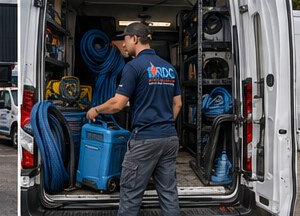
Elizabeth, NJ · Union County · Burst Pipe & Winter Water Damage
Burst Pipe & Winter Water Damage in Elizabeth, NJ
RDC Restoration handles burst pipe water damage in Elizabeth when a freeze splits a line in an old rowhouse, a basement or an unheated garage. Crews dispatch 24/7 from Berkeley Heights to extract water, dry walls and floors, prevent mold and document the loss, while your plumber repairs the pipe itself.
- 24/7 Water Extraction
- Structural Drying
- Mold Prevention
- Insurance Documentation
Quick answer
RDC Restoration responds to burst pipe water damage in Elizabeth, NJ, 24/7. When frozen pipes split, ice dams leak or thaw water floods a basement, our IICRC-certified crews extract the water, dry the structure with commercial equipment, take steps to prevent mold and document everything for your insurer. A plumber repairs the pipe; we handle the water. Call (908) 253-9000.
Burst Pipe & Winter Water Damage in Elizabeth
Burst Pipe Water Damage in Elizabeth's Older Housing
Burst pipe water damage in Elizabeth tends to follow the age of the buildings. Many rowhouses, brick tenements and two-families here are a century old or more, with supply lines running along exterior walls, through unheated porches and into crawl spaces that were never insulated. When a cold snap settles over Union County, those lines freeze first, and the break often shows up only when the thaw sends water flowing again. In attached homes and apartment buildings, that water rarely stays in one place. It follows joists and pipe chases into the unit next door or the one below, soaking ceilings and walls that the owner of the broken pipe never sees.
RDC Restoration has handled winter water losses across New Jersey for 27+ years, and Elizabeth is served from our Berkeley Heights hub. Our IICRC-certified crews extract the water, dry framing and floors and keep mold from starting. Our winter water damage services explain the full scope. For the surrounding towns, see our Union County water damage restoration page.
We are not plumbers or roofers. A plumber repairs the pipe and a roofer clears an ice dam. Our part is everything the water touched: extraction, drying, mold prevention and documentation that your insurer and your contractor can use. That split keeps each trade doing the work it is licensed and equipped for, and it gives your adjuster a clear line between the cause of the loss and the water damage it left behind.
More on Burst Pipe & Winter Water Damage →
Local risks
Why Winter Water Damage Is So Common in Elizabeth
Elizabeth winters bring hard freezes, ice storms and fast thaws, and much of the city's housing was built long before modern insulation. Pair that with a high water table near the waterfront and older sewers, and one cold week can produce frozen pipes, ice dam leaks and basement seepage across several neighborhoods.
Pipes on Exterior Walls
In older two-families and rowhouses, kitchen and bathroom lines often run inside thin exterior walls or under windows. On the coldest nights those runs can freeze even when the rest of the house feels warm, especially on walls exposed to wind off the bay.
Crawl Spaces, Garages and Porches
Enclosed porches, detached garages and crawl spaces under additions are common in Elmora and North Elizabeth. Pipes routed through these unheated spaces freeze first, and a split line there can run for a long time before anyone notices.
Ice Dams on Older Roofs
Snow melting on a warm roof refreezes at the cold eaves and backs meltwater under the shingles. Older homes with thin attic insulation are prone to this, and the leak usually shows up as stained ceilings and wet plaster along exterior walls.
Thaw Flooding Near the Waterfront
When snow melts fast or rain falls on frozen ground, water has nowhere to soak in. In low sections like Elizabethport and Bayway, a high water table and an older combined sewer can push that water into basements through slabs, walls and floor drains.
Sump Pumps in Ice Storms
Ice storms bring down power lines, and a sump pump without power or with a frozen discharge line cannot keep up with thaw water. Basements near the waterfront can take on groundwater while the pump sits idle.
Vacant Units and Frozen Sprinklers
Rentals between tenants, homes empty over the holidays and closed storefronts can lose heat without anyone noticing. Businesses with sprinkler lines in unheated loading areas or stairwells face the same risk when a cold snap arrives.
Elizabeth
Frozen Pipes in Elizabeth: What Happens When They Thaw
Frozen pipes in Elizabeth do not always burst while they are frozen. Ice expands inside the line and builds pressure between the blockage and a closed faucet, and the split often appears when the ice softens and water rushes through. That is why many homeowners first notice a problem on a milder morning, with water coming through a ceiling or pooling under a sink cabinet. Lines in exterior walls facing the wind are the usual suspects.
If you find a frozen pipe that has not split, open the faucet it feeds and warm the area gently with a hair dryer or a space heater kept away from anything flammable. Never use an open flame. If the line has already burst, shut the main valve, call a plumber and then call us for the water. Our article on how to prevent frozen pipes in New Jersey covers insulation and heat settings.
- Open the faucet on a frozen line to relieve pressure
- Warm pipes gently, never with an open flame
- Shut the main valve as soon as a split appears
- Call a plumber for the pipe and RDC for the water
Elizabeth
Ice Dam Leak in Elizabeth Ceilings and Walls
An ice dam leak in Elizabeth tends to appear after a heavy snowfall followed by a few sunny days. Heat escaping through the attic melts snow on the upper roof, the meltwater runs down to the cold eaves and refreezes, and the water that backs up behind that ridge works its way under the shingles. It then drips onto attic insulation and soaks the plaster and drywall below. Older Elizabeth homes with thin attic insulation and few roof vents are especially prone to this.
A roofer or snow removal service clears the dam. RDC handles what the leak left inside: wet insulation, soaked ceilings, damp wall cavities and stained trim. We use moisture meters to find how far the water traveled inside the walls, then dry it with air movers and dehumidifiers so mold does not take hold. Read more in our guide to ice dam water damage in New Jersey.
- Moisture mapping inside ceilings and exterior walls
- Removal of saturated insulation when needed
- Drying of plaster, drywall and framing
- Photos and readings for the insurance claim
Elizabeth
Emergency Water Extraction in Elizabeth Basements and Apartments
When a pipe breaks in a multi-family building, water does not stay in one unit. It runs through floor cavities into the apartment below and down to the basement. Emergency water extraction in Elizabeth starts with getting standing water out using truck-mounted and portable pumps, then pulling moisture out of carpet, pad and subfloor before it spreads further. Brick tenements and two-families with shared basements are where this spread shows up most, because one break can affect several households at once.
After extraction, we set up commercial air movers and dehumidifiers and return each day to check readings until materials are dry. Water that mixed with thaw seepage or came up through a floor drain may need cleaning and disinfection as well. Our water damage restoration team in Elizabeth handles year-round leaks the same way. If seepage returns with every thaw, our Elizabeth basement waterproofing service can look at the cause.
- Truck-mounted and portable extraction
- Carpet, pad and subfloor moisture removal
- Daily moisture monitoring until dry
- Cleaning and disinfection when water is contaminated
First steps
What to Do When a Pipe Bursts in Your Elizabeth Home
- Shut off the main valve. Find the main shutoff, usually in the basement near the wall where the water line enters, and turn it off. Learn where it is before winter so you are not searching in the dark with water spraying.
- Cut power to wet areas. If water is near outlets, the electrical panel or appliances, turn off power to those circuits only if you can reach the panel without standing in water. If you cannot, leave the area and call for help.
- Call a plumber, then RDC. A plumber repairs the broken line. Call (908) 253-9000 for the water itself; crews dispatch 24/7 to extract it and start drying. In apartment buildings, also alert the landlord and the neighbors below.
- Move belongings and photograph. Lift furniture onto blocks, move rugs and electronics to a dry room and photograph the damage before anything is thrown away. Pictures of the broken pipe and the water line on the walls help your claim.
- Keep the heat on. Keep the thermostat up and open cabinet doors under sinks on exterior walls so warm air reaches the pipes. Ready.gov's winter weather guidance covers dripping faucets and other ways to protect pipes during a freeze.
How we work
How RDC Dries Out a Winter Water Loss in Elizabeth
1. Confirm the source is stopped
We verify the main or branch valve is off, or that the plumber or roofer has dealt with the source. Drying cannot start while water is still entering the building.
2. Inspect and map moisture
Technicians use moisture meters and thermal imaging to trace how far water traveled through floors, walls and ceilings, including into neighboring units in attached and multi-family buildings. Hidden wet spots are marked.
3. Extract standing water
Pumps and extraction tools remove water from basements, floors, carpet and pad. Wet materials that cannot be dried, such as soaked insulation or swollen particleboard, are removed and documented. Nothing is discarded without photos.
4. Dry and dehumidify
Commercial air movers and dehumidifiers run until moisture readings return to normal. In cold weather we manage indoor temperature and airflow so drying keeps moving even when it is freezing outside.
5. Document and hand off
You get photos, moisture logs and a written scope for your insurer. Your contractor replaces removed drywall, flooring or trim using that record, and we stay available to answer the adjuster's questions.
Insurance
Insurance for Frozen Pipes and Ice Dam Leaks in Elizabeth
Most homeowner policies cover sudden water damage from a burst pipe or an ice dam leak, though the pipe repair itself or the roof work may be handled differently. Policies can also exclude freeze damage when a building was left unheated without reasonable care, which matters for vacant rentals and homes closed for the winter. Water that comes up from the ground or through a sewer backup often falls under separate coverage.
For burst pipe water damage in Elizabeth, RDC Restoration documents the cause, the path of the water and the drying results, then bills your carrier directly wherever possible. Neighbors outside the city can find burst pipe water damage in Union covered by the same crews, and we also serve burst pipe water damage in Linden with the same detailed record.
Nearby
Burst Pipe & Winter Water Damage across Union County
See the Union County service area, or another town nearby.
Full-service restoration
Other RDC services in Elizabeth
Water Damage Restoration
Water Damage Restoration in Elizabeth →Mold Remediation
Mold Remediation in Elizabeth →Mold Inspection & Testing
Mold Inspection & Testing in Elizabeth →Basement Waterproofing
Basement Waterproofing in Elizabeth →Fire & Smoke Damage
Fire & Smoke Damage in Elizabeth →Storm Damage
Storm Damage in Elizabeth →Commercial Restoration
Commercial Restoration in Elizabeth →Sewage Cleanup
About Sewage Cleanup →Asbestos Testing & Abatement
About Asbestos Testing & Abatement →Hoarding Cleanup
About Hoarding Cleanup →Elizabeth FAQs
Burst Pipe & Winter Water Damage in Elizabeth: common questions
How do I keep pipes from freezing in an older Elizabeth house?
Keep the heat on day and night, even if you are away, and open cabinet doors on exterior walls. Let faucets on vulnerable lines drip during hard freezes, insulate pipes in crawl spaces and garages, and shut off and drain outdoor spigots in the fall. Know where the main valve is before the first cold snap so you can close it right away.
My building's sprinkler line froze. Can you help my business?
Yes. Frozen fire-sprinkler lines in loading docks, stairwells and unheated storage areas can release a lot of water when they split. A licensed fire protection contractor restores the system. We extract the water, dry the space in phases where possible and document the loss. Our page on commercial restoration in Elizabeth covers how we work around business operations.
Is thaw water in my basement the same as storm flooding?
It can come from similar places. Fast snowmelt and rain on frozen ground raise groundwater and can overload Elizabeth's older sewers, pushing water through slabs and floor drains. We extract and dry it either way. Spring and summer storms bring their own version, which our storm damage restoration crews in Elizabeth handle along with tarping and board-up.
Can a space heater cause more than water damage?
Yes. Space heaters used to warm cold rooms and keep pipes from freezing are a common cause of house fires in winter. Keep them away from curtains, bedding and furniture, and never run them on extension cords. If a heater does start a fire, our fire and smoke damage restoration team in Elizabeth handles soot, odor and the water left by firefighters.
Will mold grow after a burst pipe?
It can if wet materials are not dried thoroughly. Water that sits inside wall cavities, under flooring or in attic insulation gives mold the moisture it needs. We dry to standard and verify with meters to prevent that. If you already see or smell mold, our mold remediation service in Elizabeth can contain and remove it safely.
Pipe Burst in Elizabeth? Call RDC
Crews dispatch 24/7 from Berkeley Heights to extract water, dry the structure and prevent mold after a winter pipe break anywhere in Elizabeth. Call (908) 253-9000.