
RDC Restoration Blog · New Jersey
Wet Drywall Repair or Replace? How to Decide
A smart wet drywall repair or replace decision comes down to three things: how much water hit the wall, how long it sat, and whether that water was clean or contaminated. Not every damp wall has to come out, but some absolutely do — and guessing wrong is how a small leak turns into a mold problem inside the cavity. Here is how a restoration pro in New Jersey actually makes the call.
For the technical framework, restoration professionals follow the IICRC water damage restoration standards (the S500 standard) — then apply hands-on judgment to your specific wall. If you would rather have it looked at in person, RDC Restoration is a phone call away at (908) 253-9000.
Why wet drywall is trickier than it looks
Drywall is gypsum sandwiched between two layers of paper. The gypsum core soaks up water like a sponge, and the paper facing is exactly the kind of organic food source mold thrives on. From inside the room, a wall can look almost fine an hour after a leak — a little damp, maybe a faint stain — while the core is quietly holding water you cannot see or feel from the surface.
That hidden moisture is what makes the “just let it dry on its own” approach so risky. Sometimes air-drying works. Other times you are sealing damp gypsum and mold-friendly paper behind a fresh coat of paint, and the problem resurfaces weeks later — bigger, and more expensive to fix. The whole point of a proper wet drywall repair or replace assessment is to remove that guesswork before you commit to patching.
1. How high did the water come up?
Water wicks upward through drywall against gravity, so the damage almost always climbs higher than the visible waterline. After a flood or a sustained leak, a common professional approach is a “flood cut” — the wall is opened a foot or two above the highest wet point so the saturated portion comes out and the cavity behind it can dry and be inspected. If only the bottom few inches got wet from a minor, clean spill, a spot repair may be enough. If water climbed a foot or more up the wall, replacing that lower section is usually the honest answer.
2. How long was the drywall wet?
Time is the single biggest factor. This is where our mold growth timeline matters: drywall that was wet for a few hours and then dried aggressively can very often be saved. Drywall that stayed damp for two or three days has likely started growing mold on the back of the paper facing — the side you never see until it spreads into the room. Once you are past roughly that 48-hour window, replacement is usually what protects your indoor air, not just the wall.
3. What kind of water was it?
Clean water from a burst supply line is one situation. Water from a sewage backup, a storm surge, or a slow leak that sat for weeks is another entirely. Our guide to water categories explained covers why Category 2 (gray) and Category 3 (black) water almost always means the affected drywall comes out, no matter how solid it still looks. Contaminated water leaves behind bacteria and other contaminants that drying alone simply does not remove — you cannot dry your way out of a sewage exposure.
Signs your wet drywall should be replaced
If you see any of the following, plan on replacement rather than repair — and have it confirmed before you rebuild:
- It feels soft, spongy, or crumbles when you press on it.
- It is visibly bowed, sagging, bubbling, or pulling away from the studs.
- There is staining that keeps returning after painting — a classic sign explained in what a ceiling water stain really means.
- A musty smell lingers even after the surface feels dry, often a symptom of mold growing behind the wall.
- The water was contaminated (Category 2 or 3), or it sat wet for more than about 48 hours.
- The drywall is finished with vinyl or foil wallpaper that trapped moisture against the core.
When a repair is reasonable
Repair can be the right, cost-effective call when all of these are true:
- The water was clean, caught fast, and the wall was dried within about a day.
- The drywall reads at a normal moisture content on a meter — not just dry to the touch.
- There is no staining, softness, warping, or odor after drying.
The catch is that “reads normal on a meter” is not something you can eyeball. A technician checks the moisture content inside the wall cavity and in the framing, not just on the painted surface, before signing off. That measurement is the entire difference between a wall that is truly dry and one that merely feels dry to your hand.
How professionals dry drywall the right way
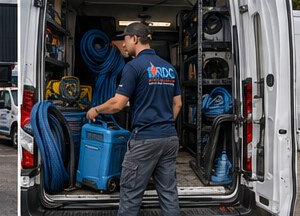
When drywall can be saved, drying it correctly is what makes that possible. A proper drying setup is not just a box fan pointed at the wall. Following the same standards used across our water damage restoration service, our crews:
- Map the full extent of the moisture with meters and, where useful, thermal imaging — so drying targets the wet area, not just the visible stain.
- Set commercial air movers and dehumidifiers to pull moisture out of the gypsum and the cavity, sometimes drilling small, patchable vent holes at the base of the wall to dry inside the stud bays.
- Monitor moisture readings daily and adjust equipment until the wall returns to a documented dry standard, not a guess.
That documentation matters twice over: it confirms the wall is genuinely dry, and it gives your insurer a clear record. RDC bills insurance directly, so that paper trail also helps your claim move faster.
Why New Jersey walls need extra attention
New Jersey homes deal with humid summers, nor’easters, and finished basements — a combination that keeps drywall damp longer than the average. Below-grade walls in particular hold moisture and are slow to dry, which is why basement drywall so often crosses the replace threshold. If your damp wall sits in a basement that takes on water more than once, the real fix may be upstream: our basement waterproofing service addresses the source so you are not repairing the same wall every spring. RDC serves all 21 New Jersey counties from dispatch hubs in Berkeley Heights and Piscataway — see our service areas for coverage near you.
Get it measured before you patch or paint
The most expensive mistake we see is a homeowner painting over a stain or screwing new drywall over a cavity that is still wet. Months later the mold surfaces, and the repair has to be torn out and redone from scratch. A proper wet drywall repair or replace assessment includes drying the cavity to a documented standard, and if mold has already taken hold, professional mold remediation with containment so spores do not spread through the rest of the house.
RDC Restoration has repaired and replaced water-damaged walls across New Jersey for 27 years. We are IICRC-certified (WRT and ASD), NORMI and AHERA trained, BBB A-rated, and hold a 4.9-star rating from the homeowners we serve. You can learn more about RDC Restoration and our crews. If you are staring at a wet wall and not sure whether it needs to come out, we will tell you straight — and the inspection is free. Call (908) 253-9000 any time, day or night.
FAQs
Frequently asked questions
Can wet drywall be saved, or does it always need replacing?
It depends on how much water hit the wall, how long it sat, and how clean the water was. Clean water caught within about a day can often be dried and saved. Contaminated water, or drywall that stayed wet longer than roughly 48 hours, usually needs replacement.
How do I know if there is mold behind my wet drywall?
A musty smell that lingers after the surface dries, stains that return after painting, and soft or spongy spots are common signs. The only way to be sure is to check the moisture inside the wall cavity and, if needed, open a small inspection area behind the surface.
How high should you cut out wet drywall?
A common professional practice is a flood cut a foot or more above the highest visible waterline, because water wicks upward through the gypsum. This removes the saturated section and lets the wall cavity behind it dry and be inspected.
How long does wet drywall take to dry?
With commercial air movers and dehumidifiers, savable drywall often dries in a few days, but the exact time depends on how saturated it was, the humidity, and how well the cavity is ventilated. Air-drying alone can take much longer and risks mold if the wall stays damp past about 48 hours.
Should I just paint over a water stain?
No. Painting over a stain hides the problem without fixing the moisture behind it. If the cavity is still wet, mold can grow and the stain will bleed back through the new paint. Have the wall measured first. Call (908) 253-9000.
Related reading
More from the RDC Restoration blog
Water, fire, or mold damage in New Jersey?
RDC Restoration answers 24/7 with certified crews from Berkeley Heights & Piscataway — fast response, direct insurance billing.