
RDC Restoration Blog · New Jersey
What a Ceiling Water Stain Really Means
A ceiling water stain almost always means active moisture is getting into your home — from a roof leak, a plumbing line running above the room, or trapped condensation — and even a faint brown ring can hide far larger saturation, sagging drywall, and mold inside the cavity you cannot see.
What a ceiling water stain really means
That discolored ring on your ceiling is a symptom, not the disease. When water passes through building materials it leaves behind dissolved minerals, dirt, and tannins, which dry into the familiar yellow, brown, or copper-colored mark. By the time a ceiling water stain is visible from below, water has usually already soaked the drywall or plaster, wicked into the insulation above it, and possibly run along a joist or truss to a low point some distance from the actual leak. In other words, the stain shows you where the water landed — rarely where it started. Understanding that gap between symptom and source is the single most important thing a New Jersey homeowner can grasp, because it is exactly where quick cosmetic fixes go wrong.
Common causes of a ceiling water stain in New Jersey homes
Across 27 years of restoring homes from the shore to the northern hills, we see the same handful of culprits behind most stained ceilings. New Jersey’s mix of older housing stock, freeze-thaw winters, and heavy summer humidity makes several of these especially common here.
Roof and flashing leaks
A cracked shingle, a failed pipe boot, or corroded flashing around a chimney or skylight lets rain in during every storm. The water travels down the underside of the roof deck and drips onto the ceiling below, often several feet from the roof penetration. Stains directly under an attic or top-floor ceiling almost always point here.
Plumbing supply and drain lines
A weeping supply line, a leaking shower pan, or a loose drain connection in a second-floor bathroom will stain the ceiling underneath. These leaks may be slow and intermittent — showing only when a fixture runs — which makes them frustrating to trace without moisture meters.
Condensation and HVAC issues
A clogged AC condensate line, an uninsulated duct sweating in a humid attic, or a leaking water heater on an upper floor all drop moisture onto the ceiling. In summer, central New Jersey humidity turns cold duct surfaces into drip sources, and the resulting stain looks identical to a roof leak.
Ice dams and winter freeze-thaw
In our colder months, snow melts on a warm roof, refreezes at the cold eaves, and backs water up under the shingles. That meltwater finds its way into the ceiling and shows up as a stain near an exterior wall — a seasonal pattern unique to Northern and Central New Jersey homes.
How to read the color and shape of a ceiling water stain
The look of the mark offers real clues before anyone opens the ceiling. A crisp, well-defined brown ring usually means an old, dried leak that has stopped and started repeatedly — each cycle deposits a new tide line. A soft, spreading, still-damp patch means water is moving right now and needs immediate attention. Rusty or copper tones often point to metal in the path, such as an old pipe or nail. And a dark, fuzzy, gray-green discoloration is a warning sign in its own right: that is likely mold feeding on the paper facing of the drywall, which changes the job from a simple leak repair into mold remediation that needs containment.
Find the source before you paint over the stain
Do not paint over a ceiling water stain and hope it stays hidden. Sealing the surface does nothing to the water above it — the moisture keeps saturating materials, the drywall keeps weakening, and mold keeps growing in the dark. The stain will simply bleed back through, usually larger. The correct sequence is always the same: locate the true source, stop the water, dry the cavity completely, then repair and repaint. Because the entry point is often far from the visible mark, a professional moisture inspection with meters and thermal imaging is what traces water back to its origin so the fix actually lasts. Once the leak is corrected, RDC dries the wall and ceiling cavity with commercial equipment before any drywall goes back up.
When to call a professional for a ceiling water stain
A tiny, one-time stain from an overflowed tub you already mopped up may be something you can watch. But call a professional the moment a ceiling water stain involves any of the following:
- A stain that is spreading, sagging, or actively dripping
- Water you suspect is contaminated (from a drain line, roof debris, or an appliance)
- Any musty smell or visible mold around the mark
- Hidden moisture you cannot reach behind drywall or above insulation
- A stain that keeps coming back after a repair
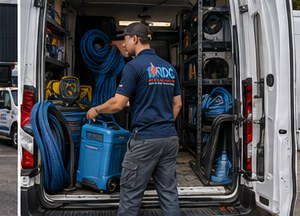
Certified crews carry moisture meters, thermal cameras, commercial air movers, dehumidifiers, and containment gear that a homeowner simply does not have — and, just as important, they find and fix the source so the problem does not return. RDC follows IICRC industry standards for structural drying, and our technicians hold IICRC (WRT, ASD), NORMI, and AHERA certifications.
Why fast response matters in New Jersey
Water damage is a race against the clock. Mold can begin growing in a wet ceiling cavity within 24 to 48 hours, drywall loses structural integrity as it stays saturated, and a small stain becomes a collapsed section of ceiling if it is ignored. Because RDC Restoration dispatches from two central hubs — Berkeley Heights in Union County and Piscataway in Middlesex County — a certified crew reaches most New Jersey addresses while the damage is still containable. Fast water damage restoration protects your family’s health and keeps the total repair far smaller than it would be after days of hidden saturation. If the water is coming from below-grade seepage rather than above, our basement waterproofing team addresses that root cause too.
What ceiling water damage cleanup costs
Honest answer: it depends. The cost of repairing ceiling water damage in New Jersey varies with the size of the saturated area, how contaminated the water is, the materials involved, and how quickly work begins. A small, contained leak caught early is typically far less than a large or delayed one, because waiting lets damage spread across joists and adds mold remediation to the bill. RDC Restoration gives free, itemized on-site estimates, and in covered losses we document the damage thoroughly and bill your insurance carrier directly wherever possible — so you are not guessing at the number or fighting the paperwork alone.
Key takeaways
- A ceiling water stain marks where water landed, not where it started
- Never paint over a stain — find and stop the source first
- Gray-green fuzzy stains signal mold and need containment
- Act fast — mold can start within 24 to 48 hours
- Call (908) 253-9000 for 24/7 help across New Jersey
Staring at a spreading ceiling water stain in New Jersey right now? RDC Restoration answers 24/7.
Quick answers
Frequently asked questions
What does a ceiling water stain mean?
A ceiling water stain means moisture has passed through the ceiling material and left behind minerals and dirt. It signals an active or recent leak from the roof, a plumbing line, or condensation above the room — and it often hides larger saturation you cannot see.
Is a ceiling water stain dangerous?
It can be. A wet ceiling cavity can grow mold within 24 to 48 hours, and saturated drywall can eventually sag or collapse. Gray-green fuzzy staining in particular points to mold and should be inspected quickly. Call (908) 253-9000.
Should I just paint over a ceiling water stain?
No. Painting hides the mark but does nothing to the water above it, so the stain bleeds back through — usually larger — while drywall weakens and mold grows. Find and fix the source, dry the cavity, then repair and repaint.
How fast can RDC respond in New Jersey?
RDC dispatches 24/7 from Berkeley Heights and Piscataway and typically reaches nearby New Jersey towns within about an hour, day or night, across all 21 counties.
Does RDC bill my insurance?
Yes — RDC documents the loss thoroughly and bills your carrier directly wherever possible, and provides free, no-pressure on-site estimates.
New Jersey’s trusted restoration team.
Water, fire, or mold trouble? RDC Restoration dispatches the nearest crew 24/7, statewide. Call (908) 253-9000 or request a free estimate.