
RDC Restoration Blog · New Jersey
Hardwood Floor Water Damage: Can Your Floors Be Saved?
Hardwood floor water damage does not automatically mean a ruined floor. Whether your boards can be saved comes down to three things: the type of wood, how quickly the water was extracted, and how far the warping progressed before real drying began. After 27 years pulling water out of homes across New Jersey, I can tell you that plenty of floors that look destroyed on day one are back to normal a few weeks later — if the response is fast and done correctly.
The decisions you make in the first 24 to 48 hours matter more than anything else. Our own drying process follows IICRC water damage restoration standards, so the guidance below reflects how the work is really done in the field — not guesswork.
What water actually does to a wood floor
Hardwood is hygroscopic, meaning it drinks in moisture and swells, then gives it up and shrinks as it dries. When a floor gets soaked, the boards absorb water along their edges and expand. Because they are nailed or glued down, they have nowhere to go but up and against each other, and that pressure is what causes the warping you see. The good news is that wood is also forgiving if you dry it quickly and correctly, so a fast, controlled response often saves a floor that looks doomed.
Reading the damage: cupping, crowning, and buckling
- Cupping is when the edges of each board rise higher than the center, creating a subtle washboard look. It is the most common and the most recoverable form of hardwood floor water damage. Cupping frequently flattens back out as the floor dries evenly to its normal moisture content.
- Crowning is the opposite — the center rises above the edges. It often means the floor was sanded too soon, before it fully dried, and moisture was still trapped underneath the surface.
- Buckling is the most severe, where boards lift completely off the subfloor. Buckled boards usually need replacement, though the surrounding floor is frequently salvageable.
Here is the key point: cupping and crowning can look alarming and still recover fully. What kills a floor is rarely the shape you see on the surface — it is the timing and the moisture still trapped in the subfloor and joists below.
How fast hardwood floor water damage becomes permanent
Water sitting on hardwood does two damaging things at once: it warps the visible boards, and it seeps down into the subfloor and framing beneath them. The faster standing water is extracted, the more of the floor you keep. From there, drying becomes a controlled process — not just a box fan in the corner. Pull moisture out too fast and the boards crack; too slow, and mold begins colonizing the cavity underneath.
Once the subfloor stays saturated for several days, or once mold takes hold below the finished surface, saving the floor gets dramatically harder and can turn into a mold remediation project on top of the water loss. It is the same race against the clock we run on every water job in New Jersey.
The category of water changes everything
A clean supply-line leak gives your floor a real chance. A dishwasher hose that ran overnight, or a Category 3 sewage backup, is a completely different story. Contaminated water soaks into the wood grain and cannot simply be dried back to safe — the boards themselves become a health concern. The source of the water, not just the amount, drives whether a floor can be dried in place or has to come out. That single judgment call is a big reason to get a trained set of eyes on the loss early.
How RDC dries a water-damaged hardwood floor the right way
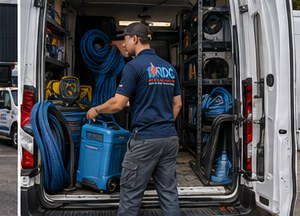
When our crews arrive from our Berkeley Heights and Piscataway hubs, we do not start by ripping up boards. We start by measuring. Every proper drying job begins with mapping the moisture content of the wood, the subfloor, and the surrounding materials so we know where the water traveled. That baseline is what every decision is measured against.
- Extraction first. We remove every bit of standing and absorbed surface water before it can migrate deeper.
- Specialty drying, not just air movers. Purpose-built floor drying systems pull moisture up through the boards and out of the subfloor without tearing the floor apart — but only when the job starts early enough.
- Controlled dehumidification. We manage the humidity of the whole room so the floor dries evenly and gradually, which is what lets cupping relax instead of cracking.
- Daily monitoring. We track moisture readings each day and dry to a documented standard rather than a guess, then only decide what — if anything — needs replacement.
Because RDC is IICRC-certified (WRT and ASD), NORMI-trained, and AHERA-accredited, and because we bill insurance directly, you get a documented, defensible drying record that matters if a claim adjuster ever asks why the floor was kept or replaced. RDC serves all 21 New Jersey counties — see our service areas to confirm we cover your town.
Solid versus engineered hardwood in NJ homes
New Jersey homes run the full range, from century-old solid oak to engineered planks in newer townhomes. Solid hardwood is thick enough that it can often be dried, re-acclimated, and eventually sanded flat, giving it a genuine second life. Engineered flooring is a thin wood veneer over a plywood or fiberboard core, and once that core swells or delaminates, drying alone usually will not bring it back. Knowing which one you have shapes the realistic outcome, and it is one of the first things we identify on site.
The same logic applies to what is under the floor. Many older NJ homes sit over basements or crawlspaces where water re-wets a floor from below. If your loss traces back to chronic moisture rather than a one-time spill, the real fix may be basement waterproofing so the floor above stops absorbing water in the first place.
What you can do before the crew arrives
- Stop the water source and get standing water off the floor with towels or a wet-vac as soon as it is safe.
- Do not crank the heat or aim a single fan at one spot. Uneven, aggressive drying causes more warping, not less.
- Lift area rugs and move furniture so air can reach the entire floor surface.
- Do not sand or refinish anything yet. The floor must fully dry and re-acclimate first, which can take weeks.
- Watch the room’s humidity. A household dehumidifier helps at the margins, but whole-floor drying needs professional equipment and daily monitoring.
When to call a restoration pro
If more than a small area is affected, if the water was dirty, or if you see any buckling, call before you make decisions you cannot undo. Our full water damage restoration process includes measuring the moisture content of the wood and subfloor, drying to a documented standard, and only then deciding what truly needs replacement. That accurate early read is what determines the entire path a floor takes.
RDC Restoration has saved hardwood floors across New Jersey for 27 years. We are IICRC-certified, BBB A-rated with a 4.9-star reputation, we answer 24/7, and inspections are free with direct insurance billing. Move fast and you may keep the floor you have. Call (908) 253-9000 or reach out here and we will get a certified technician out.
Frequently asked questions
Can water-damaged hardwood floors be saved?
Often yes, if you act fast. Cupped and even crowned floors frequently recover once the wood and subfloor are dried slowly and evenly to their normal moisture content. Buckled boards usually need replacement, but the surrounding floor is often salvageable, so do not assume the whole room is a loss.
How long before water ruins a hardwood floor?
Damage begins within hours as the boards absorb water and swell. The longer water sits, the deeper it drives into the subfloor and framing, and the harder the floor is to save — which is why extraction speed is the single most important factor in the outcome.
Will cupping in my hardwood floor go away?
Cupping often flattens out on its own as the floor dries gradually and evenly back to its normal moisture content. The mistake to avoid is sanding it flat too soon, which traps moisture and can cause permanent crowning. Always have the moisture measured before anyone sands.
Should I refinish my hardwood floor right after it dries out?
No. Wood needs to fully dry and re-acclimate first, which can take weeks depending on conditions. Sanding or refinishing too early traps moisture and causes new warping. Have the moisture content confirmed with a meter before you refinish anything.
Does homeowners insurance cover hardwood floor water damage?
Sudden, accidental losses like a burst pipe or an appliance line failure are commonly covered, while gradual leaks and long-term neglect often are not. RDC bills insurance directly and documents the drying process to support a clean claim. Call (908) 253-9000 and we can walk you through it.
Water, fire, or mold damage in New Jersey?
RDC Restoration answers 24/7 with certified crews from Berkeley Heights & Piscataway — fast response, direct insurance billing.