
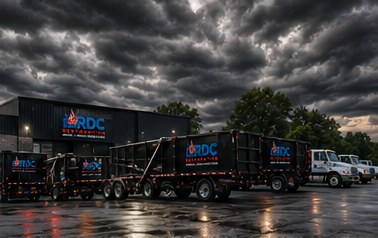
Ridgewood, NJ · Bergen County · Storm Damage
Storm Damage Restoration in Ridgewood, NJ
RDC Restoration handles storm damage restoration in Ridgewood when wind, heavy rain or a rising Ho-Ho-Kus Brook leaves your home open or flooded. Crews dispatch 24/7 from Berkeley Heights with tarps, board-up materials and extraction equipment, then dry the structure and document the loss for your insurance carrier.
- Emergency Roof Tarping
- Floodwater Extraction
- 24/7 Storm Dispatch
- Claim-Ready Documentation
Quick answer
For storm damage restoration in Ridgewood, NJ, RDC Restoration tarps damaged roofs, boards up broken windows and doors, clears storm debris, extracts floodwater from basements and dries the structure to IICRC standards. Crews dispatch 24/7 from the Berkeley Heights hub, and RDC documents the damage and bills insurance directly. Call (908) 253-9000 as soon as it is safe to do so.
Storm Damage in Ridgewood
Storm Damage Restoration in Ridgewood for Wind, Rain and Rising Water
Ridgewood's mature shade trees and its two waterways give the Village much of its character, and they also explain why severe weather lands hard here. RDC Restoration provides storm damage restoration in Ridgewood for both halves of a storm loss: the openings that wind and falling limbs tear in a house, and the water that pours in through them or rises from below. Our storm damage restoration services cover tarping, board-up, debris removal, extraction and structural drying.
The Ho-Ho-Kus Brook and the Saddle River both run through Ridgewood, and their floodplains put low-lying blocks and parts of the downtown at risk during heavy rain. Runoff from the surrounding hills moves fast, and high groundwater near the brooks pushes water through older basement walls. A single nor'easter or the remnants of a tropical storm can deliver all of it at once, along with downed limbs and widespread power outages. Streets lined with old oaks and maples can lose several trees in the same blow, which leaves crews and utilities stretched across the Village.
RDC has worked across New Jersey for 27+ years with IICRC-certified crews, and Ridgewood is covered from our Berkeley Heights hub, the same location behind our water damage restoration throughout Bergen County. We close up openings first, then extract, dry and document. Once the property is stable, permanent roof, window and siding repairs belong to your chosen contractor, who works from the records we provide.
More on Storm Damage Restoration →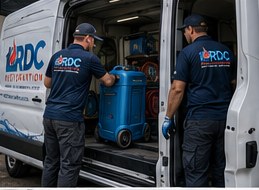
Local risks
Why Ridgewood Takes Storms Hard
Ridgewood combines brook-side floodplains, older foundations and a dense canopy of large trees. That combination means a storm that only scatters branches in some towns can bring a punctured roof and a flooded basement to the same Ridgewood house in one night.
Ho-Ho-Kus Brook flooding
Homes along the Ho-Ho-Kus Brook corridor sit close to a channel that rises quickly in a downpour. When the brook overtops its banks, yards, detached garages and finished lower levels can take on water that carries mud, leaves and debris inside.
Saddle River overflow
The Saddle River runs along the eastern side of the Village. Days of rain from tropical remnants or a stalled system can keep it high, and that high water holds groundwater against basement walls well after the skies clear.
Big trees over old roofs
The tree-shaded streets of Willard and Somerville mean heavy limbs hang over many roofs. Saturated soil plus strong wind can uproot entire trees, which can split a roof, crush a porch and shatter windows in a single fall.
Stone and block foundations
Many Victorian and early-twentieth-century homes sit on foundations never designed to stay dry. Wind-driven rain and rising groundwater find mortar joints and cracks, and our basement waterproofing team in Ridgewood can address recurring seepage once the emergency is under control.
Outages that stop sump pumps
Wind, ice and falling trees knock out power across Bergen County, and a sump pump without electricity cannot keep pace with rising groundwater. Our article on what to do when a sump pump fails in a storm walks through backup options.
Downtown runoff
Paved areas around the train station and the central business district shed water fast, and storm drains can back up in a cloudburst. Shop owners facing water at the door or below grade can turn to our commercial restoration page for Ridgewood.
Ridgewood
Flood Cleanup in Ridgewood Basements and Lower Levels
Water from an overflowing brook is not clean water. It can carry soil, lawn chemicals, oil from driveways and sewage, so flood cleanup in Ridgewood treats affected materials as contaminated until proven otherwise. RDC pumps out standing water with truck-mounted and submersible equipment, removes saturated carpet, pad and drywall that cannot be saved, and cleans and sanitizes what remains. Basement furniture, stored boxes and appliances that sat in floodwater are photographed and set aside for your adjuster before anything is discarded.
Then the drying begins. Commercial air movers and dehumidifiers run while technicians take daily moisture readings in walls, floors and framing. In older Ridgewood homes with plaster and stone foundations, moisture can hide for a long time, so we keep measuring until readings reach the target. When the source turns out to be a failed fitting rather than the storm, our water damage restoration services in Ridgewood follow the same drying standard.
- Pumping of standing floodwater
- Removal of soaked carpet, pad and drywall
- Cleaning and sanitizing of contaminated areas
- Daily moisture readings until dry
Ridgewood
Emergency Roof Tarping in Ridgewood After Wind or a Falling Limb
An open roof lets water in every time it rains, which turns a contained loss into ruined ceilings, wet insulation and cupped hardwood floors. Emergency roof tarping in Ridgewood seals that opening with heavy-duty, weather-tight tarps fastened over the damaged section, so the house stays dry until your roofer can make permanent repairs. A tarp is a temporary measure, but a well-secured one can hold through several more storms while you line up a roofer and settle the claim.
Many older Ridgewood homes have steep pitches, multiple gables and dormers, which take care and the right equipment to cover properly. Crews dispatch 24/7, and we board up broken windows and doors on the same visit. We photograph the roof before and after tarping so your insurer can see its condition right after the storm, which helps when the adjuster cannot get out to the house right away during a busy storm week.
- Weather-tight tarps over roof breaches
- Board-up of broken windows and doors
- Before-and-after photos for the adjuster
- Interior checks for water that already got in
Ridgewood
Fallen Tree Damage in Ridgewood: Securing the House Underneath
When a tree comes down on a house, the first call is usually to a tree service that can lift the trunk off safely. Fallen tree damage in Ridgewood rarely ends there. Once the weight is gone, the roof deck, gutters, windows and siding are left open to the next band of rain, and branches, shingles and broken glass are scattered inside and out.
RDC clears storm debris, tarps the roof opening, boards up broken windows and extracts any water that came in through the breach. We document the impact area in detail so your insurer and your contractor can see exactly what the tree damaged and where water traveled afterward. Quick drying matters here, since wet insulation and ceiling materials left in place can start growing mold. If the tree also pulled down gutters or punched through siding, those openings are covered too, so wind-driven rain cannot find its way into wall cavities.
- Debris and glass cleared from the home
- Tarping after the tree service removes the trunk
- Water extraction through the breach
- Detailed photos of the impact area
First steps
What to Do First After a Storm Hits Your Ridgewood Home
- Stay away from downed lines. Treat every fallen wire as live and keep children and pets back. Check National Weather Service alerts before heading outside, since a second line of storms often follows the first.
- Photograph before you move anything. Take wide and close-up photos of the roof, windows, yard, basement water line and any tree on the house. Those images, taken before cleanup starts, give your adjuster the clearest picture of what the storm actually did.
- Lift belongings out of the water. Move rugs, boxes, electronics and furniture to a dry floor if you can do it safely. Items stored on basement floors near the brooks are often the first to soak through, so start there and work upward.
- Shut power to wet areas. If water is near outlets, appliances or the electrical panel, do not step into it. If the panel is on a dry floor, switch off breakers for the flooded level. Otherwise, wait for the utility or an electrician.
- Call RDC and your carrier. Call (908) 253-9000 to get tarping, board-up and extraction underway, then open your claim. Crews dispatch 24/7, and getting the roof covered early limits how much more water reaches your ceilings and walls.
How we work
Our Storm Response Process in Ridgewood
1. Dispatch and secure
A crew arrives with tarps, plywood and pumps. Roof openings are covered and broken windows and doors are boarded so rain, wind and intruders stay out while the rest of the storm damage restoration in Ridgewood proceeds.
2. Clear storm debris
Branches, shingles, broken glass and soaked materials are removed from inside the house and the immediate work area, making room for safe extraction and giving your adjuster an unobstructed view of the damage.
3. Extract the water
Truck-mounted and submersible pumps pull standing water from basements and lower levels. Contaminated floodwater is handled with cleaning and sanitizing steps that clean rainwater intrusion does not always require. Equipment runs on its own power when the grid is down.
4. Dry and monitor
Air movers and dehumidifiers dry framing, subfloors and walls while technicians record moisture readings each day. Drying continues until materials reach target levels, which keeps mold from forming behind finished surfaces.
5. Document for your claim
You receive photos, moisture logs and notes on how water entered, whether through the roof, a window or the foundation. That record supports the claim and gives your contractor a clear scope for repairs.
Insurance
Flood vs. Wind Coverage for Ridgewood Storm Claims
Standard homeowners policies typically cover wind damage, trees that strike the house and rain that enters through a storm-created opening. Water that rises from an overflowing brook or flows in across the ground is usually classed as flood, which requires a separate flood policy. Homes near the Ho-Ho-Kus Brook and the Saddle River can end up with both kinds of damage from one storm. Our article on water damage versus flood insurance in New Jersey explains the difference.
RDC documents each source separately, with photos, moisture maps and notes on where water came in, then bills your carrier directly wherever possible. Clear records matter when two policies or two adjusters are involved. Repairs to roofing, siding and interior finishes then move to your contractor.
Full-service restoration
Other RDC services in Ridgewood
Water Damage Restoration
Water Damage Restoration in Ridgewood →Burst Pipe & Winter Water Damage
Burst Pipe & Winter Water Damage in Ridgewood →Mold Remediation
Mold Remediation in Ridgewood →Mold Inspection & Testing
Mold Inspection & Testing in Ridgewood →Basement Waterproofing
Basement Waterproofing in Ridgewood →Fire & Smoke Damage
Fire & Smoke Damage in Ridgewood →Commercial Restoration
Commercial Restoration in Ridgewood →Sewage Cleanup
About Sewage Cleanup →Asbestos Testing & Abatement
About Asbestos Testing & Abatement →Hoarding Cleanup
About Hoarding Cleanup →Ridgewood FAQs
Storm Damage in Ridgewood: common questions
Does storm damage restoration in Ridgewood include basement flooding from the brook?
Yes. RDC extracts floodwater, removes soaked materials, cleans and sanitizes contaminated areas and dries the basement with commercial equipment. Insurance for brook or surface flooding usually runs through a flood policy rather than a homeowners policy, so we document the water source clearly. That record helps whichever carrier handles the claim decide what is covered.
Can RDC remove a tree that fell on my roof?
A tree service should lift the trunk and large limbs, since that work needs specialized rigging. RDC handles what comes next: clearing debris and broken glass, tarping the roof opening, boarding broken windows, extracting water that came in and drying the structure. We can be ready to tarp as soon as the tree crew finishes, so the house is not left open overnight.
My power went out and the sump pump stopped. What should I do?
Stay out of standing water if outlets or appliances are near it. Once it is safe, call (908) 253-9000. RDC brings pumps that do not rely on your home's power, extracts the water and starts drying. After the emergency, a battery backup or generator connection for the pump is worth discussing with a plumber or electrician before the next storm.
What if lightning starts a fire during a storm?
Lightning can ignite attics or damage wiring, and the result is a fire loss with storm damage on top. RDC can tarp the roof and extract water while our fire and smoke damage restoration team in Ridgewood handles soot cleanup and odor removal. Both parts are documented in one file so your adjuster sees the full picture of what happened.
Do you respond to storm damage in towns near Ridgewood?
Yes. Severe weather usually hits a wide area, and our Berkeley Heights hub covers Ridgewood along with the rest of northern New Jersey. We handle storm damage restoration in Paramus and storm damage restoration in Teaneck, among many other towns across the county. Call (908) 253-9000 any time, and crews dispatch 24/7.
Storm Damage in Ridgewood? Get It Covered Tonight
RDC crews dispatch 24/7 to tarp roofs, board up windows and pump out flooded basements across Ridgewood. Call (908) 253-9000 and we will document everything for your claim.