
Ridgewood, NJ · Bergen County · Fire & Smoke Damage
Fire & Smoke Damage Restoration in Ridgewood, NJ
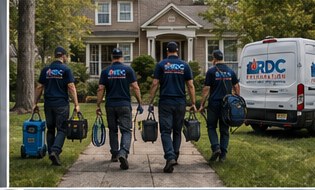
RDC Restoration provides fire damage restoration in Ridgewood for Victorian homes on shaded side streets, apartments above downtown shops and everything in between. Crews dispatch 24/7 from our Berkeley Heights hub to board up openings, extract firefighting water, remove soot, clear smoke odor from ductwork and document the loss for your insurer.
- 24/7 Board-Up & Tarping
- IICRC-Certified Crews
- Contents Pack-Out & Cleaning
- Direct Insurance Billing
Quick answer
RDC Restoration handles fire damage restoration in Ridgewood, NJ around the clock. IICRC-certified crews board up and tarp the house, extract the water left by firefighters, dry the structure, remove soot and char, clean HVAC ductwork, eliminate smoke odor at the source and pack out contents for off-site cleaning. RDC bills insurance directly. Call (908) 253-9000 any time, day or night.
Fire & Smoke Damage in Ridgewood
Fire Damage Restoration in Ridgewood, From Board-Up to Odor-Free
A house fire in the Village rarely stays where it started. Smoke climbs the stairwell, soot settles on plaster crown molding two floors up, and the water used to put the fire out soaks into old subfloors. RDC Restoration delivers fire damage restoration in Ridgewood with one goal: stop the secondary damage early so more of the house, and more of what is inside it, can be cleaned instead of thrown away. The full scope of that work is laid out on our fire and smoke damage restoration service page.
Ridgewood's housing stock shapes how a fire behaves. Many homes around the Willard and Somerville school neighborhoods date to the Victorian era or the early twentieth century, with working fireplaces, plaster walls, built-in cabinetry and attic spaces that connect to the floors below in ways newer houses do not. Smoke follows those pathways. So do the acidic residues that etch glass, tarnish brass hardware and yellow painted trim if they sit too long.
RDC has served New Jersey for 27+ years with IICRC-certified crews, also credentialed through NORMI and AHERA, and Ridgewood is covered from our Berkeley Heights hub. Whether the call comes from a colonial on the West Side or a condo near the train station, the order of work is the same: secure the building, measure how far smoke and water traveled, clean what can be saved and record every step for your adjuster.
More on Fire & Smoke Damage Restoration →
Local risks
Why Fires in Ridgewood Homes Spread Smoke So Far
Ridgewood's tree-lined streets hold a large share of older houses, and older houses carry their own fire risks. The way these homes were built, how they are heated through Bergen County winters and how tightly downtown buildings sit together all affect how far smoke, soot and water travel after the fire department leaves.
Fireplaces and chimneys
Wood-burning fireplaces are common in the Village's older homes. A cracked flue liner or creosote buildup can start a chimney fire that pushes smoke into bedrooms and the attic. Even a chimney fire that stays contained usually leaves fine soot on walls and ceilings well away from the hearth.
Wiring behind plaster
Houses built early in the twentieth century may still have original or patched wiring hidden behind plaster. A fire that starts inside a wall cavity can smolder before anyone notices. Our guide to electrical fire safety in New Jersey homes covers the warning signs worth checking.
Kitchen grease fires
The National Fire Protection Association identifies cooking as a leading cause of home fires. Grease smoke is sticky, and in Ridgewood homes with open kitchens and family rooms it coats cabinets, ceilings and upholstery across the whole first floor.
Furnaces and boilers
Heating systems run hard through northern New Jersey winters, and many Ridgewood basements still hold older boilers. A malfunction in the mechanical room sends smoke straight into the ductwork, which spreads soot to every room the system serves before anyone smells a thing upstairs.
Apartments over storefronts
Along Ridgewood Avenue and East Ridgewood Avenue, apartments sit above shops and restaurants. A fire in one space can push smoke into neighboring units and shared hallways, so each affected unit needs its own assessment, its own cleaning plan and its own documentation.
Lightning in summer storms
Summer thunderstorms roll through the Ho-Ho-Kus Brook and Saddle River valleys, and a lightning strike can ignite an attic or damage wiring. When a fire follows severe weather, our storm damage restoration crews in Ridgewood can tarp the roof while soot cleanup begins.
Ridgewood
Smoke Odor Removal in Ridgewood That Treats the Source
Smoke odor is not a surface problem. Heated smoke particles push into porous materials like plaster, drywall, insulation, wood trim, carpet pad and upholstery, then release odor again every time the humidity climbs. Spraying fragrance covers it for a few days at most. Real smoke odor removal in Ridgewood starts by removing the residue that holds the smell, then treating the air and the materials that absorbed it.
RDC uses thermal fogging, ozone or hydroxyl treatment depending on the material and whether the family can stay in the home, and we clean HVAC ductwork so the system does not redistribute odor the first time the heat comes on. In older Ridgewood homes with open framing between floors, we check closets, attics and rooms above and below the fire, not just the room where it started. Our article on how smoke odor is removed after a fire explains why each step matters.
- Residue cleaned before deodorizing begins
- Thermal fogging, ozone or hydroxyl treatment
- HVAC and ductwork cleaning
- Checks of attics, closets and adjoining floors
Ridgewood
Fire Damage Cleanup in Ridgewood After the Trucks Pull Away
When the fire department clears the scene, the house is usually open to the weather and soaked through. Fire damage cleanup in Ridgewood begins with emergency board-up of broken windows and doors and tarping of any roof openings, which keeps rain, animals and intruders out while the rest of the work moves forward. We also shut down damaged utilities with your input and mark unsafe areas so family members and adjusters can move through the house safely.
Next comes the water. Hose streams can leave a large volume of water in finished basements, plaster ceilings and hardwood floors. We extract it, set commercial air movers and dehumidifiers and check moisture readings until the structure is dry, which limits mold growth behind walls. Charred debris and materials that cannot be saved are removed and logged. Repairs to framing, roofing and finishes then go to the contractor you choose, working from our documentation.
- Board-up of windows and doors
- Roof tarping over fire openings
- Firefighting water extraction and drying
- Char and debris removal with photo records
Ridgewood
Soot and Smoke Damage Cleanup in Ridgewood Homes and Belongings
Soot is acidic. Left on surfaces, it discolors marble, pits chrome fixtures and permanently stains grout and painted woodwork. Soot and smoke damage cleanup in Ridgewood calls for identifying which residue is present, because dry soot from a wood fire, oily soot from a kitchen and protein residue from burned food each need a different cleaning method.
Homes in the Ridge and West Side neighborhoods often have detailed plaster, original hardwood, stained glass and built-ins that deserve careful hand cleaning rather than replacement. For contents, we inventory, pack out and clean furniture, electronics, clothing, books and keepsakes off-site, deodorize them and bring them back once the house is ready. Clearing the rooms also lets drying and surface cleaning proceed faster, and the written inventory gives your adjuster a room-by-room list of what was affected, what was cleaned and what could not be saved.
- Residue type identified before cleaning
- Hand cleaning of plaster, trim and hardwood
- Contents inventory and pack-out
- Off-site cleaning and deodorizing of belongings
First steps
First Steps After a Fire in Your Ridgewood Home
- Wait for the all-clear. Do not go back inside until the fire department says the building is safe. Smoldering material, weakened floors and live wiring are real hazards, especially in older homes where soaked plaster ceilings can sag and fall without warning.
- Call your insurer, then RDC. Report the claim, then call RDC at (908) 253-9000. Crews dispatch 24/7 to board up the house, tarp the roof and begin documenting damage, which protects what is left and gives your adjuster a clear starting record.
- Leave the soot alone. Wiping soot with a household rag smears it deeper into paint and fabric. Avoid touching walls, upholstery and lampshades, and keep the furnace and air conditioning off until the ductwork has been checked for residue.
- Grab essentials if it is safe. If the fire department allows it, collect medications, documents, jewelry and laptops, and note where each item was. Leave furniture and larger contents in place for a professional pack-out and a full written inventory.
- Save every receipt. Keep receipts for hotel stays, meals, clothing and toiletries. Many homeowners policies include additional living expense coverage, and organized records make that part of the claim move faster with your adjuster.
How we work
How RDC Handles a Ridgewood Fire Loss
1. Secure the property
We board up broken windows and doors and tarp roof openings so weather and intruders stay out. This step comes first because an open house keeps losing value with every rainstorm and cold night that follows.
2. Assess smoke, soot and water
Technicians trace how far smoke and soot traveled, including into ductwork, attics and neighboring rooms, and map moisture from firefighting water. Every finding is photographed and recorded for the insurance file.
3. Extract water and dry
Pumps and extractors remove standing water, then air movers and dehumidifiers dry framing, subfloors and plaster. Daily moisture readings confirm progress so mold does not take hold inside walls or under floors.
4. Clean and deodorize
Soot and char are removed with methods matched to each surface, ductwork is cleaned and smoke odor is treated at the source. Packed-out contents are cleaned and deodorized off-site at the same time.
5. Document and hand off
When the fire damage restoration in Ridgewood is complete, you receive photos, moisture logs and a contents inventory. Your contractor uses that record to scope repairs, and your insurer uses it to settle the claim.
Insurance
Fire Insurance Claims for Ridgewood Homeowners
Homeowners policies generally cover sudden fire, the smoke damage it causes and the water used to fight it, though limits and exclusions vary by carrier. RDC photographs every affected room, logs moisture readings, inventories packed-out contents and bills your carrier directly wherever possible. That record helps your adjuster see the full reach of smoke migration, which is often far wider than the burned area.
Firefighting water is handled the same way as any other water damage restoration in Ridgewood, with drying verified by meter readings. If moisture lingered in a basement or wall before we arrived, our mold remediation team in Ridgewood can address it so a hidden problem does not surface later. We also keep records clean for your contractor.
Nearby
Fire & Smoke Damage across Bergen County
See the Bergen County service area, or another town nearby.
Full-service restoration
Other RDC services in Ridgewood
Water Damage Restoration
Water Damage Restoration in Ridgewood →Burst Pipe & Winter Water Damage
Burst Pipe & Winter Water Damage in Ridgewood →Mold Remediation
Mold Remediation in Ridgewood →Mold Inspection & Testing
Mold Inspection & Testing in Ridgewood →Basement Waterproofing
Basement Waterproofing in Ridgewood →Storm Damage
Storm Damage in Ridgewood →Commercial Restoration
Commercial Restoration in Ridgewood →Sewage Cleanup
About Sewage Cleanup →Asbestos Testing & Abatement
About Asbestos Testing & Abatement →Hoarding Cleanup
About Hoarding Cleanup →Ridgewood FAQs
Fire & Smoke Damage in Ridgewood: common questions
How long will smoke odor last in my Ridgewood house without treatment?
It can linger for a long time. Smoke particles sit in plaster, insulation, wood and fabric and release odor whenever humidity rises, which is why many homeowners notice the smell returning on damp summer days. Professional treatment removes the residue first, then deodorizes the air and materials. Airing out the house helps only a little and does not reach odor trapped inside walls or ductwork.
Can plaster walls and original woodwork be saved after a fire?
Often, yes. Plaster and solid wood hold up better than many people expect when soot is removed promptly with the right method. RDC tests surfaces, cleans by hand where detail matters and seals odor where needed. Areas that are charred through or structurally weakened are documented for your contractor, who decides on repairs with you and your insurer.
Should I run my furnace or air conditioning after a fire?
Not until the system has been checked. Ductwork pulls in smoke and soot during a fire, and turning the system on can blow that residue into rooms that were untouched. RDC inspects and cleans the ducts as part of the job, and we coordinate with your HVAC technician if the equipment itself was damaged by heat or water.
Is firefighting water part of fire damage restoration in Ridgewood?
Yes. Water from hoses can soak framing, subfloors and finished basements, and it needs extraction and drying just like a plumbing leak. RDC dries the structure to standard with meter checks, the same process we use for burst pipe water damage in Ridgewood. Handling fire and water together on one claim keeps the documentation consistent for your adjuster.
Do you handle fire losses in towns near Ridgewood?
Yes. Our Berkeley Heights hub covers the Ridgewood area along with the rest of northern New Jersey, including fire damage restoration in Paramus and fire damage restoration in Hackensack. We also handle water damage restoration across Bergen County. Crews dispatch 24/7, and the call to (908) 253-9000 is the same wherever you are.
Fire in Your Ridgewood Home? Call RDC Now
Crews dispatch 24/7 from Berkeley Heights to board up, dry and clean your Ridgewood home and document the loss for your insurer. Call (908) 253-9000 day or night.