
RDC Restoration Blog · New Jersey
Water Heater Leaking? What NJ Homeowners Should Do
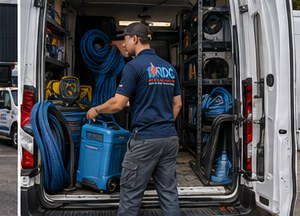
A water heater leak can flood a basement or utility closet in minutes, and the first few of them decide how big the cleanup gets. If you see water pooling under the tank, shut off the water supply and the power or gas to the unit, move belongings out of the way, and start extracting the water. This guide walks New Jersey homeowners through exactly what to do next, why fast action matters, and when it is time to call a certified restoration crew.
What to do first when your water heater is leaking
The moment you notice a leak, work through these steps in order. Doing them calmly and quickly protects your home, your family, and your wallet.
- Shut off the water supply. Turn the cold-water inlet valve on top of the tank clockwise until it stops. If it will not budge, close the main water shutoff for the house.
- Kill the power or gas. For an electric unit, switch off its breaker at the panel. For a gas unit, turn the gas control dial to “off.” Never leave a leaking heater energized.
- Move belongings up and out. Lift boxes, tools, and stored items off the floor so they are not sitting in water while it spreads.
- Start extracting water. Use a wet/dry vacuum, towels, or a mop to remove standing water before it soaks into subfloor, drywall, and carpet padding.
- Document everything. Photograph the tank, the water line, and any damaged items before you clean up — your insurance carrier will want it.
- Call for help if it is spreading. If water has reached finished areas or you cannot stop the flow, call RDC Restoration at (908) 253-9000, answered 24/7 across New Jersey.
Why water heaters leak in the first place
A water heater leak rarely comes out of nowhere. Knowing the cause helps you decide whether it is a quick fix or a sign the whole unit is done. The most common culprits we see in New Jersey basements are:
- Age and internal corrosion. Tanks typically last 8 to 12 years. As the interior rusts through, the tank itself starts to weep — and that damage cannot be repaired, only replaced.
- A failed temperature & pressure (T&P) relief valve. This safety valve discharges when pressure climbs too high. A leak here can mean the valve is faulty or the tank is over-pressurized.
- Loose or corroded connections. The hot and cold fittings on top can loosen over time; sometimes a simple tightening stops a slow drip.
- Drain-valve drips and sediment buildup. Hard-water sediment settles at the bottom, overheats the steel, and shortens tank life. A loose drain valve at the base is another frequent source.
- A cracked or split tank. Once the inner tank splits, water escapes fast. This is the failure that floods basements, and it is the reason to replace an aging unit before it lets go.
How a small water heater leak turns into major damage
Restoration is a race against time. A puddle you could have mopped up on day one becomes a structural drying job by the weekend, because water does not sit still — it wicks into drywall, migrates under flooring, and soaks the porous materials it touches.
Mold can start within 24 to 48 hours
Give trapped moisture a day or two and mold begins to colonize damp drywall, framing, and stored cardboard. That is why quick extraction and professional drying matter so much: they stop the problem before it becomes a mold remediation project on top of the original leak. If moisture has already reached wall cavities or subfloor, a homeowner mop simply cannot reach it — the water is hidden, and it keeps feeding mold until it is dried out properly.
Chronic dampness undermines your basement
Even a slow, repeated water heater leak keeps a basement humid, which invites musty odors, efflorescence on masonry, and long-term moisture problems. If your utility area struggles with recurring water, it may be worth pairing the cleanup with basement waterproofing so the space stays dry for good.
When to call a professional for water heater leak cleanup
You can handle a minor drip and a small puddle yourself. Call a professional the moment the situation involves any of the following:
- Water has spread across a large area or into a finished basement.
- Moisture is hidden behind walls, under floors, or inside cabinetry.
- The water is dirty, has sat for a while, or is mixing with anything contaminated.
- You smell must or mildew, which signals mold is already forming.
- You are unsure whether the structure is fully dry.
Certified crews carry moisture meters, commercial air movers, and dehumidifiers that a homeowner does not — and, just as important, they confirm the structure is dry to the wall cavity, not just the surface. Our full water damage restoration process follows the standards published by the IICRC, the industry body that sets the benchmark for proper water extraction and drying.
What water heater leak cleanup costs in New Jersey
The cost of cleaning up a water heater leak in New Jersey depends on the size of the affected area, how long the water sat, the materials involved, and how quickly drying begins. A small, contained job caught on day one is typically far less than a large or delayed one, because waiting lets damage spread and can add mold remediation to the bill. RDC Restoration gives free, itemized on-site estimates, and in covered losses we bill your insurance carrier directly and document the claim thoroughly — so you are not guessing at the numbers or fronting the cost.
How RDC Restoration handles a water heater leak
RDC Restoration dispatches from two central New Jersey hubs — Berkeley Heights in Union County and Piscataway in Middlesex County — so a certified crew reaches most addresses in all 21 counties while the damage is still containable. Founder Russell Calderone brings 27 years of experience and IICRC (WRT, ASD), NORMI, and AHERA credentials to every job. Our crews extract standing water, set up structural drying, monitor moisture readings until the space is verified dry, and address the source so the problem does not return. RDC is BBB A-rated with a 4.9-star reputation and offers direct insurance billing.
Key takeaways
- Shut off the water and the power or gas the instant you spot a water heater leak
- Extract and document before you clean — mold can start in 24 to 48 hours
- Replace an aging tank (8–12 years) before it splits and floods
- Call a pro for hidden moisture, large areas, or any musty smell
- RDC gives free, itemized on-site estimates and bills insurance directly
Water heater leaking in New Jersey right now? RDC Restoration answers 24/7.
Quick answers
Frequently asked questions
What should I do first when my water heater is leaking?
Shut off the cold-water inlet valve on top of the tank (or the main house shutoff), then cut the power at the breaker or the gas at the control dial. Move belongings off the floor, extract standing water, photograph the damage, and call RDC at (908) 253-9000 if it is spreading.
Can a water heater leak cause mold?
Yes. Trapped moisture from a water heater leak can start growing mold within 24 to 48 hours, especially in drywall, framing, and stored cardboard. Fast extraction and professional drying are the best way to prevent it.
Does RDC handle water heater leak cleanup in my New Jersey town?
Yes — RDC serves all 21 New Jersey counties, dispatched 24/7 from Berkeley Heights and Piscataway. Call (908) 253-9000.
Will my insurance cover the damage?
Sudden, accidental water damage from a failed water heater is often covered, though gradual leaks may not be. RDC documents the loss thoroughly and bills your carrier directly wherever possible.
Has RDC done this before?
RDC Restoration has 27 years of experience, IICRC and NORMI certifications, and a 4.9 rating across 117 Google reviews from New Jersey families and businesses.
New Jersey’s trusted restoration team.
Water, fire, or mold trouble? RDC Restoration dispatches the nearest crew 24/7, statewide. Call (908) 253-9000 or request a free estimate.