
RDC Restoration Blog · New Jersey
Interior vs Exterior Waterproofing: Which Is Right for Your NJ Home?
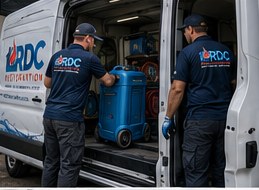
The interior vs exterior waterproofing decision comes down to where you stop the water: an interior system manages moisture after it reaches the foundation, while an exterior system seals the wall from the outside so water never gets in. Both keep a New Jersey basement dry — but they differ sharply in cost, disruption, and the kind of water problem they were built to solve.
Interior vs exterior waterproofing: the core difference
Interior waterproofing works from inside the basement. A crew cuts a channel around the perimeter of the slab, installs a perforated drain (a French drain) that captures water as it enters, and routes it to a sump pit where a pump lifts it out and away from the home. It is fast, minimally invasive, and it does not require tearing up your yard, driveway, or landscaping. Exterior waterproofing takes the opposite approach: crews excavate down to the base of the foundation, clean and repair the wall, apply a waterproof membrane or coating, and often add a footing drain before backfilling. It stops water before it ever touches the structure, which is the more thorough fix — and the more expensive one.
Neither method is universally “better.” The right choice depends on how water is entering, the condition of your foundation, your lot grading, and your budget. In many New Jersey homes the two approaches are even combined for a belt-and-suspenders result.
How interior waterproofing works
Because it targets water that has already reached the wall, interior waterproofing is the go-to solution for chronic seepage, a high water table, or a basement that floods after heavy rain and spring melt — conditions common across Union, Middlesex, and much of central New Jersey. The system pairs a sub-floor drain with a reliable sump pump and, ideally, a battery backup so it keeps working during the storm-driven power outages that cause the flooding in the first place. Installation usually finishes in a day or two with no exterior demolition.
How exterior waterproofing works
Exterior waterproofing is the right call when the foundation itself is the problem — active wall cracks, a bowing wall, deteriorating mortar, or hydrostatic pressure pushing water through the masonry. Sealing the wall from outside relieves that pressure and protects the structure, not just the interior finish. It is the more disruptive project because it involves excavation, but if you are already digging for a foundation repair, French drain, or new landscaping, adding exterior waterproofing at the same time is efficient and cost-effective.
How to choose for a New Jersey home
For most New Jersey homes with a dry, sound foundation that simply takes on water during storms, a well-designed interior system solves the flooding effectively and at a reasonable cost. Exterior waterproofing earns its higher price when the foundation is failing, when you see structural movement, or when persistent hydrostatic pressure needs to be relieved at the source. The honest answer for your house depends on your water table, soil type, grading, and exactly how the water is getting in. RDC assesses all of it on site and recommends the approach that fits your home — not a one-size package. If you are weighing your options, our basement waterproofing team will walk the basement with you and explain what we see.
- Water pooling on the floor after rain → usually an interior drain and sump
- Cracks, bowing, or wet masonry → likely exterior sealing plus repair
- Already excavating for another project → add exterior waterproofing now
- High water table or frequent outages → add a battery-backup sump pump
What each approach costs in New Jersey
Pricing for basement waterproofing in New Jersey depends on the size of the affected area, the condition of the foundation, the materials involved, and how quickly work begins. As a rule, interior systems are typically the more affordable route because there is no excavation, while exterior waterproofing costs more due to the digging, labor, and site restoration involved. A small, contained job is far less than a large or delayed one, because waiting lets moisture spread and can add mold remediation to the bill. RDC Restoration gives free, itemized on-site estimates and, on covered losses, bills your insurance carrier directly so you are not guessing at the total.
Signs your basement needs waterproofing now
Small warning signs tend to arrive long before an inch of standing water does. Catching them early is the difference between a manageable interior drain and a full water damage restoration job. Watch for:
- A musty smell or visible mold along the base of the walls
- White chalky residue (efflorescence) on concrete or block
- Damp spots, bubbling paint, or stains where the wall meets the floor
- Cracks in the foundation wall or floor that are widening over time
- A sump pump that runs constantly or a basement that floods every storm
Why professional installation and fast response matter
Waterproofing is only as good as its diagnosis. A homeowner can bail out a wet basement, but finding the actual entry point — and choosing correctly between interior vs exterior waterproofing — takes trained eyes, moisture meters, and experience with New Jersey soil and foundations. RDC crews follow IICRC standards for water damage and drying, and Founder Russell Calderone holds IICRC (WRT, ASD), NORMI, and AHERA certifications backed by 27 years in the field. Speed matters just as much: water feeds mold within 24 to 48 hours, so the sooner a problem is contained, the less it costs and the healthier the home stays. Because RDC dispatches from two central hubs — Berkeley Heights in Union County and Piscataway in Middlesex County — a certified crew reaches most addresses across all 21 New Jersey counties while the damage is still containable. See our full service areas to confirm coverage in your town.
Weighing interior vs exterior waterproofing for your NJ basement? RDC answers 24/7.
Frequently asked questions
Is interior or exterior waterproofing better?
Neither is universally better. Interior waterproofing is ideal for managing seepage and a high water table at a lower cost, while exterior waterproofing is the stronger fix when the foundation itself is cracking, bowing, or under hydrostatic pressure. RDC recommends the approach that matches your specific water problem.
How long does interior waterproofing take to install?
Most interior French-drain and sump-pump systems are installed in about one to two days, with no exterior excavation and minimal disruption to your yard or landscaping.
Does RDC handle basement waterproofing in my New Jersey town?
Yes — RDC serves all 21 New Jersey counties, dispatched 24/7 from Berkeley Heights and Piscataway. Call (908) 253-9000 to confirm coverage in your town.
Will my insurance cover basement waterproofing?
Coverage depends on your policy and the cause of loss. RDC documents the damage thoroughly and bills your carrier directly wherever the loss is covered, so you are not fronting the full cost.
Is the on-site estimate really free?
Yes — RDC provides free, no-pressure, itemized on-site estimates across New Jersey, backed by a BBB A rating and a 4.9-star reputation.
Still deciding between interior vs exterior waterproofing? Don’t let a damp basement become a mold problem. Call RDC Restoration at (908) 253-9000 for 24/7 help statewide, or request your free estimate and we’ll assess your foundation and recommend the right fix.
New Jersey’s trusted restoration team.
Water, fire, or mold trouble? RDC Restoration dispatches the nearest crew 24/7, statewide.