RDC Restoration Blog · New Jersey
Emergency Water Extraction: How It Works
Emergency water extraction is the fast removal of standing water from a flooded home or business, followed by professional structural drying that stops mold, warping, and rot before they take hold. When a pipe bursts, a basement floods, or an appliance fails, the first minutes decide how much you lose — and how much it costs to make things right.
What emergency water extraction actually means
People often use “water extraction,” “water removal,” and “water damage restoration” as if they were the same thing, but they describe different stages of one emergency. Extraction is the physical pulling of water out of carpet, pad, subfloor, and standing pools using truck-mounted and portable equipment. Drying is the slower, science-driven phase that removes the moisture left inside building materials afterward. Skip or shortcut either stage and you invite the exact problems — mold, buckled flooring, delaminated drywall — that a proper job is meant to prevent. Real emergency water extraction is both stages done in the right order, verified with instruments rather than a guess.
The emergency water extraction process, step by step
Every RDC Restoration job follows the same disciplined sequence, whether it is a finished basement in Berkeley Heights or a flooded office in Piscataway. Here is what happens from the moment a certified crew arrives:
- Safety and source control. The crew shuts off the water source and checks for electrical or contamination hazards before anyone steps into standing water.
- Assessment and moisture mapping. Using moisture meters and thermal imaging, technicians find hidden water behind walls, under cabinets, and beneath flooring — the water you cannot see is what breeds mold.
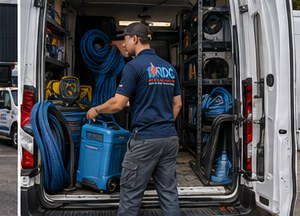
- Bulk water removal. Truck-mounted units and portable extractors pull thousands of gallons quickly. Speed here is what limits the total damage.
- Material removal, if needed. Saturated pad, unsalvageable drywall, or contaminated materials are removed and documented for your insurance claim.
- Structural drying. Commercial air movers and dehumidifiers are placed by calculation, not by habit, to dry the structure evenly.
- Monitoring and verification. Crews return to log moisture readings daily until materials hit dry standard, then remove the equipment.
That final verification step is the one homeowners skip most often on their own — and it is why sealed-up dampness turns into a mold call weeks later. RDC follows IICRC drying standards so “dry” means measured, not assumed.
Why fast emergency water extraction matters in New Jersey
Restoration is a race against the clock. Water wicks into porous materials within minutes, mold can begin colonizing within 24 to 48 hours, and the longer contaminated water sits, the wider it spreads. New Jersey’s humid summers and cold, freeze-prone winters make both extremes common — a July basement seep and a January burst pipe create the same urgency. Because RDC Restoration dispatches from two central hubs, Berkeley Heights in Union County and Piscataway in Middlesex County, a certified crew reaches most New Jersey addresses while the damage is still containable. Getting emergency water extraction started quickly protects your family’s health and keeps the final bill down.
Common causes of water damage in NJ homes
Most emergency calls trace back to a short list of culprits. Knowing them helps you catch trouble early:
- Burst or frozen pipes during cold snaps
- Failed water heaters, dishwashers, and washing machine hoses
- Heavy-rain and storm flooding, especially in below-grade basements
- Sump pump failure during power outages
- Roof leaks and ice dams that let water track down inside walls
- Sewer backups, which introduce contaminated Category 3 water
If your basement floods repeatedly, extraction is only half the answer. Pairing cleanup with basement waterproofing addresses the root cause so you are not calling for the same emergency every storm.
Water categories change the whole job
Not all water is equal, and the category dictates the safe response. Category 1 is clean water from a supply line. Category 2, “gray water,” carries some contamination from appliances or overflow. Category 3, “black water,” includes sewage and flood water and is a genuine health hazard. The higher the category — and the longer it sits — the more aggressive the containment, extraction, and disinfection have to be. This is one reason DIY shop-vac cleanups go wrong: a homeowner cannot always tell how contaminated the water is, and handling Category 3 without proper protection is dangerous. When contamination is involved, professional water damage restoration is not optional.
DIY versus professional water extraction
A small, clean spill caught immediately — a cup of water, a minor overflow — you can often manage yourself with towels and a fan. Call a professional the moment the situation involves any of the following:
- Contaminated (Category 2 or 3) water
- A large affected area or more than one room
- Water that has been sitting for hours or longer
- Hidden moisture behind walls, under floors, or above ceilings
- Any health concern, or vulnerable people in the home
Certified crews carry commercial extractors, moisture meters, and containment gear that a homeowner does not, and — just as important — they find and fix the source so the problem does not return. Left-behind moisture is the number-one reason a “handled” leak becomes a mold remediation job a month later.
What emergency water extraction costs in New Jersey
Pricing depends on the size of the affected area, how contaminated the water is, the materials involved, and how quickly work begins. A small, contained job is typically far less than a large or delayed one, because waiting lets damage spread and can add mold remediation to the bill. RDC Restoration provides free, itemized on-site estimates, and on covered losses we document the damage thoroughly and bill your insurance carrier directly wherever possible — so you are not guessing at the number or fronting the cost. The honest way to keep emergency water extraction affordable is simple: start it fast.
Why New Jersey homeowners trust RDC Restoration
RDC Restoration has spent 27 years restoring homes and businesses across all 21 New Jersey counties. Founder Russell Calderone leads a crew that holds IICRC (WRT and ASD), NORMI, and AHERA certifications, and RDC is BBB A-rated with a 4.9-star reputation built one emergency at a time. Direct insurance billing, honest estimates, and a 24/7 line mean that when water is spreading, one call to (908) 253-9000 reaches people who have handled exactly your situation before. See the full list of towns we cover on our service areas page, or learn more about RDC Restoration.
Key takeaways
- Emergency water extraction is two stages: fast removal, then verified drying
- Act fast — mold can start within 24 to 48 hours
- Water category dictates the safe response; contamination means call a pro
- Document everything for your insurance claim
- Fix the source, not just the symptom
- Call (908) 253-9000 for 24/7 help across New Jersey
Dealing with this in New Jersey right now? RDC Restoration answers 24/7.
Frequently asked questions
What is emergency water extraction and how is it different from drying?
Emergency water extraction is the fast physical removal of standing water with truck-mounted and portable units. Drying is the follow-up phase where air movers and dehumidifiers pull the remaining moisture out of building materials. A complete job needs both, verified with moisture meters. Questions? Call RDC at (908) 253-9000.
How fast should water extraction begin after a leak or flood in NJ?
As fast as possible — ideally within the first hour. Mold can begin within 24 to 48 hours and materials keep absorbing water every minute it sits. RDC dispatches 24/7 from Berkeley Heights and Piscataway and typically reaches nearby New Jersey towns within about an hour.
Does homeowners insurance cover emergency water extraction in New Jersey?
Sudden, accidental water damage — a burst pipe or failed appliance — is commonly covered, while gradual leaks and flood water often are not. RDC documents the loss thoroughly and bills your carrier directly wherever possible. Call (908) 253-9000 and we will walk your claim with you.
Can I extract the water myself or do I need a professional?
A tiny, clean spill caught immediately you can often handle. Call a professional the moment there is contaminated water, a large area, standing time, hidden moisture, or any health concern — those need commercial equipment and proper containment.
Which New Jersey areas does RDC Restoration serve?
RDC serves all 21 New Jersey counties for emergency water extraction, dispatched around the clock from our Union County and Middlesex County hubs. See our service areas page for details.
New Jersey’s trusted restoration team.
Water, fire, or mold trouble? RDC Restoration dispatches the nearest crew 24/7, statewide.