
RDC Restoration Blog · New Jersey
Basement Efflorescence in New Jersey: What the White Chalky Residue Means
Basement efflorescence is that white, powdery, chalk-like residue you find crusting across concrete or block walls in New Jersey homes. It is not mold and it is not toxic — but it is a reliable signal that water is moving through your foundation, and that is worth paying attention to before it turns into a bigger, more expensive problem.
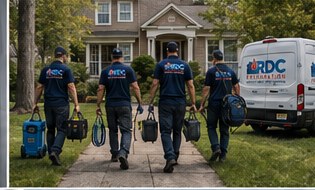
After 27 years diagnosing wet basements from Berkeley Heights to Piscataway, my crews at RDC Restoration see this white bloom nearly every week. Homeowners scrub it off, it comes back, and they assume the wall is just “old.” The truth is simpler: the powder is a symptom, and the water behind it is the disease. Here is exactly what basement efflorescence is, how to tell it apart from mold, why New Jersey foundations are so prone to it, and how we stop it for good.
What basement efflorescence actually is
Efflorescence is a mineral salt deposit. When groundwater seeps into porous concrete, cinder block, brick, or mortar, it dissolves the natural salts locked inside that masonry. The salty water is then drawn to the surface of the wall, where it evaporates into your basement air. The water disappears, but the salt it carried cannot — so it is left behind as a crystalline white or grayish crust. That crust is basement efflorescence.
Two conditions have to be present for it to form: a source of moisture inside the masonry, and a surface where that moisture can evaporate. That is why you almost always see it on foundation walls, the base of chimneys, around cove joints where the wall meets the floor, and near hairline cracks. The salt itself is harmless. The moisture that delivered it is the part that matters.
Efflorescence vs. mold: how to tell the difference
This is the question we get asked most, and getting it right changes what you do next. Efflorescence and mold both show up on damp basement walls, but they are completely different substances:
- Color & texture: Efflorescence is white, off-white, or gray and crystalline — it looks like dried salt or chalk. Mold is usually green, black, brown, or fuzzy.
- The touch test: Efflorescence is dry and brushes off as a fine powder. Mold smears when you wipe it and often feels slimy or fuzzy.
- Smell: Efflorescence has no odor. Mold gives off a musty, earthy smell.
- Location: Efflorescence sits on masonry surfaces where water evaporates. Mold prefers organic material — drywall, wood framing, cardboard, and carpet.
A quick field check: dissolve a pinch in water. True efflorescence dissolves; mold does not. If you are seeing dark growth, a musty smell, or spread onto drywall and framing, that is a job for professional mold remediation, not a scrub brush. When our technicians are on site we can tell the two apart in minutes.
Why New Jersey basements get efflorescence so often
Basement efflorescence is especially common across New Jersey, and the reasons are geological and seasonal. Much of the state sits on dense clay soil that holds water instead of draining it. After spring thaw, summer thunderstorms, or a wet nor’easter, that saturated soil presses water against your foundation — a force called hydrostatic pressure — and drives moisture straight through the masonry.
Older housing stock adds to it. Many homes here were built with concrete block or poured walls that were never fully waterproofed on the exterior, so the masonry wicks groundwater like a sponge. Common local triggers we trace back to include:
- Poor exterior grading that slopes water toward the house instead of away
- Clogged or missing gutters and downspouts dumping runoff at the foundation
- A high seasonal water table, especially in low-lying and riverside towns
- Failed or absent footing drains around an aging foundation
- Cracks and porous foundation walls that give water an easy path in
Because the underlying cause is water pressure and drainage, efflorescence tends to come and go with the seasons — heaviest after wet stretches, lighter in dry summers. That cycle is your foundation telling you where it leaks.
Why basement efflorescence is a warning sign worth acting on
On its own, the salt deposit will not hurt you or your home. The problem is what it proves: liquid water is actively passing through your foundation. Ignore that long enough and the same moisture path creates real damage.
- Mold follows moisture. The humidity feeding efflorescence also feeds mold on any nearby wood, drywall, or stored belongings.
- Cracks widen. The hydrostatic pressure pushing water in also works on hairline cracks, and freeze-thaw cycles pry them open over New Jersey winters.
- Finishes fail. Paint blisters, drywall crumbles, and flooring lifts once moisture keeps cycling through.
- Air quality drops. A chronically damp basement raises humidity throughout the house, which can affect comfort and health.
In short, efflorescence is an early, visible, free warning. Reading it correctly now is far cheaper than repairing water-damaged framing later. If you have already had seepage, our water damage restoration team can assess how far it has spread.
Can you remove efflorescence yourself?
You can clean the surface, and for light, cosmetic deposits it is reasonable to do so. Dry-brush the crust with a stiff nylon brush first, then treat stubborn spots with a masonry-safe efflorescence cleaner, following the manufacturer’s directions and wearing gloves and eye protection. Never start with water alone — it re-dissolves the salt and drives it back into the wall.
But understand what cleaning does and does not accomplish. Wiping off the powder is purely cosmetic. As long as water keeps migrating through the masonry, the efflorescence returns — often within weeks. And the worst move is painting or sealing over it: trapping the moisture behind a coating makes the paint peel and can push water to find a new exit. Removal treats the symptom. Only stopping the water treats the cause.
How RDC Restoration stops basement efflorescence at the source
Because basement efflorescence is a water problem, we fix the water, not just the wall. RDC Restoration follows IICRC industry standards for moisture diagnosis and drying, and our founder holds IICRC (WRT, ASD), NORMI, and AHERA certifications. A typical visit looks like this:
- Diagnose the entry point. We inspect grading, gutters, cracks, cove joints, and the water table to find where moisture is entering, not just where the salt shows.
- Relieve the pressure. Interior perimeter drainage channels water away from the slab and walls so hydrostatic pressure can no longer push it through.
- Manage the water. Where needed we add a sump-pump system with a battery backup to discharge groundwater before it reaches the foundation.
- Seal and finish. We seal cracks and porous masonry and, once the wall is dry, restore the surface.
Our basement waterproofing solutions are dispatched from hubs in Berkeley Heights (Union County) and Piscataway (Middlesex County), and we serve all 21 New Jersey counties — see our full service areas. We are BBB A-rated, hold a 4.9-star reputation, and bill your insurance directly when a covered water loss is involved.
Frequently asked questions
Is basement efflorescence dangerous to my health?
No. The salt deposit itself is not toxic and does not release harmful spores the way mold does. The concern is indirect: the moisture that creates efflorescence can also feed mold and raise indoor humidity, so it is a signal to address the underlying water rather than a health hazard on its own.
How do I know if it’s efflorescence or mold?
Efflorescence is white or gray, crystalline, odorless, and brushes off as a dry powder from masonry. Mold is typically green, black, or brown, smells musty, smears when wiped, and grows on organic materials like wood and drywall. If a pinch dissolves in water, it is efflorescence. When in doubt, have it inspected — call RDC at (908) 253-9000.
Will efflorescence go away on its own?
Not permanently. It may fade during dry summer stretches, but it returns every time your New Jersey soil saturates and pushes water back through the foundation. It only stops for good once the water source is controlled with proper drainage and waterproofing.
Can I just paint or seal over the white residue?
No. Coating over efflorescence traps moisture behind the paint, so the finish peels and the water simply finds another way out. Surface cleaners remove the look; only stopping the water at its source keeps it from coming back.
Does homeowners insurance cover basement waterproofing?
Waterproofing to prevent seepage is usually considered maintenance and is typically not covered, while sudden water-damage events may be. Because coverage varies, we assess each situation and, when a covered loss applies, bill your insurer directly. Call us to review your specific case.
Seeing white residue creeping across your basement walls? Do not wait for it to become mold or a foundation crack. RDC Restoration answers 24/7 with certified New Jersey crews — call (908) 253-9000 or schedule a free inspection and we will find the water behind your basement efflorescence and stop it at the source.
Water, fire, or mold damage in New Jersey?
RDC Restoration answers 24/7 with certified crews from Berkeley Heights & Piscataway — fast response, direct insurance billing.