
Morristown, NJ · Morris County · Burst Pipe & Winter Water Damage
Burst Pipe & Winter Water Damage in Morristown, NJ
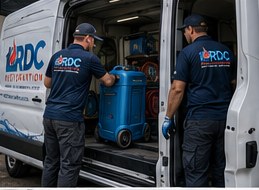
RDC Restoration handles burst pipe water damage in Morristown and the rest of what winter brings: frozen supply lines in Victorian walls, ice dam leaks through upstairs ceilings, and thaw seepage into stone basements near the Whippany River. Crews dispatch 24/7 from Berkeley Heights to extract water, dry the structure and document the loss.
- 24/7 winter dispatch
- Emergency water extraction
- Mold prevention while drying
- Direct insurance billing
Quick answer
For burst pipe water damage in Morristown, NJ, RDC Restoration dispatches IICRC-certified crews 24/7 to extract standing water, dry walls, floors and framing with commercial air movers and dehumidifiers, and record moisture readings until the structure is dry. RDC also handles ice dam leaks, thaw flooding and frozen sprinkler releases, applies mold prevention and bills insurance directly. A plumber or roofer handles the repair itself. Call (908) 253-9000.
Burst Pipe & Winter Water Damage in Morristown
Burst Pipe Water Damage in Morristown and Other Winter Water Losses
Burst pipe water damage in Morristown tends to follow a pattern. A cold snap settles over Morris County, a supply line in an exterior wall, crawl space or unheated porch freezes solid, and nothing seems wrong until the ice thaws and water starts running through the split. By the time someone notices a stain or hears dripping, water may have soaked plaster, hardwood and the ceiling below. RDC Restoration answers that call 24/7.
The town's housing makes winter harder on plumbing. Many Victorian homes near the Morristown Green and in Franklin Corners were plumbed long before modern insulation, with pipes running along outside walls and through basements set on stone foundations. Converted multi-unit houses and apartments above Town Center storefronts share risers, so one frozen line can affect several households. Steep older rooflines also collect snow, and the ice dams that form at the eaves push meltwater under the shingles.
RDC is not a plumber or a roofer. Your plumber repairs the pipe and a roofer clears the ice dam; RDC handles the emergency water extraction, structural drying, mold prevention and documentation for your insurer and contractor. The full range of cold-weather services is on our winter water damage page. Commuters near the train station and families in older single-family homes call for the same reason: the water needs to come out before it settles into floors and walls.
More on Burst Pipe & Winter Water Damage →
Local risks
Why Morristown Homes Are Prone to Winter Water Damage
Morristown's mix of historic houses, shared-wall buildings and river lowlands means winter water shows up in several ways. A frozen pipe on Speedwell Avenue, an ice dam in Franklin Corners and thaw seepage in The Hollow all need different drying plans.
Plumbing on outside walls
Older homes around the Green often route supply lines along exterior walls, under bay windows and through unheated mudrooms. Those runs freeze first in a cold snap, and a split inside the wall can leak for a long time before stains appear on plaster.
Ice dams on steep roofs
Victorian rooflines with dormers, valleys and poorly vented attics melt snow unevenly. Water refreezes at the cold eaves and backs up under shingles, soaking insulation and running into upstairs ceilings. Our article on how ice dams cause water damage explains why.
Thaw flooding near the river
In The Hollow and around Speedwell, rapid snowmelt and winter rain raise the Whippany River and the groundwater beside it. Stone foundations and older slabs let that water seep in, so basements get wet even when every pipe is intact.
Sump pumps in ice storms
Freezing rain brings down branches and power lines across Morris County. Without power a sump pump stops, and a frozen discharge line can make even a working pump overflow. Thaw water then fills the pit and spills into finished basements.
Vacant homes and empty units
Houses closed up for a winter trip, apartments between tenants and offices shut for the holidays can lose heat without anyone noticing. A furnace failure in an empty unit can freeze pipes and let water run for days before it is discovered.
Frozen fire-sprinkler lines
Shops, offices and apartment buildings downtown rely on sprinkler systems that can freeze in unheated stairwells, loading areas or attic spaces. A released sprinkler head floods fast, and our commercial restoration in Morristown crews handle the cleanup for businesses.
Morristown
Frozen Pipes in Morristown: Where They Break and What to Do
Frozen pipes in Morristown most often split in the same places: kitchen and bathroom lines on north-facing exterior walls, pipes in crawl spaces under additions, hose bibs and their supply lines, and plumbing in attached garages or enclosed porches. Older houses with balloon framing can also let cold air run up inside wall cavities, freezing pipes on upper floors that seem protected. Homes that sit empty during a cold weekend away are the most common case, because nobody is there to hear the first drip.
Prevention is simple but needs to happen before the deep cold arrives. Keep the heat steady, open sink cabinets on outside walls, let faucets drip during the coldest nights, insulate exposed pipes, and disconnect garden hoses. Know where your main shutoff is. Our guide to preventing frozen pipes in New Jersey walks through each step, and Ready.gov winter weather guidance covers broader storm preparation.
- Exterior walls and under-window sink lines
- Crawl spaces, garages and enclosed porches
- Hose bibs and outdoor spigot supply lines
- Upper-floor pipes in balloon-framed walls
Morristown
Ice Dam Leak in Morristown: Drying What the Roof Let In
An ice dam leak in Morristown usually shows up as a brown stain along the top of an exterior wall, water dripping from a window head, or a sagging spot in an upstairs ceiling after a few days of snow cover. The water has already passed through the roof sheathing and soaked attic insulation, and it often runs down inside the wall where you cannot see it. Houses with low-slope porch roofs and deep eaves along the side streets near the Green tend to see this most.
A roofer removes the ice and addresses the roof. RDC handles what is inside: wet insulation is removed when it cannot be dried, ceilings and wall cavities are checked with moisture meters, and drying equipment runs until readings return to normal. Damp attics and wall cavities are prime places for mold, so if you suspect growth after a past leak, our mold inspection in Morristown service can confirm it.
- Attic insulation checked and removed if saturated
- Moisture mapping of ceilings and wall cavities
- Drying with air movers and dehumidifiers
- Photos and readings for the roofer and adjuster
Morristown
Emergency Water Extraction in Morristown Basements and Floors
Emergency water extraction in Morristown is the first thing that happens after the water is shut off. Truck-mounted and submersible pumps pull standing water from basements, kitchens and finished lower levels, and extraction wands remove water from carpet so it does not keep wicking into baseboards, hardwood and the bottom of plaster walls. Fast removal shortens the drying that follows. In stone-walled basements, crews also pump out sump pits and check where water pooled along the foundation.
RDC brings the same equipment for every winter source: a split supply line, a frozen sprinkler head, thaw seepage through a stone foundation or a sump pit that overflowed during an ice storm. After extraction, crews set up air movers and dehumidifiers and monitor moisture daily. Our water damage restoration in Morristown page covers year-round water losses, and neighbors to the north can find burst pipe water damage in Parsippany service as well.
- Truck-mounted and submersible pumps
- Carpet and pad extraction
- Basement and slab water removal
- Daily moisture monitoring after extraction
First steps
First Steps When Water Starts Flowing in Winter
- Close the main shutoff. In many older Morristown homes the main valve sits in the basement where the service line comes through the front foundation wall. Turn it fully closed. Apartment residents should ask the building manager where their unit's shutoff is before the first freeze.
- Kill power to wet areas. If water is near a ceiling light, outlets or a basement panel, shut off those circuits only if you can reach the panel without standing in water. Otherwise stay out of the space until help arrives.
- Call a plumber and RDC together. A licensed plumber repairs the split line. Call RDC at (908) 253-9000 at the same moment so extraction can start as soon as the flow stops. For an ice dam, call a roofer for the roof and RDC for the interior.
- Keep the heat on. Leave the heat running and open cabinet doors so warm air reaches other pipes. Turning the heat down after a break can freeze a second line. Do not use open flames or a torch to thaw a pipe.
- Photograph and save receipts. Take photos and video of the burst section, standing water, ceiling stains and damaged belongings before moving anything. Keep receipts for plumbers, space heaters or hotel stays, since many policies reimburse those costs.
How we work
How RDC Dries Out a Winter Water Loss in Morristown
1. Find the water's path
Technicians use moisture meters and thermal imaging to trace water through walls, ceilings and subfloors. In older homes that means checking plaster, lath and stone basement walls, which hold moisture differently than modern drywall.
2. Extract
Pumps and extraction wands remove standing water and water held in carpet and pad. Contents are moved and blocked up off wet floors so furniture legs and boxes do not wick moisture.
3. Remove what cannot dry
Saturated insulation, swollen carpet pad and drywall that has lost its strength are removed and photographed. Removal is kept to what is necessary, so your contractor has a clear, limited scope for repairs.
4. Dry and prevent mold
Air movers and dehumidifiers run while technicians balance heat and airflow in closed-up winter homes. Mold-prevention treatment is applied to affected areas, and moisture is checked daily until the structure reaches drying standards.
5. Document and hand off
RDC delivers photos, moisture logs and a written scope to you, your insurer and the contractor who handles repairs. If a storm caused the loss, our storm damage restoration in Morristown crews coordinate that side too.
Insurance
Insurance for Burst Pipes, Ice Dams and Thaw Flooding
A sudden pipe break is usually a covered event on a homeowner policy, while gradual leaks, groundwater seepage and rising floodwater are often treated differently or excluded, and flood coverage typically needs a separate policy. Ice dam claims depend on your policy wording. Adjusters may also ask whether the home was kept heated, which matters for vacant or seasonal properties.
Burst pipe water damage in Morristown claims move faster with complete records, so RDC provides photos, moisture maps and drying logs from the first visit and bills your carrier directly wherever possible. Landlords with multi-unit buildings receive documentation organized by unit. For service across the county, see our Morris County water damage restoration page, and residents to the west can reach us for burst pipe water damage in Mount Olive.
Nearby
Burst Pipe & Winter Water Damage across Morris County
See the Morris County service area, or another town nearby.
Full-service restoration
Other RDC services in Morristown
Water Damage Restoration
Water Damage Restoration in Morristown →Mold Remediation
Mold Remediation in Morristown →Mold Inspection & Testing
Mold Inspection & Testing in Morristown →Basement Waterproofing
Basement Waterproofing in Morristown →Fire & Smoke Damage
Fire & Smoke Damage in Morristown →Storm Damage
Storm Damage in Morristown →Commercial Restoration
Commercial Restoration in Morristown →Sewage Cleanup
About Sewage Cleanup →Asbestos Testing & Abatement
About Asbestos Testing & Abatement →Hoarding Cleanup
About Hoarding Cleanup →Morristown FAQs
Burst Pipe & Winter Water Damage in Morristown: common questions
Will RDC repair the burst pipe in my house?
No. RDC handles water mitigation and cleanup, not plumbing. A licensed plumber repairs the broken line. RDC extracts the water, dries walls, floors and framing, applies mold prevention and documents everything for your claim. Calling both at once lets drying begin the moment the plumber stops the leak. We can also share photos with your plumber.
How do I know if an ice dam caused my ceiling stain?
Ice dam leaks usually appear along exterior walls or near windows on the top floor, after several days of snow on the roof, often during a thaw. A plumbing leak follows the pipe instead. RDC checks the attic, ceiling and wall cavities with moisture meters to find the source and the full extent of the wet area.
My basement near the Whippany gets wet every spring thaw. Is that a burst pipe?
Probably not. Homes in The Hollow and near Speedwell sit close to the river, and melting snow raises groundwater against stone foundations. Water then seeps through mortar joints and slabs. RDC extracts and dries the basement after each event, and our basement waterproofing team can discuss long-term options. Each event is documented separately for your records.
What should I do before leaving my Morristown home empty in winter?
Keep the thermostat at a steady, moderate setting, never off. Shut off and drain outdoor spigots, open cabinet doors on exterior walls, and ask a neighbor to check the house. For long trips, consider shutting off the main water valve and draining the lines, and make sure your sump pump has a backup power source.
Can a frozen pipe cause mold later?
Yes. Water that runs inside a wall or under flooring can stay hidden after the surface looks dry, and mold can follow in the damp cavity. That is why RDC measures moisture inside walls and subfloors and keeps drying until readings meet the standard, then treats affected areas to discourage growth.
Frozen Pipe or Ice Dam Leak in Morristown? Call RDC
RDC crews dispatch 24/7 from Berkeley Heights to extract water, dry the structure and document your Morristown winter loss. Call (908) 253-9000.