
Denville, NJ · Morris County · Burst Pipe & Winter Water Damage
Burst Pipe & Winter Water Damage in Denville, NJ
RDC Restoration handles burst pipe water damage in Denville when winter cold splits a supply line, an ice dam leaks into a ceiling or a thaw floods a basement. Our IICRC-certified crews dispatch 24/7 from Berkeley Heights to extract water, dry the structure and prevent mold while your plumber or roofer fixes the source.
- 24/7 Water Extraction
- Frozen Pipe Cleanup
- Ice Dam Leak Drying
- Direct Insurance Billing
Quick answer
For burst pipe water damage in Denville, NJ, RDC Restoration dispatches crews 24/7 to extract water, dry walls, floors and ceilings with commercial equipment, and prevent mold. A plumber repairs the pipe and a roofer clears ice dams; RDC handles the water damage and documents it for insurance, billing carriers directly wherever possible. Call (908) 253-9000 day or night.
Burst Pipe & Winter Water Damage in Denville
Burst Pipe Water Damage in Denville: What Winter Does Here
Burst pipe water damage in Denville tends to show up on the coldest mornings of the year, or a few days later when the thaw arrives. Pipes in exterior walls, unheated garages, crawl spaces and attics are the usual culprits. When water inside them freezes it expands, and the split often does not leak until the ice melts and pressure returns.
Denville's housing makes winter especially tricky. Older homes near the downtown can have supply lines running through poorly insulated walls. Some cottages around Indian Lake, Cedar Lake and Rainbow Lakes started out as seasonal houses, and their plumbing may run through crawl spaces that get bitterly cold. Homes that sit empty for part of the winter can lose heat without anyone noticing, and businesses closed over a holiday weekend face the same risk with sprinkler and supply lines.
Thaws bring a different kind of trouble. Den Brook and the Rockaway River rise with snowmelt, and the town's high water table pushes water into basements just as sump pumps are working hardest. RDC Restoration brings 27+ years in New Jersey and IICRC-certified crews to the cleanup: we extract water, dry the structure and prevent mold, while your plumber or roofer handles the source. See our full winter water damage services for more on how we handle each kind of cold-weather loss.
More on Burst Pipe & Winter Water Damage →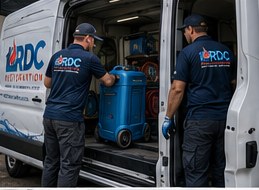
Local risks
Why Winter Hits Denville Homes and Businesses Hard
Northern New Jersey winters swing between deep cold and sudden thaws, and Denville's setting adds water to every swing. These are the winter patterns that most often send water through ceilings, walls and basements in town.
Pipes in Exterior Walls and Crawl Spaces
Supply lines along exterior walls, under kitchen sinks on outside walls and in crawl spaces beneath lake cottages are the first to freeze. Closed cabinet doors keep warm room air away from those pipes on the coldest nights.
Ice Dams on Older Roofs
Heat escaping through the attic floor melts snow on the roof, and the water refreezes at the colder eaves. The ridge of ice traps more meltwater, which backs up under shingles and drips into ceilings and wall cavities, often far from the dam itself.
Thaw Flooding Near the River
Snowmelt raises the Rockaway River and Den Brook, and saturated ground near the low-lying downtown sends water into basements. A thaw paired with rain can flood lower levels that stayed dry all fall.
Frozen or Powerless Sump Pumps
Sump discharge lines can freeze solid where they leave the house, and ice storms knock out power. Either way, the pump stops just as groundwater rises. A battery backup and a protected discharge line help keep it running.
Vacant and Seasonal Homes
A furnace that fails while the owners are away, or a house kept too cool to save on heating, can freeze pipes on several floors at once. Water may run for days before anyone checks on the property.
Frozen Sprinkler Lines in Businesses
Fire sprinkler piping in unheated loading areas, attics and vestibules can freeze in commercial buildings along Broadway and the highway corridors. When it thaws, a break can release water across a large area overnight.
Denville
Frozen Pipes in Denville: Prevention and Cleanup
Frozen pipes in Denville can usually be prevented with a few habits. Keep the heat at a steady temperature, even overnight and while you travel. Open cabinet doors under sinks on exterior walls, let faucets on vulnerable lines drip during the coldest nights and disconnect garden hoses before the first freeze. Insulate pipes in garages, crawl spaces and attics, and learn where your main shutoff valve is before you need it. Tag it so anyone in the house can find it in the dark.
If a pipe has frozen but not split, shut off the water before it thaws and call a plumber. Never use an open flame or torch to thaw a line. If it has burst, shut off the main and call RDC for the water. Our tips on preventing frozen pipes in New Jersey homes go further. The Ready.gov winter weather guide covers broader cold-weather safety for your household.
- Keep heat steady, including when away
- Drip faucets on exterior-wall lines in deep cold
- Insulate pipes in garages, attics and crawl spaces
- Disconnect hoses and shut off outdoor spigots
- Label the main shutoff valve
Denville
Ice Dam Leak in Denville Ceilings and Walls
An ice dam leak in Denville usually shows up as a brown stain on a ceiling near an exterior wall, peeling paint above a window or water dripping from a light fixture. The water has often traveled along rafters and down wall cavities before it appears, so the wet area inside the wall is larger than the stain suggests. Older Denville homes with little attic insulation tend to see ice dams return winter after winter.
A roofer or snow removal contractor clears the ice and addresses the roof. RDC handles the inside: we find wet insulation and drywall with moisture meters, remove what cannot be dried, set drying equipment and monitor until readings are normal. Leaving a damp wall cavity alone in January invites mold by spring. Our article on how ice dams cause interior water damage explains the warning signs and what to check in your attic.
- Moisture mapping behind ceiling stains
- Removal of soaked insulation and drywall
- Drying of wall cavities and attic framing
- Mold prevention before spring
Denville
Emergency Water Extraction in Denville, Day or Night
Emergency water extraction in Denville is the first step after any winter break. A split supply line can put a large amount of water on the floor before anyone finds the shutoff, and in a finished basement that water soaks carpet, pad and the bottom of the drywall right away. RDC crews dispatch 24/7 with truck-mounted and submersible pumps to get the standing water out. The sooner the water is gone, the more flooring and drywall can be dried in place.
Extraction is followed by drying with commercial air movers and dehumidifiers, checked daily with moisture meters to the IICRC S500 standard. If a sump pump failed during a thaw, our Denville basement waterproofing team can talk with you about backup options. Homeowners in nearby towns call for the same work, including burst pipe water damage in Parsippany and burst pipe water damage in Randolph.
- Truck-mounted and submersible pumps
- Removal of saturated carpet and pad
- Commercial air movers and dehumidifiers
- Daily moisture checks to the S500 standard
First steps
When a Pipe Bursts in Your Denville Home
- Shut off the main. Find the main shutoff, usually where the water line enters the basement or crawl space, and turn it off. If the leak is near outlets or the panel, keep clear and cut power to that area only if you safely can.
- Call a plumber for the pipe. RDC does not repair plumbing. Call a licensed plumber to fix the break and check other vulnerable lines. If it is a frozen sprinkler line in a business, call your fire protection contractor instead.
- Call RDC for the water. Dial (908) 253-9000. Crews dispatch 24/7 to extract water and start drying, and we document the damage for your insurer from the first visit so the claim starts with a clear record.
- Move belongings and take photos. Lift furniture off wet floors, move rugs and boxes out of the water and photograph everything before it moves. Pictures of the split pipe and the wet areas help your adjuster understand what happened.
- Keep the heat on. Do not turn the heat down while the house dries. Warm air helps drying and keeps other pipes from freezing. If the furnace has failed, call your heating contractor right away so the problem does not spread.
How we work
How RDC Dries Out Winter Water Damage
1. Inspect and classify
Technicians identify the water source and category, then map moisture through floors, walls and ceilings with meters. Winter leaks travel, so we trace water well beyond the obvious puddle or ceiling stain.
2. Extract
Pumps and extraction tools remove standing water from floors, carpet and lower levels. Saturated pad, insulation and drywall that cannot be dried are removed and noted for the insurance file.
3. Dry and dehumidify
Air movers and dehumidifiers run until materials reach normal moisture levels. In Denville basements with a high water table, we monitor slab and lower-wall readings carefully before calling the job dry.
4. Prevent mold
Prompt drying is the main defense. Where growth has already started, often in a wall cavity that stayed wet for days, our Denville mold remediation team takes over under containment.
5. Document for repairs
When readings confirm the structure is dry, RDC hands over photos, moisture logs and a scope of what was removed. Your insurer and your contractor use that file to plan drywall, flooring and finish repairs.
Insurance
Insurance for Frozen Pipes and Ice Dams in Denville
Homeowners policies generally cover sudden water damage from a burst pipe and interior damage from an ice dam leak. Many policies exclude freeze damage if the home was left without reasonable heat, which matters for seasonal and vacant homes around Denville's lakes. Groundwater and thaw flooding are often handled differently and may require flood coverage. Read the freeze and water exclusions in your policy before the first cold snap, not after.
RDC documents the source, the path the water took and every wet material with photos and readings, and bills carriers directly wherever possible. For leaks that happen outside of winter, see our page on water damage restoration in Denville. Our Morris County water damage restoration page covers the same process for neighboring towns across the county.
Nearby
Burst Pipe & Winter Water Damage across Morris County
See the Morris County service area, or another town nearby.
Full-service restoration
Other RDC services in Denville
Water Damage Restoration
Water Damage Restoration in Denville →Mold Remediation
Mold Remediation in Denville →Mold Inspection & Testing
Mold Inspection & Testing in Denville →Basement Waterproofing
Basement Waterproofing in Denville →Fire & Smoke Damage
Fire & Smoke Damage in Denville →Storm Damage
Storm Damage in Denville →Commercial Restoration
Commercial Restoration in Denville →Sewage Cleanup
About Sewage Cleanup →Asbestos Testing & Abatement
About Asbestos Testing & Abatement →Hoarding Cleanup
About Hoarding Cleanup →Denville FAQs
Burst Pipe & Winter Water Damage in Denville: common questions
Does RDC fix the burst pipe?
No. A licensed plumber repairs the pipe. RDC handles burst pipe water damage in Denville: extracting water, drying the structure, removing materials that cannot be saved, preventing mold and documenting the loss. We can work alongside your plumber so drying starts as soon as the break is isolated, and our records help both you and your insurer.
How long does it take to dry out after a burst pipe?
Drying time depends on how much water escaped, how long it sat and what it soaked into. Hardwood, plaster and basement slabs take longer than drywall and carpet. RDC checks moisture daily and only calls a space dry when readings confirm it, not on a fixed schedule. In Denville basements near a high water table, slabs can take extra time.
Can an ice storm flood my basement?
Yes, in two ways. Ice storms knock out power, which stops your sump pump, and the thaw that follows raises groundwater. Homes near Denville's low-lying downtown are especially exposed. RDC extracts the water and dries the space. For fallen limbs and roof openings from the same storm, see our Denville storm damage restoration page.
My business had a frozen sprinkler line. Can you help?
Yes. After your fire protection contractor isolates and repairs the line, RDC extracts the water, dries affected areas in phases so the rest of the building can operate and documents the loss for your commercial carrier. Our commercial restoration team in Denville handles offices, shops, restaurants and multifamily buildings across town.
What if a space heater starts a fire while we keep pipes warm?
Portable heaters and heat tape help keep pipes from freezing, but they need clearance and should never be left unattended near anything that can burn. If one does start a fire, RDC handles the soot, smoke odor and firefighting water. Our page on fire damage restoration in Denville explains that process step by step, from board-up to odor removal.
Burst Pipe in Denville? RDC Dispatches 24/7
Shut off the water, call your plumber for the pipe, then call RDC at (908) 253-9000 for extraction, drying and insurance documentation.