
RDC Restoration Blog · New Jersey
Why Soot Damage Gets Worse If You Wait
Soot damage is not a stain that sits still and waits for you — it is an active, acidic chemical process that keeps attacking your home long after the fire is out. In the hours and days after even a small kitchen or furnace fire, that fine black residue etches metal, discolors walls, corrodes electronics, and works its way into porous materials. The single biggest factor in how much a New Jersey homeowner ultimately loses to a fire is not the flames — it is how long the soot is left to do its damage.
What soot damage actually is
Soot is the carbon-rich residue left behind when fuel does not burn completely. Depending on what burned — wood, plastics, synthetic fabrics, cooking oils, or electrical insulation — the residue carries different chemistries, and most of them are acidic. When that acidity meets moisture in New Jersey’s humid air, it turns into a corrosive film that reacts with almost every surface it touches. This is why two identical homes can end up with very different repair bills: the one cleaned within a day keeps most of its finishes, while the one left for a week loses walls and belongings to permanent staining.
There are also several kinds of residue in play at once. Dry soot from fast, high-temperature fires powders off and smears easily. Wet, greasy soot from smoldering plastics and cooking fires clings and requires solvents. Protein residue from kitchen fires is nearly invisible but carries an intense odor and yellows paint and varnish. A trained technician identifies which residues are present before touching a surface, because the wrong cleaning method can drive soot deeper and set the stain for good.
Why soot damage gets worse the longer you wait
Restoration is a race against chemistry. Acidic soot does not pause overnight — it accelerates, and the timeline below is why RDC treats every fire call as time-sensitive.
The first 24 hours
Within minutes, soot begins settling into porous materials — drywall, upholstery, carpet, and grout. Within hours, acidic residue starts to discolor painted walls and yellow plastics. Fingerprints and any contact smear the film into surfaces. Cleaned quickly, most of this is fully reversible. This is the window where fast response saves the most.
Days two through seven
Now the losses turn permanent. Acidic residue etches glass and mirrors, pits chrome and stainless steel, tarnishes brass, and corrodes the copper in wiring, outlets, and appliances. Circuit boards in electronics begin to fail. Grout and unsealed stone stain for good. Any moisture from firefighting also becomes a mold risk in this same window, because mold can take hold in as little as 24 to 48 hours — turning a fire job into a combined fire-and-mold remediation project. Every day of delay quietly moves items from the “cleanable” column to the “total loss” column, and the bill grows with it.
The hidden health risks of lingering soot
Soot damage is not only a property problem — it is a health problem. Fine soot particles are small enough to reach deep into the lungs, and residue from burned plastics and synthetics can carry irritating and toxic compounds. Lingering smoke odor is not just unpleasant; it is a sign that residue is still active in the space. Children, older adults, and anyone with asthma or respiratory conditions are most vulnerable, which is why professional crews set up containment and use HEPA filtration and proper protective equipment rather than simply wiping surfaces and stirring particles back into the air.
What DIY cleaning gets wrong
It is tempting to grab a sponge and a household cleaner, but soot punishes guesswork. A few common mistakes we see across New Jersey homes:
- Using water on dry soot — it smears the residue into a permanent stain instead of lifting it.
- Wiping before dry-sponging — skipping the dry chemical-sponge step grinds particles deeper into porous surfaces.
- Ignoring hidden spread — soot travels through HVAC ducts and settles inside wall cavities and closets far from the fire.
- Masking odor instead of removing residue — air fresheners hide the smell for a day while the corrosive film keeps working.
- Skipping protection — cleaning without a respirator and gloves exposes you to the same particles you are trying to remove.
Professional crews carry the tools a homeowner does not: dry chemical sponges, the right solvents for greasy versus protein residue, HEPA vacuums, air scrubbers, thermal fogging and hydroxyl or ozone equipment for odor, and moisture meters to find hidden dampness behind walls. Just as important, they clean in the correct sequence and find the source so the problem does not creep back.
How RDC Restoration stops soot damage from spreading
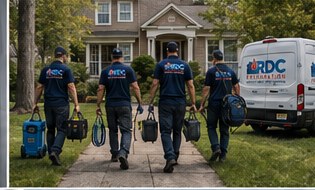
Because RDC dispatches from two central New Jersey hubs — Berkeley Heights in Union County and Piscataway in Middlesex County — a certified crew reaches most addresses in the state while the damage is still containable. Our technicians are IICRC-certified in Water Damage Restoration and Applied Structural Drying, and we follow the cleaning and drying standards published by the IICRC. On a typical soot damage call we assess and photograph the loss for your claim, contain the affected area, dry-clean surfaces before any wet cleaning, treat odor at the source rather than masking it, and check for hidden moisture that could invite mold. RDC is BBB A-rated with a 4.9 rating from New Jersey families and businesses, and we bill your insurer directly on covered losses so you are not fronting the cost. If firefighting left standing water, our water damage restoration and mold remediation teams handle it in the same visit.
What professional soot cleanup costs in New Jersey
Pricing for soot and smoke cleanup in New Jersey depends on the size of the affected area, how contaminated the residue and any water are, the materials involved, and — above all — how quickly work begins. A small, contained job cleaned within a day is typically far less than a large or delayed one, because waiting lets damage spread and can add mold remediation to the bill. RDC Restoration gives free, itemized on-site estimates and, on covered losses, works directly within your insurance claim so you are not guessing at the number. We serve all 21 New Jersey counties — see our service areas — and answer the emergency line 24/7 at (908) 253-9000.
Key takeaways
- Soot is acidic and keeps damaging surfaces by the hour — speed matters most.
- The first 24 hours are largely reversible; days two through seven turn losses permanent.
- DIY cleaning often sets stains and stirs harmful particles into the air.
- Document everything for your insurance claim and get a free on-site estimate.
- Call RDC at (908) 253-9000 for 24/7 help across New Jersey.
Dealing with soot damage in New Jersey right now? RDC Restoration answers 24/7.
Quick answers
Frequently asked questions
How quickly should soot damage be cleaned?
As fast as possible. The first 24 hours are when most soot damage is still reversible; after that, acidic residue permanently etches metal, corrodes electronics, and stains porous surfaces. RDC answers 24/7 at (908) 253-9000 and reaches most New Jersey towns quickly from our Berkeley Heights and Piscataway hubs.
Can I clean soot damage myself?
Minor, dry soot on a hard surface can sometimes be dry-sponged, but water or household cleaners often smear soot into a permanent stain and stir harmful particles into the air. For anything beyond a small spot — or any greasy, protein, or odor-heavy residue — a certified crew is safer and preserves more of your home.
Is soot damage dangerous to my health?
Yes. Fine soot particles reach deep into the lungs and residue from burned plastics can carry toxic compounds. Children, older adults, and anyone with respiratory conditions are most at risk, which is why professionals use containment, HEPA filtration, and protective equipment.
Does RDC Restoration handle soot damage in my New Jersey town?
Yes — RDC serves all 21 New Jersey counties for fire, smoke, and soot damage, dispatched 24/7 from Berkeley Heights and Piscataway. Call (908) 253-9000.
Will my insurance cover soot and smoke cleanup?
Fire, smoke, and soot damage are commonly covered losses. RDC documents the damage thoroughly, provides a free itemized estimate, and bills your carrier directly wherever possible so you are not fronting the cost.
New Jersey’s trusted restoration team.
Water, fire, or soot damage? RDC Restoration dispatches the nearest crew 24/7, statewide.