
RDC Restoration Blog · New Jersey
Does Insurance Cover Fire and Smoke Damage in NJ?
Yes — in almost every case, a standard New Jersey homeowners policy covers fire and smoke damage, including the soot, charring, and lingering odor a fire leaves behind. Fire is one of the most clearly named perils on an HO-3 policy, so the real question is rarely whether you are covered, but how much you recover and how quickly. That comes down to two things: documenting the loss properly and starting mitigation fast, because smoke residue turns corrosive within days of the flames going out.
What fire and smoke damage does insurance cover in NJ?
Because fire is a named peril, most policies reimburse the full chain of loss that follows a house fire — not just the flames themselves. In practice, a typical New Jersey homeowners policy pays to repair or replace what fire and smoke damage destroys, including:
- Structural damage — framing, drywall, flooring, and roofing burned, scorched, or weakened by heat.
- Smoke and soot cleanup — the oily film that coats walls, ceilings, ductwork, and belongings, plus the odor trapped in porous materials.
- Water damage from firefighting — the thousands of gallons a fire department uses to put out the blaze are covered as part of the fire loss.
- Contents and personal property — furniture, clothing, electronics, and household goods, typically up to a percentage of your dwelling limit.
- Additional living expenses (ALE) — hotel, meals, and other costs if your home is unlivable during repairs.
These categories apply whether the fire started in a kitchen, an electrical panel, a chimney, or a space heater. The cause matters far less than the type of policy and how the claim is handled.
The three losses one fire creates
Homeowners are often surprised that a single fire produces three distinct kinds of damage, and each one needs a different remedy. First is the fire and smoke damage itself — charred structure and heavy soot. Second is water intrusion from suppression efforts, which soaks drywall, insulation, and subfloors. Third is the delayed threat: standing water feeds mold within 24 to 48 hours, and untreated soot keeps etching metal, glass, and finishes long after the fire is out. RDC handles all three together, coordinating fire cleanup with water damage restoration and mold remediation so one team resolves the entire loss instead of three separate contractors chasing each other.
How to file a fire and smoke damage insurance claim in New Jersey
A covered peril still requires a well-built claim. The homeowners who recover the most tend to follow the same steps:
- Make sure everyone is safe and the fire department has cleared the property before you re-enter.
- Notify your insurer promptly. Most policies require timely notice, and early reporting starts the clock in your favor.
- Photograph and video everything before any cleanup — wide shots of each room and close-ups of soot lines, char, and damaged belongings.
- Build a contents inventory. List damaged items with rough age and value; receipts and old photos help.
- Keep every receipt for lodging, meals, and emergency supplies to support your ALE claim.
- Mitigate to prevent further loss. Policies obligate you to stop damage from spreading, which is exactly why professional cleanup often begins before the claim fully settles.
RDC produces a detailed, photo-backed loss report your adjuster can work from, and bills your carrier directly wherever possible — which removes friction and speeds the payout.
What might not be covered
Coverage is broad, but a few situations create disputes. Intentionally set fires are excluded. Vacant-home fires can be limited if the property sat empty beyond your policy’s vacancy window. Some carriers cap or exclude losses tied to long-deferred maintenance. And standard homeowners policies do not automatically include flood, which is a separate concern from firefighting water. When you are unsure, read your declarations page or simply ask us — after 27 years of NJ claims, we can usually tell you what to expect before the adjuster arrives.
Why a fast, certified response protects your claim
Restoration is a race against the clock, and delays cost you twice — once in added damage and again in a weaker claim. Soot becomes acidic and permanently etches surfaces within days; water feeds mold within a day or two; and odor sinks deeper into drywall and framing the longer it sits. Acting quickly limits the total loss, and it also proves to your insurer that you met your duty to mitigate. RDC follows IICRC restoration standards, and our technicians hold IICRC (WRT, ASD), NORMI, and AHERA certifications — the training that separates a documented, warrantable restoration from a quick surface wipe that leaves corrosive residue behind the walls.
How RDC Restoration works with your insurance
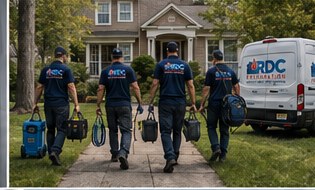
RDC Restoration dispatches 24/7 from two central New Jersey hubs — Berkeley Heights in Union County and Piscataway in Middlesex County — and serves all 21 NJ counties. A certified crew reaches most addresses while the damage is still containable, stabilizes the scene, and documents the loss for your carrier from the first hour. We are BBB A-rated with a 4.9-star reputation, and we bill insurers directly wherever possible so you are not floating the cost of your own recovery. To confirm we cover your town, check our service areas or read more about RDC Restoration.
Key takeaways
- Standard NJ homeowners policies cover fire and smoke damage, soot cleanup, and firefighting water
- Document everything with photos before cleanup, and keep all receipts for your ALE claim
- Mitigate fast — soot turns corrosive and mold starts within 24–48 hours
- Certified, IICRC-standard restoration strengthens the claim and protects your health
- Call (908) 253-9000 for 24/7 help across New Jersey
Dealing with fire and smoke damage in New Jersey right now? RDC Restoration answers 24/7.
Quick answers
Frequently asked questions
Does homeowners insurance cover fire and smoke damage in NJ?
Yes. Fire is a named peril on virtually every standard New Jersey homeowners policy, so fire and smoke damage — including soot cleanup and the water used to fight the fire — is typically covered, along with damaged contents and additional living expenses.
Does insurance pay to remove smoke odor and soot?
Generally yes. Soot removal and odor treatment are part of the covered fire loss. Prompt, certified cleanup matters because soot turns corrosive within days, so carriers expect you to mitigate quickly.
Is the water damage from firefighting covered too?
Yes. The water a fire department uses to extinguish the blaze is treated as part of the fire loss, not as a separate flood, so drying and water damage restoration are covered.
Does RDC bill my insurance directly?
RDC documents the loss thoroughly with a photo-backed report and bills your carrier directly wherever possible, which strengthens and speeds your claim.
How fast can RDC respond in New Jersey?
RDC dispatches 24/7 from Berkeley Heights and Piscataway and typically reaches nearby NJ towns within about an hour, day or night. Call (908) 253-9000.
New Jersey’s trusted restoration team.
Water, fire, or mold trouble? RDC Restoration dispatches the nearest crew 24/7, statewide.