
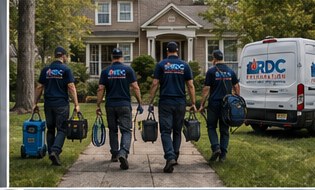
Cranford, NJ · Union County · Fire & Smoke Damage
Fire & Smoke Damage Restoration in Cranford, NJ
RDC Restoration handles fire damage restoration in Cranford from the first board-up to the last deodorizing pass. Our IICRC-certified crews secure the house, extract firefighting water, remove soot, clean contents and treat smoke odor in Cranford's older colonials, Tudors and downtown storefronts. Call any time; fire crews dispatch 24/7 from Berkeley Heights.
- IICRC-Certified Fire Crews
- 24/7 Emergency Board-Up
- Direct Insurance Billing
- Contents Pack-Out & Cleaning
Quick answer
RDC Restoration provides fire damage restoration in Cranford, NJ around the clock. Crews from our Berkeley Heights location board up openings, pump out firefighting water, dry the structure, remove soot and char, clean HVAC ductwork, pack out and clean contents, and eliminate smoke odor with thermal fogging, ozone and hydroxyl treatment. We document the loss and bill your insurer directly. Call (908) 253-9000 any time, day or night.
Fire & Smoke Damage in Cranford
Fire Damage Restoration in Cranford for Older Homes and Downtown Blocks
Fire damage restoration in Cranford often starts in a house built long before modern wiring codes. Much of the township is early-1900s colonials, Tudors and craftsman homes on tree-lined streets in sections like Lincoln Park, Sherman and Nomahegan. Those houses tend to have plaster walls, open wall cavities and deep attics where smoke travels farther than people expect. A small kitchen fire on the first floor can leave a film of soot inside a second-floor closet.
The damage does not stop when the fire department rolls up its hoses. Acidic soot keeps etching glass, chrome, grout and stone. Smoke odor settles into plaster, insulation, hardwood and upholstery. The water used to knock the fire down soaks subfloors and basements, and in Cranford, where the water table runs high and many foundations are older, that water can linger below grade longer than it would on higher ground.
RDC Restoration has worked on New Jersey fire losses for more than 27 years, and Cranford is served from our Berkeley Heights hub in Union County. We stabilize the property, clean what can be saved, and document everything for your insurer. Our fire and smoke damage restoration services cover soot, odor, contents and firefighting water under one call. When cleaning is finished, repairs go to the contractor you choose, with our photos and notes in hand.
More on Fire & Smoke Damage Restoration →
Local risks
Why Fire and Smoke Spread the Way They Do in Cranford Homes
Cranford's housing stock, its compact downtown and its river setting all shape how a fire loss plays out. These are the conditions our crews keep running into here, and the reasons fire damage restoration in Cranford usually takes more than a quick wipe-down.
Dated Wiring in Early-1900s Houses
Many Cranford houses were wired long before today's electrical loads. Old circuits and fixtures can start fires inside walls, where smoke moves through cavities before anyone sees flame. Our guide to electrical fire safety in older New Jersey homes lists the warning signs.
Fireplaces and Chimneys
Wood-burning fireplaces are common in the township's Tudors and colonials. A cracked flue or creosote buildup can push smoke into framing or send a puff-back of soot across a living room. Even a contained chimney fire usually needs soot cleaning and odor treatment nearby.
Kitchen and Grease Fires
Cooking is a leading cause of home fires, according to the National Fire Protection Association. Grease fires leave a sticky protein residue that smells worse than it looks, and on plaster ceilings and painted cabinets it needs specific cleaning methods to come off without smearing.
Ductwork That Carries Soot
Older homes here may run on boilers with radiators or on forced-air systems added later. If a furnace or air handler was running during the fire, the ducts carried soot into every room they serve. Duct cleaning is often the difference between a lingering smell and a fresh house.
Shared Walls Downtown
Storefronts and apartments in Downtown Cranford share walls, ceilings and attic space. Smoke from one unit can stain and scent the business next door. We map how far the smoke traveled so each owner and tenant has a clear record of their own part of the loss.
Firefighting Water in Low Basements
Much of Cranford sits low along the Rahway River, with a high water table. Hose water runs down into the basement and sits on top of moisture that is already there. Prompt extraction and drying keep a fire loss from turning into a mold problem later on.
Cranford
Smoke Odor Removal in Cranford That Treats the Source
Smoke odor is the part of a fire that families live with longest. Air fresheners and open windows only cover it for a while. Real smoke odor removal in Cranford means finding where the smoke particles settled, cleaning them away, and then treating the structure so the smell does not return on the first humid summer day near the river. Homes close to the Rahway River tend to hold humidity, and that moisture can reawaken smoke odor in materials that were only surface cleaned.
RDC Restoration uses thermal fogging, ozone and hydroxyl treatment depending on the materials and on whether people or pets need to stay in the home. Plaster walls, old hardwood floors, attic insulation and closets full of clothing each hold smoke differently. We also clean HVAC ducts when the system ran during the fire. Our article on how to remove smoke odor after a fire explains why masking sprays fail.
- Source cleaning before any deodorizing
- Thermal fogging for odor trapped in framing
- Hydroxyl treatment when the home stays occupied
- Ozone for empty rooms and packed-out contents
- Duct cleaning when soot reached the HVAC system
Cranford
Fire Damage Cleanup in Cranford, Room by Room and Box by Box
Fire damage cleanup in Cranford usually involves two jobs at once: the structure and everything inside it. We remove charred material and debris, extract firefighting water, and set drying equipment so floors and walls are not left wet under the soot. Broken windows and doors get boarded up before our crew leaves the site. Wet plaster and hardwood in an older house need careful drying, or the floors can cup and the walls can stain through fresh paint later.
Contents get their own process. Furniture, electronics, clothing, books and keepsakes can be inventoried, packed out, cleaned and deodorized off-site, then returned once the house is ready. That matters in a town where many families have lived in the same house for decades and the attic holds things no claim check can replace. If firefighting water reached the basement, our water damage restoration team in Cranford handles the drying side.
- Emergency board-up of windows, doors and roof openings
- Char and debris removal
- Firefighting water extraction and drying
- Contents inventory, pack-out and off-site cleaning
Cranford
Soot and Smoke Damage Cleanup in Cranford Without Spreading the Stain
Soot is acidic and often oily, and it behaves differently depending on what burned. Wiping it with a household cleaner tends to push it deeper into paint and plaster. Proper soot and smoke damage cleanup in Cranford starts with testing surfaces, then choosing dry sponges, HEPA vacuuming or wet cleaning to match the residue. Protein residue from a kitchen fire, dry soot from burning paper and wet, smeary soot from plastics each need a different approach.
Timing matters because soot keeps etching chrome fixtures, glass, grout and marble the longer it sits. Older Cranford homes often have original tile baths, built-in cabinets and plaster moldings worth saving, so we clean them carefully instead of tearing them out. Our crews handle the same era of housing in nearby towns, including fire damage restoration in Westfield and fire damage restoration in Elizabeth. Soot that drifted into radiator covers, window sashes and built-in bookcases gets hand-detailed rather than sprayed.
- Surface testing to identify the soot type
- Dry sponges and HEPA vacuuming for loose residue
- Careful cleaning of plaster, tile and original woodwork
- Register and vent cleaning
First steps
What to Do After the Fire Department Leaves Your Cranford Home
- Wait for the all-clear. Do not go back inside until fire officials say it is safe. Floors, ceilings and stairs can be weakened, and hot spots can still be hiding inside wall cavities or the attic of an older home.
- Call your insurer and RDC. Report the claim, then call (908) 253-9000. We board up openings and tarp the roof so the house is protected from rain and intruders while you sort out where your family will stay.
- Leave the soot alone. Do not wipe walls, wash curtains or vacuum carpets. Household cleaning smears soot deeper into porous surfaces and makes professional cleaning harder. Take photos instead, room by room, before anything is moved.
- Keep the HVAC off. Running the furnace or air conditioning after a fire pulls soot through every duct in the house. Leave the system off until the ducts and air handler have been inspected and cleaned.
- Take only essentials. If officials allow it, collect medications, documents, glasses and phones. Leave furniture, electronics and clothing for the contents team, since smoke-exposed electronics should not be powered on before they are cleaned.
How we work
How RDC Handles a Fire Loss in Cranford
1. Secure the Property
Crews board up broken windows and doors, tarp roof openings and walk the house with you. Every damaged area is photographed and logged for the insurance claim before cleanup begins.
2. Remove Water and Debris
Firefighting water is extracted and drying equipment is placed, with extra attention to basements in low-lying parts of town. Charred materials and debris are removed so cleaning starts on stable ground.
3. Clean Soot and Smoke
Surfaces are tested, then cleaned with methods matched to the residue. Ductwork, registers and the air handler are cleaned so the heating system does not spread soot again later.
4. Deodorize
Thermal fogging, ozone or hydroxyl treatment neutralizes the odor left in framing, insulation and plaster. We choose the method based on the materials and on whether anyone is living in the house.
5. Return Contents and Hand Off
Cleaned contents come back from off-site, and you receive a complete record of the work. Any repairs then go to your own contractor, who can work from our documentation and photos.
Insurance
Working With Your Insurer on a Cranford Fire Claim
RDC Restoration bills insurance carriers directly for fire and smoke work wherever the policy allows. We send the adjuster photos, moisture readings, soot test notes and a contents inventory, which helps the claim reflect hidden damage such as smoke inside wall cavities or soot in ductwork. If the fire also left water in a finished basement, that drying is documented as part of the same loss. Clear records also help when a claim involves both the dwelling and personal property limits.
Most homeowner policies cover sudden fire and smoke damage, but limits on contents, living expenses and code upgrades vary. Read your declarations page and ask your agent before signing anything, and keep receipts for hotel stays and meals. We work with carriers throughout the county, alongside our Union County water damage restoration crews, so we know what local adjusters ask to see.
Nearby
Fire & Smoke Damage across Union County
See the Union County service area, or another town nearby.
Full-service restoration
Other RDC services in Cranford
Water Damage Restoration
Water Damage Restoration in Cranford →Burst Pipe & Winter Water Damage
Burst Pipe & Winter Water Damage in Cranford →Mold Remediation
Mold Remediation in Cranford →Mold Inspection & Testing
Mold Inspection & Testing in Cranford →Basement Waterproofing
Basement Waterproofing in Cranford →Storm Damage
Storm Damage in Cranford →Commercial Restoration
Commercial Restoration in Cranford →Sewage Cleanup
About Sewage Cleanup →Asbestos Testing & Abatement
About Asbestos Testing & Abatement →Hoarding Cleanup
About Hoarding Cleanup →Cranford FAQs
Fire & Smoke Damage in Cranford: common questions
How long does fire damage restoration in Cranford take?
It depends on how far smoke traveled and how much water was used. A contained kitchen fire may need only a short round of cleaning and deodorizing, while a whole-house loss with contents pack-out takes considerably longer. We give you a written scope after the first walkthrough and update it as drying and cleaning move along.
Can I stay in my house while smoke odor is treated?
Sometimes. Hydroxyl treatment can run while people are home, so a minor loss may not require moving out. Ozone requires the space to be empty of people, pets and plants. For larger losses, most families stay elsewhere while soot cleaning and deodorizing are underway, and many policies help with that living expense.
Do you clean up after space heater or holiday decoration fires?
Yes. Space heaters, extension cords and decorations are common winter fire sources in older Cranford homes. Cold weather can bring a second problem: if a pipe froze while the heat was off after a fire, our burst pipe water damage team in Cranford can dry that out as part of the same job.
What if lightning or a downed wire started the fire?
Storm-related fires often come with roof holes, broken windows and rain getting inside. We tarp and board up first, then start soot and water cleanup. Our storm damage restoration crew in Cranford handles the weather side of the loss, so both parts are documented together for your insurer.
Does RDC repair the walls and roof after cleaning?
No. RDC handles mitigation and cleanup: board-up, water extraction, drying, soot removal, odor treatment and contents cleaning. Repairs such as new drywall, framing or roofing go to the contractor of your choice. We give that contractor and your adjuster a detailed record of what was damaged and what was cleaned.
Fire or Smoke Damage in Cranford? Call RDC
Crews dispatch 24/7 from Berkeley Heights to board up, extract water, clean soot and remove smoke odor. Call (908) 253-9000 and we will walk you through the next steps.