
Bridgewater, NJ · Somerset County · Fire & Smoke Damage
Fire & Smoke Damage Restoration in Bridgewater, NJ
RDC Restoration provides fire damage restoration in Bridgewater, from the first board-up after the fire department clears the scene through soot removal, smoke odor treatment and drying out firefighting water. IICRC-certified crews dispatch 24/7 from our Piscataway hub to homes and businesses in Martinsville, Finderne, Green Knoll and the rest of the township.
- 24/7 Board-Up
- IICRC-Certified Crews
- Direct Insurance Billing
- Contents Pack-Out
Quick answer
RDC Restoration handles fire and smoke damage in Bridgewater, NJ around the clock. Crews board up openings, extract the water used to fight the fire, remove soot and char, treat smoke odor with thermal fogging, ozone and hydroxyl equipment, and pack out contents for off-site cleaning. We document the loss and bill your insurer directly. Call (908) 253-9000 any time, 24/7.
Fire & Smoke Damage in Bridgewater
Fire Damage Restoration in Bridgewater, Handled in the Right Order
A fire in a Bridgewater home rarely stays in one room. Fire damage restoration in Bridgewater starts with what the flames left behind: acidic soot on walls and cabinets, smoke residue pulled through the ductwork, and gallons of water from the hose lines soaking floors and lower walls. RDC Restoration handles all three from our Piscataway hub, so a Somerset County crew can reach Martinsville, Finderne or the neighborhoods off Route 22 at any time of day or night.
Bridgewater's housing mix shapes the job. Postwar ranches and colonials near Bradley Gardens and Finderne often still have older wiring, working fireplaces and forced-air systems that can spread smoke from a small kitchen flare-up into every bedroom. Newer developments have tighter building envelopes, which trap odor and let fine soot settle into insulation and carpet. We test surfaces, find where the smoke traveled, and clean or treat each material based on what it is.
Fire damage restoration in Bridgewater also has a practical side. After the trucks leave, broken windows and a vented roof need to be secured before weather or intruders get in. We board up, extract firefighting water, dry the structure, and pack out salvageable belongings for cleaning, following the same fire and smoke damage restoration process we use across New Jersey. When mitigation is done, your own contractor handles repairs, and we hand them and your insurer a full record of the loss.
More on Fire & Smoke Damage Restoration →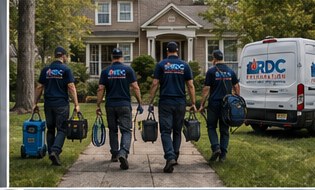
Local risks
Why Fire and Smoke Spread the Way They Do in Bridgewater
Bridgewater is a mix of older suburban homes, newer subdivisions, corporate campuses and a regional mall corridor. Each building type burns, smokes and holds odor differently, and the township's low neighborhoods near the river add a moisture problem once firefighting water soaks in.
Older wiring in postwar homes
Many ranches and colonials around Finderne, Bradley Gardens and Milltown were built decades ago, and their panels and circuits have often been added to piece by piece. Overloaded circuits and worn outlets are a common source of house fires. Learn the warning signs of an electrical fire hazard before heating season.
Kitchen fires in busy households
Stovetop and grease fires are among the most common causes of home fires. Even a small one that a homeowner smothers with a lid leaves a greasy, protein-based film on cabinets and ceilings across the first floor, and ordinary household cleaners tend to smear it instead of removing it.
Fireplaces, chimneys and oil burners
Homes in Martinsville and Green Knoll often have fireplaces that see heavy use on cold nights. A cracked flue liner, a downdraft or a puff-back from an oil burner can coat a living room or basement in fine soot without any visible flame damage at all.
Smoke carried through HVAC
Forced-air systems in two-story colonials can keep running during a fire, pulling smoke into the returns and pushing soot out of supply registers on every floor. We inspect and clean the duct runs so odor does not come back the first time the heat kicks on.
Firefighting water near the river
Finderne and Bradley Gardens sit on low ground near where the North and South Branches form the Raritan, and basements there already contend with a high water table. Hose water that drains below grade needs fast extraction and drying before mold gets a foothold.
Offices, stores and restaurants
Fires in offices, restaurants and shops along Route 22 and near Bridgewater Commons push smoke through shared ceilings and ventilation. Our commercial restoration team in Bridgewater handles those losses with schedules built around tenants and business operations.
Bridgewater
Smoke Odor Removal in Bridgewater Homes and Buildings
Smoke odor is the part of a fire that people underestimate. Smoke particles are small enough to work into drywall paper, carpet pad, attic insulation and the inside of closets, and a house can smell fine for a few days before warm, humid weather brings the odor back. Smoke odor removal in Bridgewater has to treat the source instead of covering it with fragrance or a store-bought air freshener.
RDC removes soot-loaded materials that cannot be saved, cleans the surfaces that can, and then treats the air and structure with thermal fogging, ozone or hydroxyl equipment, depending on what burned and whether people or pets need to stay nearby. Our crews use the same methods on fire damage restoration in Hillsborough and other towns along the Route 206 corridor. A final walkthrough confirms the odor is gone at the source, not just faded.
- Thermal fogging for odor trapped in wall cavities and contents
- Ozone or hydroxyl treatment matched to the building
- Duct and register cleaning so smoke does not recirculate
- Removal of soot-saturated insulation and carpet pad
Bridgewater
Fire Damage Cleanup in Bridgewater After the Fire Department Leaves
The fire company's job ends when the fire is out. Yours is just starting, often in the cold or the rain, and the house may have broken windows, a vented roof, a forced door and standing water from the hose lines. Fire damage cleanup in Bridgewater begins with boarding up and tarping those openings so rain, snow, animals and trespassers stay out while the rest of the work is planned.
Next, crews clear charred debris, extract water from floors and the basement, and set air movers and dehumidifiers to dry framing and subfloors. In split-levels and colonials with finished basements, water from upstairs often ends up below grade, and our water damage restoration work in Bridgewater tracks it with moisture meters until readings return to normal. Daily moisture checks are logged for your claim file, and once drying is complete the property is ready for the owner's contractor.
- Emergency board-up of windows and doors
- Roof tarping over vented or burned sections
- Extraction of firefighting water
- Debris removal and structural drying
Bridgewater
Soot and Smoke Damage Cleanup in Bridgewater, Room by Room
Soot is acidic. Left on bathroom fixtures, window glass, appliance finishes and grout, it starts to etch and discolor surfaces, which is why soot damage gets worse the longer it sits. Soot and smoke damage cleanup in Bridgewater starts with identifying the residue, because dry soot from a fast fire, oily soot from a smoldering one and protein film from a kitchen fire each need a different cleaning method.
Contents matter as much as walls. RDC inventories furniture, clothing, electronics and keepsakes, packs out what can be cleaned, and handles cleaning and deodorizing off-site so the house can be worked on without everything in the way. For families in Green Knoll or Martinsville, that often means getting back the items that matter most while the structure is still drying. Items that cannot be saved are photographed and listed for your adjuster.
- Dry soot, oily soot and protein residue identified first
- Contents inventoried, packed out and cleaned off-site
- Glass, metal and fixtures cleaned before etching sets in
- Unsalvageable items photographed for the claim
First steps
First Steps After a House Fire in Bridgewater
- Wait for the all-clear. Do not go back inside until fire officials say the building is safe to enter. Smoke, weakened floors and hidden hot spots can still be dangerous after the flames are out, and gas or electric service may need to stay off.
- Call your insurer and RDC. Report the loss to your insurance company, then call (908) 253-9000. RDC dispatches crews 24/7 to board up the property, start water extraction and begin documenting the damage for your claim.
- Leave the soot alone. Do not wipe walls, scrub upholstery or run a household vacuum over soot. Rubbing pushes acidic residue deeper into porous surfaces and can turn a cleanable stain into permanent damage.
- Keep the HVAC off. Leave the furnace or air handler off until the system is inspected. Running it moves smoke and soot from the fire room into the ducts and out to every other room of a two-story Bridgewater colonial.
- Photograph everything first. Take photos and video of every room, including ceilings, closets and the basement, before anything is moved or thrown out. A clear record helps your adjuster and protects items you might otherwise lose track of.
How we work
How RDC Handles a Bridgewater Fire Loss
1. Secure the property
Crews board up broken windows and doors and tarp roof openings so weather and intruders stay out. We photograph the damage before anything is moved, which starts the documentation your insurer will review.
2. Assess smoke and soot travel
Technicians trace where smoke moved through the house, including attics, closets, wall cavities and ductwork, and identify which residues are present. That assessment decides what gets cleaned, what gets treated and what has to be removed.
3. Extract water and dry
Water from the hose lines is pumped out and the structure is dried with commercial air movers and dehumidifiers. Moisture readings are taken and logged until framing and subfloors return to normal levels.
4. Clean soot and pack out contents
Soot and char are removed from walls, ceilings and fixtures. Salvageable contents are inventoried, packed out, cleaned and deodorized off-site, then returned when the house is ready to receive them again.
5. Deodorize and hand off
Thermal fogging, ozone or hydroxyl treatment removes remaining odor at the source. We complete a final walkthrough and give you, your insurer and your own contractor the documentation needed to plan repairs.
Insurance
Fire Insurance Claims for Bridgewater Homeowners
Most homeowners policies cover sudden fire damage, including smoke, soot and the water used to put the fire out, but limits, deductibles and contents coverage vary from policy to policy. RDC documents the loss with photos, moisture logs and contents inventories, and we bill your carrier directly wherever possible so you are not fronting the cost of mitigation. Keep receipts for hotel stays and meals, since many policies reimburse additional living expenses.
Mitigation and repairs are separate parts of a claim. RDC handles board-up, cleanup, water removal, odor treatment and contents cleaning, then hands a complete record to the contractor you choose for repairs. If smoke residue or damp materials raise mold concerns, our mold inspection service in Bridgewater can test before walls are closed up.
Nearby
Fire & Smoke Damage across Somerset County
See the Somerset County service area, or another town nearby.
Full-service restoration
Other RDC services in Bridgewater
Water Damage Restoration
Water Damage Restoration in Bridgewater →Burst Pipe & Winter Water Damage
Burst Pipe & Winter Water Damage in Bridgewater →Mold Remediation
Mold Remediation in Bridgewater →Mold Inspection & Testing
Mold Inspection & Testing in Bridgewater →Basement Waterproofing
Basement Waterproofing in Bridgewater →Storm Damage
Storm Damage in Bridgewater →Commercial Restoration
Commercial Restoration in Bridgewater →Sewage Cleanup
About Sewage Cleanup →Asbestos Testing & Abatement
About Asbestos Testing & Abatement →Hoarding Cleanup
About Hoarding Cleanup →Bridgewater FAQs
Fire & Smoke Damage in Bridgewater: common questions
How soon can RDC start fire damage restoration in Bridgewater?
RDC answers (908) 253-9000 24/7 and dispatches crews from our Piscataway hub to Bridgewater at any time of day or night. The first visit focuses on securing the property, removing water and documenting damage. Bridgewater is part of our wider Somerset County restoration service area. We also handle fire damage restoration in Somerville next door.
Can smoke damage be hidden even if the fire was small?
Yes. A small kitchen fire or a furnace puff-back can send smoke through the whole house, and residue often collects in closets, behind outlet covers, in attic insulation and inside ductwork. Homes around Green Knoll and Martinsville with forced-air heat are especially prone to it. RDC inspects those areas and tests surfaces before deciding what to clean and what to remove.
Will my belongings be saved?
Many can be. Hard furniture, dishes, clothing, many electronics and keepsakes often clean up well when soot is removed promptly. RDC inventories everything, packs out salvageable items for off-site cleaning and deodorizing, and photographs anything that cannot be saved so your adjuster has a record. The U.S. Fire Administration also publishes guidance on recovering after a home fire.
Does RDC do the repairs after a fire?
No. RDC handles mitigation and cleanup: board-up, water extraction and drying, soot removal, odor treatment and contents cleaning. Repairs belong to the contractor you or your insurer selects. We give that contractor a complete record of what was removed, cleaned and dried so the repair scope is clear and matches the claim.
What if the fire happens in the middle of winter?
Winter fires bring extra risk in Bridgewater. A house with broken windows and the heat shut off can get cold quickly, and pipes in exterior walls may freeze and split. RDC boards up and tarps openings right away, and if lines burst, our burst pipe water damage team in Bridgewater handles the extraction and drying. Your plumber repairs the pipe itself.
Fire Damage in Bridgewater? Call RDC 24/7
Crews dispatch day and night from our Piscataway hub to board up, extract water, clean soot and remove smoke odor. Call (908) 253-9000 and we start the insurance documentation on the first visit.