
Bayonne, NJ · Hudson County · Fire & Smoke Damage
Fire & Smoke Damage Restoration in Bayonne, NJ
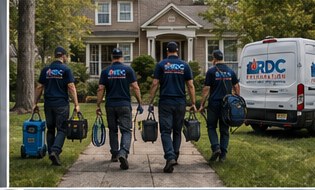
RDC Restoration handles fire damage restoration in Bayonne from the first board-up to the last odor treatment. Our IICRC-certified crews secure the building, clear soot, remove smoke odor, dry out firefighting water and clean your belongings, whether the fire hit a frame house in Bergen Point, a two-family home Uptown or a shop on Broadway.
- 24/7 Emergency Board-Up
- IICRC-Certified Crews
- Direct Insurance Billing
- Contents Pack-Out
Quick answer
RDC Restoration provides 24/7 fire damage restoration in Bayonne, NJ, dispatching IICRC-certified crews from its Berkeley Heights hub. After the fire department releases the building, RDC boards up openings, extracts firefighting water, removes soot and char, eliminates smoke odor with thermal fogging, ozone and hydroxyl treatment, and packs out contents for cleaning. RDC documents the loss and bills insurance directly. Call (908) 253-9000.
Fire & Smoke Damage in Bayonne
Fire Damage Restoration in Bayonne, From Board-Up to Odor-Free
When a fire hits a Bayonne home, the damage rarely stays in one room. RDC Restoration provides fire damage restoration in Bayonne for the city's dense mix of frame houses, two-family homes and attached row houses, where smoke slips through shared walls, stairwells and attic spaces into the home next door. Our crews dispatch 24/7 from our Berkeley Heights hub with board-up materials, extraction gear and odor equipment on the truck.
Bayonne's housing stock is a big part of why fire losses here get complicated. Many homes in Bergen Point, Midtown and Uptown were built long before modern electrical codes, and a two-family house often has two kitchens, two heating setups and one shared basement. A fire that starts on the first floor sends hot smoke up the stairwell, soot settles on everything above it, and water from the hose lines runs down into the basement.
On every Bayonne job we follow our fire and smoke damage restoration process: secure the property, extract the water, remove soot, treat odor at its source and clean contents. We do not handle repairs or construction. Once mitigation is done, your contractor and insurer get a documented record of the loss, so the next steps are clear. If water turns out to be the bigger problem, our water damage restoration team in Bayonne takes it from there.
More on Fire & Smoke Damage Restoration →
Local risks
Why Fire and Smoke Behave Differently in Bayonne Homes
Bayonne packs a lot of living space onto a narrow peninsula. Attached and closely spaced houses, aging wiring, gas ranges in tight kitchens and damp salt air off Newark Bay and the Kill Van Kull all shape how a fire spreads and how stubborn the smoke and soot become afterward.
Older wiring in two-family homes
Many Bayonne two-family houses still run on circuits added piece by piece over the decades. Overloaded outlets, space heaters and window air conditioners on old wiring are common fire starters, and burning wire insulation leaves a sticky, sharp-smelling residue.
Kitchen fires in tight layouts
Narrow row-house kitchens put the stove close to cabinets and curtains. A grease fire may be small, but protein and grease smoke coats walls, ceilings and the insides of cabinets across the whole floor, and the smell clings long after the pan is cool.
Shared walls and stairwells
In attached homes and apartment buildings along Kennedy Boulevard and Avenue C, smoke follows stairwells, pipe chases and attic spaces into neighboring units. A unit that never saw flames can still need soot cleaning and odor treatment.
Heating season and fireplaces
Bayonne winters off the water are raw and windy, so furnaces, boilers, space heaters and older fireplaces work hard. A puff-back from an oil burner or a chimney flare-up can spread fine black soot through every room the heat reaches.
Salt air and corrosive soot
Soot is acidic, and on a peninsula with moist salt air it keeps working on metal fixtures, appliances, electronics and window frames. Cleaning soon after the fire limits the pitting and staining that otherwise becomes permanent.
Firefighting water in basements
Hose water runs downhill. In Bayonne homes with finished or partly finished basements, it collects below the fire floor, soaking stored belongings, utilities and drywall, and it can feed mold within days if nobody dries it out.
Bayonne
Smoke Odor Removal in Bayonne That Treats the Source
Smoke odor is the part of a fire that people underestimate. Smoke particles are tiny, and they drift into drywall, insulation, carpet padding, closets and ductwork. Opening windows or spraying deodorizer only covers the smell for a while. In Bayonne's attached homes, odor also travels through shared walls and attics, so a neighbor's fire can leave your unit smelling burnt. Damp air off the bays can also make a faint smoke smell return on humid days.
Our approach to smoke odor removal in Bayonne starts by removing the residue that carries the odor, then treating what remains with thermal fogging, ozone or hydroxyl equipment, depending on the materials and whether the home is occupied. We also check the HVAC system, because forced-air ducts can recirculate smoke smell every time the heat kicks on. Our guide to getting rid of smoke odor after a fire explains why masking sprays fall short.
- Residue removed before deodorizing
- Thermal fogging, ozone and hydroxyl treatment
- HVAC and duct soot cleaning
- Odor checks in adjoining rooms and units
Bayonne
Fire Damage Cleanup in Bayonne After the Trucks Leave
Once the Bayonne Fire Department clears the scene, the building is often left with broken windows, a vented roof, forced doors and standing water. That is when fire damage cleanup in Bayonne begins. Our crews board up openings and tarp the roof to keep out weather and intruders, then remove charred debris and extract the water used to put the fire out. In salty air, wet soot on metal railings and fixtures corrodes faster, so it is cleaned early.
Fire debris and wet materials cannot sit. Wet drywall and insulation start to break down, and soot mixed with water turns into a dark slurry that stains floors and trim. We separate what can be cleaned from what is beyond saving, photograph everything for the claim and dry the structure with air movers and dehumidifiers. Homeowners just north of the city get the same process through our crews for fire damage restoration in Jersey City and fire damage restoration in Hoboken.
- Emergency board-up and roof tarping
- Firefighting water extraction and drying
- Debris removal and sorting
- Photo documentation for your claim
Bayonne
Soot and Smoke Damage Cleanup in Bayonne, Room by Room
Not all soot is the same. A fast, hot fire leaves dry, powdery soot that smears if you wipe it. A smoldering fire or a furnace puff-back leaves oily residue that spreads under a rag. Kitchen fires leave a nearly invisible film that still smells. Soot and smoke damage cleanup in Bayonne has to match the residue and the surface, from painted plaster in older homes to vinyl and laminate in newer ones. Original woodwork and plaster in older Bayonne homes often need gentler methods.
Our technicians test surfaces, then use dry sponges, HEPA vacuums and cleaning agents suited to each material. Because soot is acidic, electronics, appliances, chrome and glass get attention early. Salvageable contents are inventoried, packed out, cleaned and deodorized off-site, then returned. Soot from a fire in one apartment can reach a whole building, which is why commercial restoration in Bayonne for landlords and property managers often includes unit-by-unit cleaning.
- Dry, oily and protein residue identified
- HEPA vacuuming and dry-sponge cleaning
- Contents inventory, pack-out and return
- Early care for electronics and metal
First steps
What to Do in the First Day After a Bayonne House Fire
- Wait for the all-clear. Do not go back inside until the fire department says the building is safe. Hidden hot spots, weakened floors and damaged wiring are real hazards, and a fire official may need to inspect before utilities are turned back on.
- Call your insurer and RDC. Report the fire to your insurance company, then call RDC Restoration at (908) 253-9000. We dispatch 24/7 to board up openings and tarp the roof so rain, wind off the bay and intruders stay out.
- Leave soot alone. Wiping soot with a damp rag or running a household vacuum usually drives it deeper into paint, fabric and grout. Keep hands off walls and upholstery until a technician has tested the residue and picked a cleaning method.
- Keep the blower off. If your home has forced-air heat or central air, leave it off. Running the blower pulls smoke and soot through the ductwork and spreads it into rooms the fire never reached, which makes the cleanup bigger.
- Take photos and make a list. Photograph every room, damaged item and the outside of the house before anything is moved, and note what was in each room. Our checklist of first steps after a house fire in New Jersey walks through the rest.
How we work
How RDC Handles a Bayonne Fire Loss, Step by Step
1. Secure the property
Crews board up broken windows and doors and tarp any roof openings. We walk the building, flag structural concerns for the owner's contractor and start the photo documentation your insurance claim will need.
2. Extract water and dry
Firefighting water is pumped and extracted from floors, carpet and basements. Air movers and dehumidifiers then dry the structure, and we take moisture readings until materials reach acceptable levels and mold risk drops.
3. Remove soot and debris
Charred materials that cannot be saved are removed and hauled away. Walls, ceilings, floors and fixtures are cleaned with methods matched to the residue, and ductwork is cleaned so soot does not recirculate.
4. Deodorize the structure
Thermal fogging, ozone or hydroxyl treatment neutralizes the odor left in the structure. We treat closets, wall cavities and attic spaces where smell hides, and we check adjoining rooms and units in attached homes.
5. Return contents and hand off
Packed-out belongings are cleaned, deodorized and brought back. Your insurer and your repair contractor receive a full record of the work, so any repairs can move ahead on a clean, dry, odor-free structure.
Insurance
Fire Insurance Claims for Bayonne Homeowners and Landlords
Most homeowner and landlord policies cover fire damage restoration in Bayonne when the fire was sudden and accidental, including smoke, soot and the water used to fight it, though details vary by policy. RDC Restoration bills insurance directly and documents the loss the way adjusters expect: photos of every room, moisture readings, itemized contents lists and notes on what was cleaned and what was discarded.
In a two-family home, the owner's policy and a tenant's renters policy may both apply, one for the building and one for belongings. Keep receipts for hotel stays and meals, since additional living expenses are often covered. A fire claim is separate from a weather claim, so if wind or rain caused part of the damage, our page on storm damage restoration in Bayonne explains how that side is handled.
Nearby
Fire & Smoke Damage across Hudson County
See the Hudson County service area, or another town nearby.
Full-service restoration
Other RDC services in Bayonne
Water Damage Restoration
Water Damage Restoration in Bayonne →Burst Pipe & Winter Water Damage
Burst Pipe & Winter Water Damage in Bayonne →Mold Remediation
Mold Remediation in Bayonne →Mold Inspection & Testing
Mold Inspection & Testing in Bayonne →Basement Waterproofing
Basement Waterproofing in Bayonne →Storm Damage
Storm Damage in Bayonne →Commercial Restoration
Commercial Restoration in Bayonne →Sewage Cleanup
About Sewage Cleanup →Asbestos Testing & Abatement
About Asbestos Testing & Abatement →Hoarding Cleanup
About Hoarding Cleanup →Bayonne FAQs
Fire & Smoke Damage in Bayonne: common questions
How soon after a fire in Bayonne can RDC start work?
Our crews dispatch 24/7, so work can begin as soon as the fire department releases the building. The first visit focuses on securing the property with board-up and tarping, extracting firefighting water and documenting the damage. Soot cleaning and odor treatment follow once the structure is stable and drying is underway. Call (908) 253-9000 any day or night, including weekends and holidays.
My apartment didn't burn, but it smells like smoke. Do I need fire cleanup?
Often, yes. In Bayonne's attached homes and apartment buildings, smoke moves through stairwells, shared walls and ductwork and leaves residue you may not see. That residue keeps releasing odor and can stain surfaces over time. We test for soot, clean the affected surfaces and deodorize the unit. Tenants should also tell the landlord, since the building owner's insurer may be involved.
Can mold grow after a fire?
It can. Firefighting puts a lot of water into a building, and in Bayonne basements and wall cavities that water can stay hidden. If materials are not dried properly, mold can start within days. We dry the structure and track moisture readings, and if growth is found, our mold remediation services in Bayonne handle it with NORMI-credentialed technicians.
What can I do to lower the fire risk in my home?
Test smoke alarms monthly, keep space heaters away from curtains and bedding, never leave cooking unattended, and have older wiring checked by a licensed electrician, especially in two-family homes where circuits were added over the years. Have chimneys and heating equipment serviced before winter. The National Fire Protection Association publishes free home fire safety guides.
Do you work in other parts of Hudson County?
Yes. Bayonne is served from our Berkeley Heights hub, and the same crews cover neighboring Hudson County cities for fire, smoke, water and mold losses. Our page on water damage restoration across Hudson County lists the towns we serve. Wherever you are in the county, the 24/7 emergency number is the same: (908) 253-9000.
Fire Damage in Bayonne? Call RDC Now
Crews dispatch 24/7 to Bergen Point, Constable Hook, Uptown and every Bayonne neighborhood for board-up, soot cleanup and fire damage restoration in Bayonne. Call (908) 253-9000.