
Woodbridge, NJ · Middlesex County · Burst Pipe & Winter Water Damage
Burst Pipe & Winter Water Damage in Woodbridge, NJ
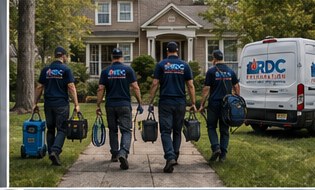
RDC Restoration handles burst pipe water damage in Woodbridge all winter, from frozen supply lines in Fords crawl spaces to ice dam leaks in Colonia ceilings. Our IICRC-certified crews extract the water, dry the structure, prevent mold, and document the loss for your insurer. Crews dispatch 24/7 from our Piscataway hub.
- 24/7 Water Extraction
- IICRC Drying Standards
- Mold Prevention
- Direct Insurance Billing
Quick answer
RDC Restoration responds 24/7 to burst pipe water damage in Woodbridge, NJ. After a plumber stops the leak, RDC extracts standing water, dries walls, floors, and ceilings with commercial equipment, monitors moisture to prevent mold, and documents everything for your insurance carrier, billing directly where possible. RDC also handles ice dam leaks and thaw flooding. Call (908) 253-9000.
Burst Pipe & Winter Water Damage in Woodbridge
Burst Pipe Water Damage in Woodbridge: Winter Help When the Lines Freeze
A hard freeze can split a copper line overnight, and once the ice thaws the water keeps flowing until someone finds the shutoff. Burst pipe water damage in Woodbridge tends to show up in the same places every winter: supply lines on exterior walls, pipes in unheated garages and crawl spaces, and plumbing that runs through cold attics. RDC Restoration removes the water and dries the house once your plumber has stopped the leak.
Woodbridge's housing makes the problem common. Post-war Capes in Fords and Hopelawn often have plumbing in knee walls and crawl spaces with little insulation. Older colonials in Colonia and Iselin may have pipes in exterior walls that were never designed for long cold snaps. Garden apartment buildings share plumbing between units, so one frozen line can soak a neighbor's ceiling before anyone notices. Add high groundwater in parts of Fords and Avenel, and winter thaws can push water into basements too.
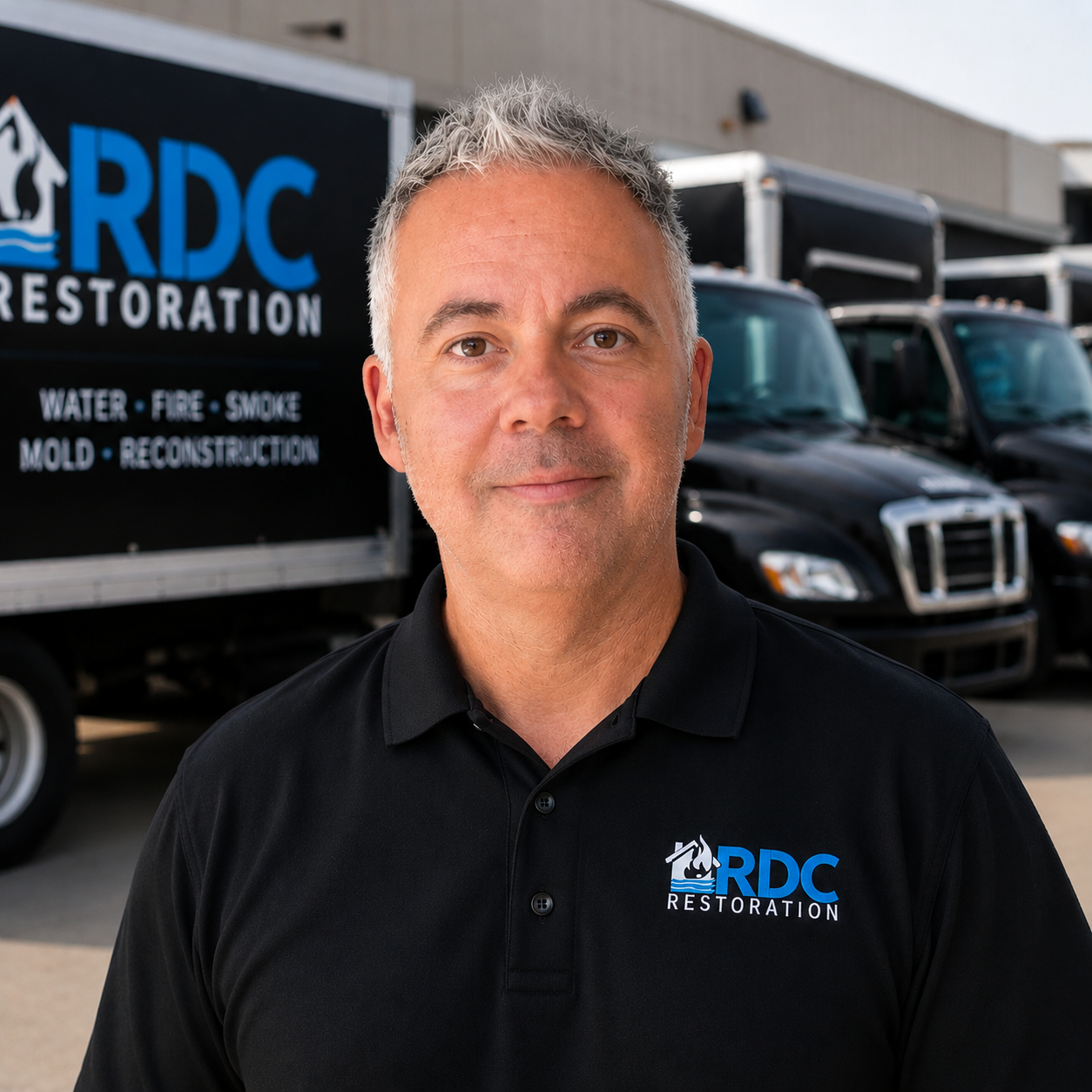
Founded by Russell Calderone, RDC Restoration brings 27+ years of New Jersey water work and IICRC-certified crews credentialed through NORMI and AHERA. We are not plumbers or roofers: your plumber repairs the pipe and a roofer clears an ice dam, while we handle extraction, drying, mold prevention, and documentation. Woodbridge is served from our Piscataway hub, and crews dispatch 24/7. See our full winter water damage services and our Middlesex County water damage coverage.
More on Burst Pipe & Winter Water Damage →
Local risks
Why Winter Water Damage Hits Woodbridge Homes and Businesses
Cold winds off Raritan Bay and the Arthur Kill, an older housing stock, and many buildings with shared plumbing give Woodbridge a long list of winter weak points. Most winter losses start small and hidden, then show up as a ceiling stain or a wet floor after the thaw.
Pipes on exterior walls
Kitchen and bathroom supply lines often run along outside walls in older Colonia and Iselin colonials. When wind drives cold air into the wall cavity, those pipes freeze first. The split usually leaks only once the ice thaws, often while the family is at work.
Crawl spaces and garages
Post-war Capes in Fords and Hopelawn frequently have plumbing in crawl spaces, attached garages, or unheated additions. These spaces track the outdoor temperature closely, and a burst there can soak framing and subfloor for days before anyone sees it.
Ice dams on Cape roofs
Cape Cod homes with finished upstairs rooms lose heat into the roof, melting snow that refreezes at the eaves. The trapped meltwater backs up under shingles and drips into knee walls, ceilings, and exterior walls inside the house.
Thaw seepage in basements
High groundwater in older Fords and Avenel homes means a fast thaw after heavy snow can push water through foundation walls and slab cracks. Basements that stayed dry all fall can take on water in a single warm, rainy day.
Sump pumps in ice storms
Ice storms bring down power lines, and a sump pump without power cannot keep up with meltwater. Discharge lines can also freeze solid, sending water back toward the foundation instead of away from it.
Frozen sprinkler lines in businesses
Warehouses, loading docks, and stores along Route 1 often have fire-sprinkler piping in cold areas near doors and roof decks. A frozen sprinkler line can release a large volume of water across inventory and finished space when it thaws.
Woodbridge
Frozen Pipes in Woodbridge: What to Do Before and After They Burst
Frozen pipes in Woodbridge are most common during long stretches below freezing, especially when wind drives cold air into wall cavities and crawl spaces. Warning signs include faucets that only trickle, frost on exposed pipes, and a whistling or knocking sound in the walls. If you suspect a frozen line, shut off the water to that fixture, open the faucet, and warm the area gently. Never use an open flame. Ready.gov winter weather guidance covers broader cold-weather preparation.
If the pipe has already split, close the main shutoff and call a plumber. Then call RDC Restoration to remove the water and start drying. Prevention is simple and worth doing every December: keep the heat on, let vulnerable faucets drip during hard freezes, open cabinet doors on exterior walls, insulate pipes in garages and crawl spaces, and make sure everyone in the house knows where the main shutoff is. Our guide to preventing frozen pipes in New Jersey has a full checklist.
- Know where your main shutoff valve is
- Keep heat on in vacant or seasonal homes
- Drip faucets on exterior walls during hard freezes
- Insulate pipes in garages and crawl spaces
Woodbridge
Ice Dam Leak in Woodbridge Ceilings and Walls
An ice dam leak in Woodbridge usually shows up as a brown stain on an upstairs ceiling, peeling paint near a window, or water dripping from a light fixture after a snowfall. Capes and older colonials with finished attic rooms are especially prone, because heat escaping through the roof melts snow that refreezes along the cold eaves and traps water behind it. Homes facing open, windy stretches near the bay can see repeated freeze and thaw cycles that make the problem worse.
A roofer should clear the ice and address the roof. RDC Restoration handles what happens inside: we find the wet areas with moisture meters, remove soaked insulation and drywall where needed, and dry the wall cavities and ceilings so mold does not follow. We photograph everything for your claim. Our article on ice dam water damage in New Jersey homes explains how these leaks develop and what insurers typically look for.
- Moisture mapping of ceilings and knee walls
- Removal of soaked insulation
- Wall cavity and ceiling drying
- Photo documentation for your claim
Woodbridge
Emergency Water Extraction in Woodbridge Homes and Buildings
Once the source is stopped, speed matters, because water spreads sideways under flooring and up into walls. Emergency water extraction in Woodbridge removes standing water from finished basements, kitchens, and lower levels before it wicks into drywall, swells hardwood, and soaks carpet pad. RDC Restoration uses truck-mounted and portable extraction units, then sets air movers and dehumidifiers and monitors moisture on every visit until the structure is dry.
Winter losses also hit businesses. A frozen sprinkler line in a Port Reading warehouse or a burst pipe above a Route 1 storefront needs the same fast extraction at a larger scale, and our commercial restoration team for Woodbridge businesses handles those jobs. For water that is not winter-related, see our water damage restoration page for Woodbridge. Fast extraction is the most reliable way to keep burst pipe water damage in Woodbridge from becoming a mold problem weeks later.
- Truck-mounted extraction for deep water
- Carpet and pad water removal
- Commercial air movers and dehumidifiers
- Moisture checks until materials are dry
First steps
When a Pipe Bursts in Your Woodbridge Home
- Shut off the main valve. Close the main water shutoff, usually in the basement or utility area near where the line enters the house. If you cannot find it or it will not turn, call your water utility for help stopping the flow.
- Kill power to wet areas. If water is near outlets, appliances, or a finished basement panel, turn off power to those circuits at the breaker if you can do it safely. Stay out of standing water when electricity is involved.
- Call a plumber, then RDC. A licensed plumber repairs the pipe. Call RDC Restoration at (908) 253-9000 for extraction and drying. Crews dispatch 24/7, so calling while the plumber is on the way saves time.
- Move belongings out. Lift furniture legs onto foil or blocks, move rugs, and carry electronics, documents, and boxes to a dry room. Photograph damaged items first so your claim reflects what was there.
- Check the rest of the house. Look for other frozen lines in garages, crawl spaces, and exterior walls. If a vacant or seasonal home lost heat, check every floor, since a second leak may be hidden inside a wall or ceiling.
How we work
How RDC Dries Out a Winter Water Loss in Woodbridge
1. Inspect and map moisture
We trace where the water traveled using moisture meters and thermal imaging, including inside walls and under flooring. Readings and photos are logged so your adjuster sees the full extent.
2. Extract standing water
Truck-mounted and portable units pull water from floors, carpet, and basement slabs. Removing as much liquid as possible early shortens the drying time and limits swelling in wood floors and trim.
3. Remove what cannot dry
Saturated carpet pad, insulation, and drywall that will not dry in place are removed and documented. Cutting a few inches of wall often lets the cavity behind it dry properly.
4. Dry and dehumidify
Air movers and dehumidifiers run until materials reach the IICRC dry standard. We check moisture readings on every visit and adjust equipment, especially in cold basements where drying slows down.
5. Prevent mold and close out
Dried areas are treated to discourage mold, and you receive a full record of photos, readings, and scope. Repairs then go to your contractor, starting from a dry, documented structure.
Insurance
Insurance for Burst Pipes and Ice Dams in Woodbridge
Most homeowners policies cover sudden and accidental water damage from a burst pipe, and many cover interior damage from ice dam leaks. Insurers may question claims where heat was turned off in a vacant home or where a leak appears to have gone on for a long time, so prompt action and good records matter. RDC Restoration documents the source, the spread, and every moisture reading, then bills your carrier directly wherever possible.
Flooding from thaw seepage or storm water is often treated differently from pipe damage, and some policies limit groundwater claims. If the water came from a winter storm rather than a pipe, our storm damage restoration crew in Woodbridge follows the same documentation approach.
Nearby
Burst Pipe & Winter Water Damage across Middlesex County
See the Middlesex County service area, or another town nearby.
Full-service restoration
Other RDC services in Woodbridge
Water Damage Restoration
Water Damage Restoration in Woodbridge →Mold Remediation
Mold Remediation in Woodbridge →Mold Inspection & Testing
Mold Inspection & Testing in Woodbridge →Basement Waterproofing
Basement Waterproofing in Woodbridge →Fire & Smoke Damage
Fire & Smoke Damage in Woodbridge →Storm Damage
Storm Damage in Woodbridge →Commercial Restoration
Commercial Restoration in Woodbridge →Sewage Cleanup
About Sewage Cleanup →Asbestos Testing & Abatement
About Asbestos Testing & Abatement →Hoarding Cleanup
About Hoarding Cleanup →Woodbridge FAQs
Burst Pipe & Winter Water Damage in Woodbridge: common questions
Should I call RDC or a plumber first after a pipe bursts?
Call both, starting with stopping the water. Close the main shutoff, then call a plumber to repair the line and RDC Restoration at (908) 253-9000 to extract water and start drying. RDC does not repair plumbing, but our crews can begin removing water as soon as the source is off, even before the plumber finishes the fix.
My Woodbridge home was empty over the holidays and the heat failed. What now?
Expect water in more than one place. Shut off the main, call a plumber, and have RDC inspect every floor with moisture meters, because leaks in vacant homes often run for days. Next winter, keep the thermostat at a safe setting and ask a neighbor to check the house while you are away.
Can frozen pipes cause mold even after the leak is fixed?
Yes. Water that soaked into wall cavities, subfloors, and insulation can stay wet long after the pipe is repaired, especially in cold Woodbridge basements where drying is slow. Mold can follow if those materials are not dried to a measured standard. RDC verifies dryness with meters rather than guessing, which is the most reliable way to prevent growth.
Do you help with frozen sprinkler lines in commercial buildings?
Yes. When a frozen fire-sprinkler line thaws and releases water, your fire protection contractor repairs the system and RDC extracts the water and dries the building. Warehouses and storefronts along Route 1 and near the Turnpike often have sprinkler piping in cold spaces, so these losses can be large and need commercial drying equipment.
Does RDC serve towns near Woodbridge for winter water damage?
Yes. RDC Restoration serves all of New Jersey. Residents to the west and south can see our pages on burst pipe water damage in Piscataway and burst pipe water damage in Old Bridge. Every town gets the same IICRC drying standards, 24/7 dispatch, and direct insurance billing.
Burst Pipe in Woodbridge? Call RDC 24/7
Water from a frozen pipe, ice dam, or thaw spreading through your Woodbridge home or business? RDC Restoration extracts, dries, and documents it. Call (908) 253-9000.