
RDC Restoration Blog · New Jersey
Basement Waterproofing Membranes: A Homeowner’s Guide
What Are Basement Waterproofing Membranes and Do You Need One?
Basement waterproofing membranes are sheet, liquid, or spray-applied barriers installed on a foundation wall to keep groundwater and soil moisture from penetrating concrete or block. If your home sits on clay soil, near a high water table, or has shown even minor dampness, a membrane system paired with proper drainage is usually the most durable long-term fix.
- Inspect foundation walls and the base of the basement for staining, efflorescence, or musty odors after heavy rain.
- Check exterior grading and gutters to confirm water is being directed away from the foundation.
- Schedule a professional inspection to determine whether an exterior membrane, interior system, or combination approach fits your soil and foundation type.
How Basement Waterproofing Membranes Work
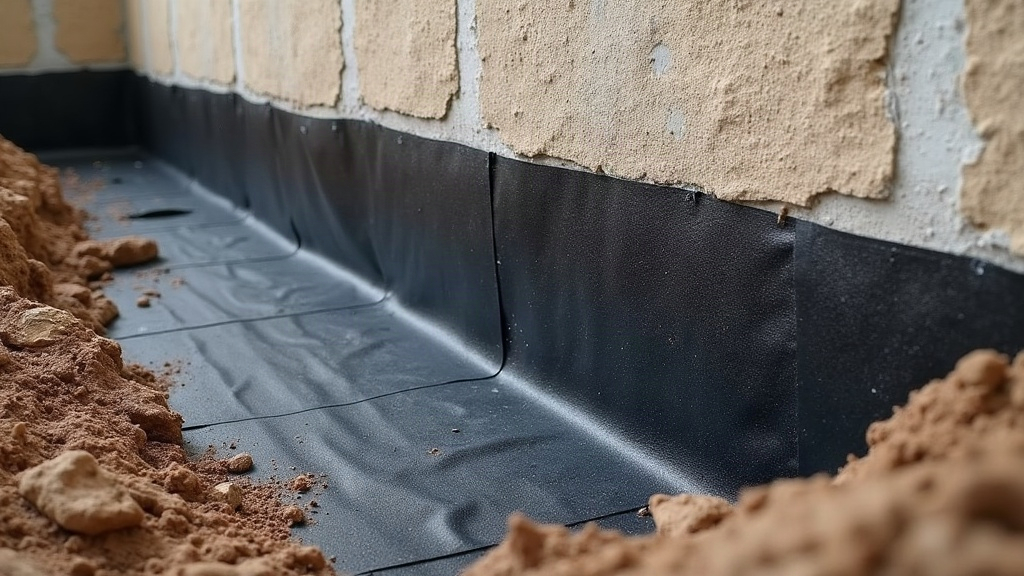
A basement waterproofing membrane is designed to sit between your foundation wall and the surrounding soil, creating a continuous barrier that groundwater cannot pass through. Most membranes fall into three categories: sheet membranes (rolled rubberized or polymer-modified asphalt products adhered directly to the wall), liquid-applied membranes (rolled or sprayed coatings that cure into a seamless rubber-like layer), and cementitious coatings, which are rigid and bond mechanically to concrete or masonry.
Each type resists hydrostatic pressure differently. Sheet membranes offer excellent puncture resistance and are a common choice for new construction. Liquid membranes conform to irregular surfaces and seal around penetrations like pipe sleeves more easily. Cementitious coatings are economical but less flexible, which can be a drawback where foundation walls experience seasonal movement.
In our region, the amount of hydrostatic pressure a wall faces depends heavily on local soil composition and water table depth. Homes in low-lying parts of Middlesex County or along the Jersey Shore towns we serve, such as Brick Township and Manasquan, often face more persistent pressure than homes on higher, sandier ground. Understanding why hydrostatic pressure causes basements to leak helps explain why membrane selection is never one-size-fits-all.
Exterior vs. Interior Membrane Applications
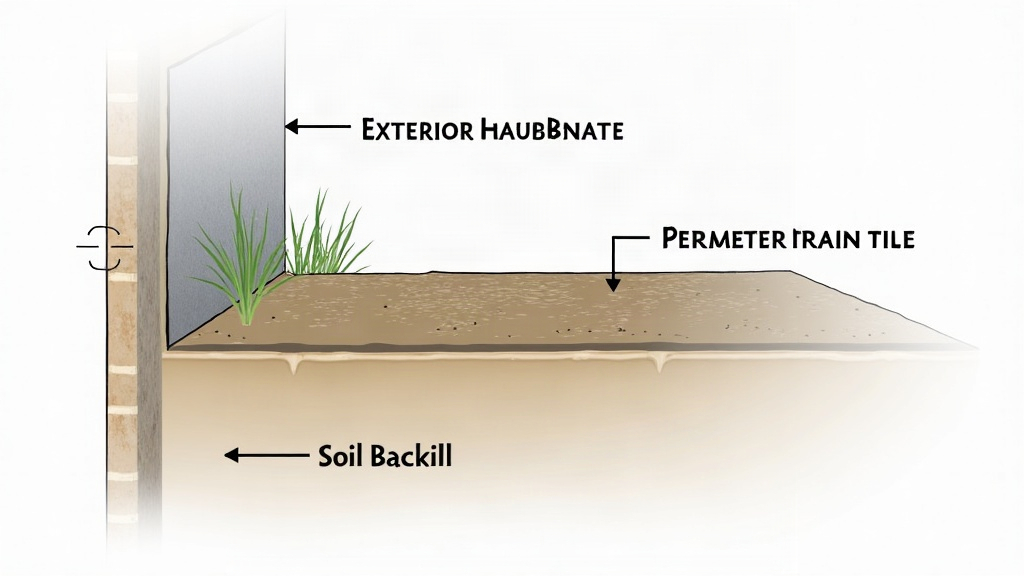
Exterior membranes are applied to the outside of the foundation wall before backfilling, which means they stop water before it ever reaches the concrete. This is generally the most effective placement because it addresses the source of the problem rather than managing water after it has already entered the wall assembly. Exterior work typically pairs a membrane with a drainage board and a perimeter drain tile to carry water away from the footing.
Interior systems take a different approach. Rather than coating the outside wall, they manage water that has already passed through the concrete, usually by routing it to a drain system beneath the slab. Our guide on interior French drain systems for basement waterproofing explains how this approach works when exterior excavation is not practical, such as on a tightly built lot or near an existing patio.
Choosing between the two often comes down to access, budget priorities, and the severity of water intrusion. For a full side-by-side breakdown, see our comparison of interior vs. exterior basement waterproofing and which approach fits different foundation conditions.
Signs Your Basement Waterproofing Membrane Has Failed
Membranes do not last forever, and certain conditions accelerate their breakdown. Watch for these warning signs:
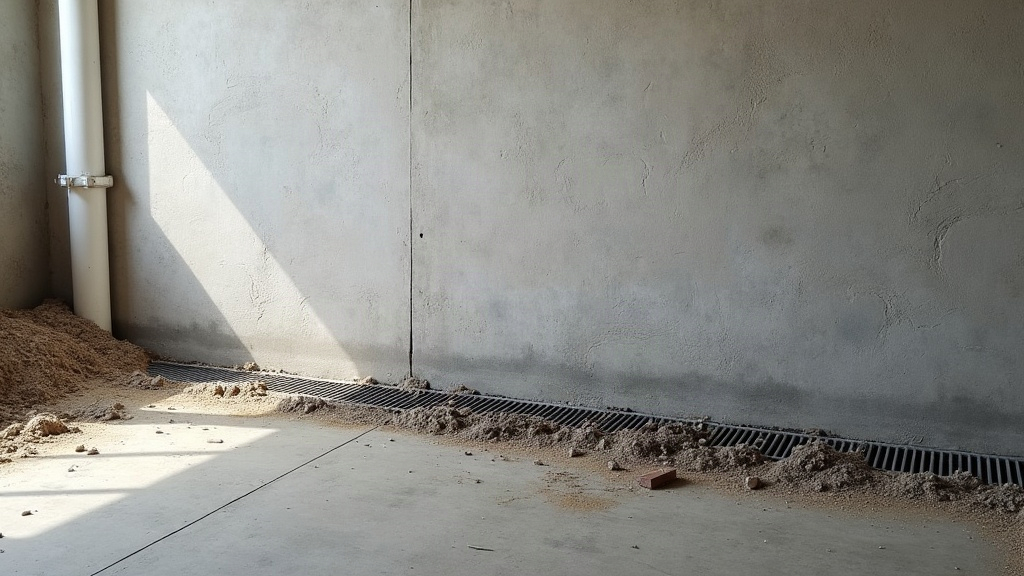
- Efflorescence: White, chalky mineral deposits on interior walls indicate moisture is migrating through the concrete.
- Peeling or bubbling coatings: Cementitious or liquid coatings that blister often signal moisture trapped behind the membrane.
- Musty odors after rain: A persistent damp smell following storms often means a membrane seam or penetration has failed.
- Visible cracks with staining: Hairline cracks that weep water suggest the membrane and drainage system are no longer managing hydrostatic pressure.
- Soft or spongy flooring near walls: This can indicate long-term moisture intrusion that has gone unaddressed.
According to the U.S. Environmental Protection Agency, controlling moisture is one of the most effective ways to prevent mold growth and protect indoor air quality in below-grade spaces (EPA, Mold Course). Left unaddressed, a failed membrane can quickly become a mold remediation issue in addition to a structural one.
Choosing the Right Basement Waterproofing Membranes for Your Home
The right membrane depends on your foundation type, soil conditions, and whether the work is happening during new construction or as a retrofit on an existing home. New construction generally allows for sheet or spray-applied exterior membranes installed before backfill, since the foundation wall is fully exposed. Retrofits on existing homes often require excavation around the perimeter, which is more invasive but still effective when water intrusion is severe or recurring.
For homes where excavation is not feasible, interior drainage combined with a sealant or vapor barrier on the interior wall face can manage moisture, though it does not stop water from entering the wall assembly itself. We evaluate soil type, grading, downspout placement, and the history of water intrusion before recommending a specific membrane system, since a mismatched product can fail within a few seasons regardless of installation quality.
Homeowners in older housing stock, common throughout Essex County and Newark, often have foundations built before modern waterproofing standards existed, meaning the original parging or tar coating has long since broken down. In these cases, a full exterior membrane replacement paired with updated drainage typically offers the most lasting result.
Basement Waterproofing Membranes: Common Questions About Cost and Insurance
Homeowners researching basement waterproofing membranes frequently ask about cost and whether insurance will help cover the work. We address these questions directly below, since clear expectations upfront make the decision-making process easier.
It is worth noting that waterproofing is generally considered a preventive home improvement rather than a repair for sudden damage, which affects how insurance providers typically classify it. The Insurance Information Institute notes that standard homeowners policies typically exclude gradual water seepage and groundwater intrusion, which is the type of damage membranes are designed to prevent (III, Basement Flooding).
Maintaining a Waterproofing Membrane System Long-Term
Even a correctly installed membrane benefits from routine attention. Keeping gutters clear and downspouts extended at least several feet from the foundation reduces the volume of water a membrane has to resist in the first place. Grading should slope away from the house, and any new landscaping or hardscaping near the foundation should be planned with drainage in mind.
We recommend a visual inspection of the basement interior each spring and after any unusually heavy storm, checking for the warning signs described earlier. Catching a small seam failure or isolated crack early is far less disruptive than addressing widespread water intrusion after a membrane has failed completely.
Frequently asked questions
Will insurance pay for basement waterproofing?
Typically no. Standard homeowners policies generally exclude gradual water seepage, groundwater intrusion, and preventive work like waterproofing membranes, since these are considered maintenance issues rather than sudden, accidental damage. Some policies offer optional water backup endorsements, but these usually cover specific scenarios like sewer backup, not general foundation waterproofing.
What type of basement waterproofing is best?
The best type depends on your soil, water table, and access to the foundation. Exterior membranes paired with drainage are generally most effective because they stop water before it reaches the wall, while interior systems are a practical alternative when excavation isn’t feasible. We assess each home individually before recommending a system.
What is the average cost of waterproofing your basement?
Costs vary widely based on foundation size, soil conditions, chosen membrane type, and whether excavation is required, so we don’t quote general averages. The most accurate way to understand pricing for your specific home is a professional on-site evaluation that accounts for your foundation’s condition and drainage needs.
Does waterproofing a basement really work?
Yes, when the membrane type matches the soil and water conditions and is paired with proper drainage. A correctly installed and maintained system can keep a basement dry for many years, though no system eliminates the need for basic maintenance like clear gutters and proper grading.
How much does it usually cost to waterproof a basement?
Pricing depends on factors like foundation length, whether work is interior or exterior, soil type, and the extent of existing damage, so costs are specific to each property rather than a fixed figure. We provide detailed, itemized estimates after inspecting the foundation in person.
What is the cheapest way to waterproof a basement?
Interior sealants and vapor barriers are generally less invasive and less costly than full exterior excavation, since they avoid digging around the foundation. However, they manage moisture after it enters the wall rather than stopping it at the source, so they’re best suited to homes with mild, non-structural dampness rather than active water intrusion.
Ready to get started with RDC Restoration? Call (908) 253-9000
Water, fire, or mold damage in New Jersey?
RDC Restoration answers 24/7 with IICRC-certified crews from Piscataway & Berkeley Heights. Fast response, direct insurance billing.